
ይህ ትርጉም በአጋሮቻችን እየተገመገመ ነው።
የዓለም አቀፍ ጤና መሠረቶች
ትምህርቶች
ስለ ሌክቸር ተከታታዮቻችን
በካንሳስ ዩኒቨርሲቲ ሕክምና ትምህርት ቤት የዓለም አቀፍ ፕሮግራሞች ቢሮ ጋር በመተባበር የዓለም አቀፍ ጤና መሠረቶች ላይ ያተኮረ ተከታታይ ሌክቸር እያዘጋጀን ነው። የሌክቸር ቀናትንና ምዝገባን ለማወቅ እባክዎ የOIP ዝግጅቶች የቀን መቁጠሪያን (OIP Events Calendar) ይጎብኙ.
7 ትምህርቶች
የአካል ጉዳትና ኦርቶፔዲክስ 3
-
Conflict-Related Deaths and Self-Harm - OIP & IOTC Lecture
የዓለም አቀፍ ፕሮግራሞች ጽህፈት ቤትና IOTC ስለ ግጭት ነክ ሞቶችና ራስን ስለ መጉዳት ትምህርት አዘጋጅተዋል። ዋና ተናጋሪዎቹ ዶ/ር Archie Heddings እና ዶ/ር Betty Kassa ነበሩ።
-
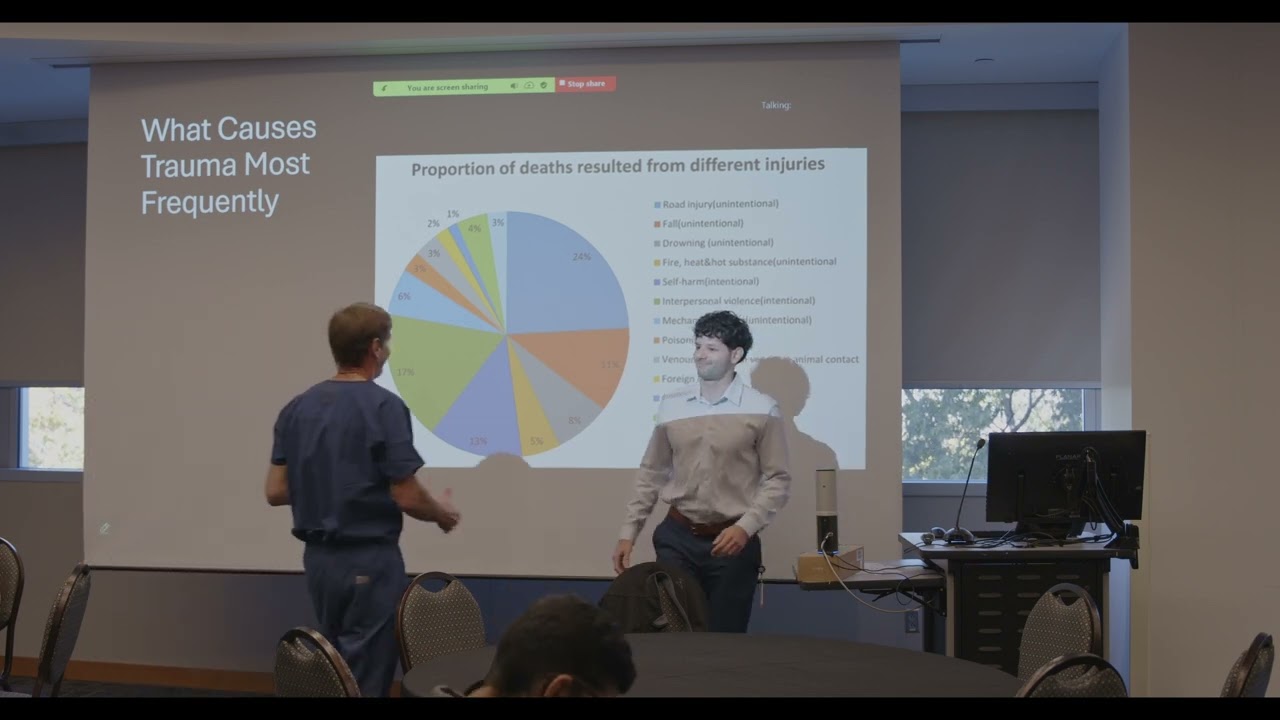
"Etiology of the Trauma Epidemic; RTA's and Work Related Injuries" Lecture 10/22/24
ዶ/ር Archie Heddings ከኬዝ ነርስ Connie Arnold እና አሁን የIOTC ፌሎው ከሆኑት ዶ/ር Beza ጋር ስለ አካል ጉዳት ባህሪና ምክንያቱ ይናገራሉ። እንደ ኢትዮጵያ ባሉ ዝቅተኛና መካከለኛ ገቢ አገሮች ያለውን የአካል ጉዳት ወረርሽኝ፣ አካል ጉዳት ለምን በሰፊው እንደሚስፋፋና ገዳይ እንደሚሆን ይወያያሉ።
-
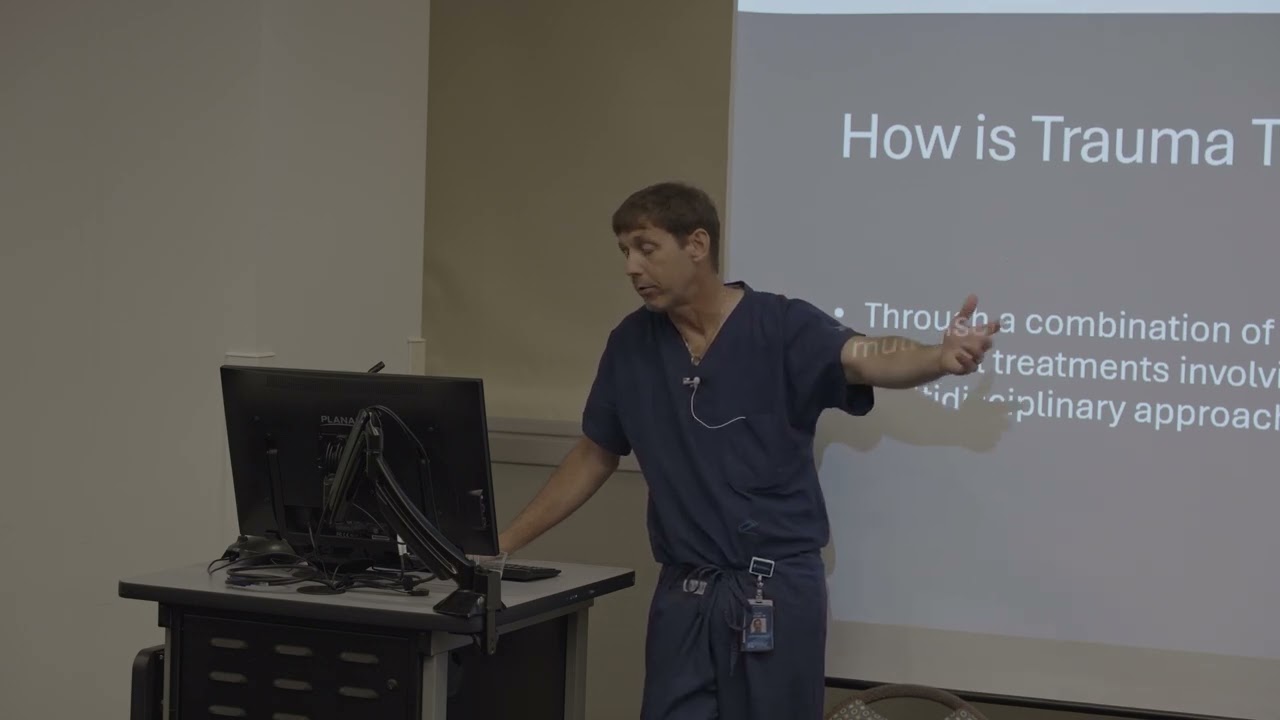
"An Introduction to Orthopedic Trauma" Lecture 9/27/24
ዶ/ር Archie Heddings ከነርሶቹ Lauri Spriresweet እና Tessa Petersen ጨምሮ ከጤና ባለሙያዎች ፓናል ጋር በዚህ ትምህርት የአካል ጉዳት ምን ማለት እንደሆነና ማከም ምን ማለት እንደሆነ ይወያያሉ።

ዓለም አቀፍ ቀዶ ሕክምናና የሕክምና ተልዕኮዎች 3
-
An Introduction to Global Surgery
ከKU የዓለም አቀፍ ፕሮግራሞች ጽህፈት ቤት ጋር በመተባበር ከምናዘጋጀው "Partnering to Solve the New Trauma Epidemic" ተከታታይ ትምህርት አንዱ ነው።
-
"A Brief History of Medical Missions and Similar Interventions" Lecture 11/5/24
ዶ/ር Archie Heddings ከIOTC ፌሎዎች ጋር ስለ የሕክምና ተልዕኮዎች ታሪክ ይናገራሉ። ሊያመጡት ስለሚችሉት ለውጥ፣ እንዲሁም ተልዕኮዎቹ በሚጎበኟቸው አገሮች የጤና አጠባበቅ አጠቃላይ መዋቅር ላይ፣ በእነዚህ ተልዕኮዎች ቀጥተኛ ተጽዕኖ ለሚደርስባቸው ሰዎች ደግሞ የጉዳት አመለካከትና የሕክምና ውጤት ላይ ምን ተጽዕኖ እንደሚያሳድሩ ይወያያሉ።
-
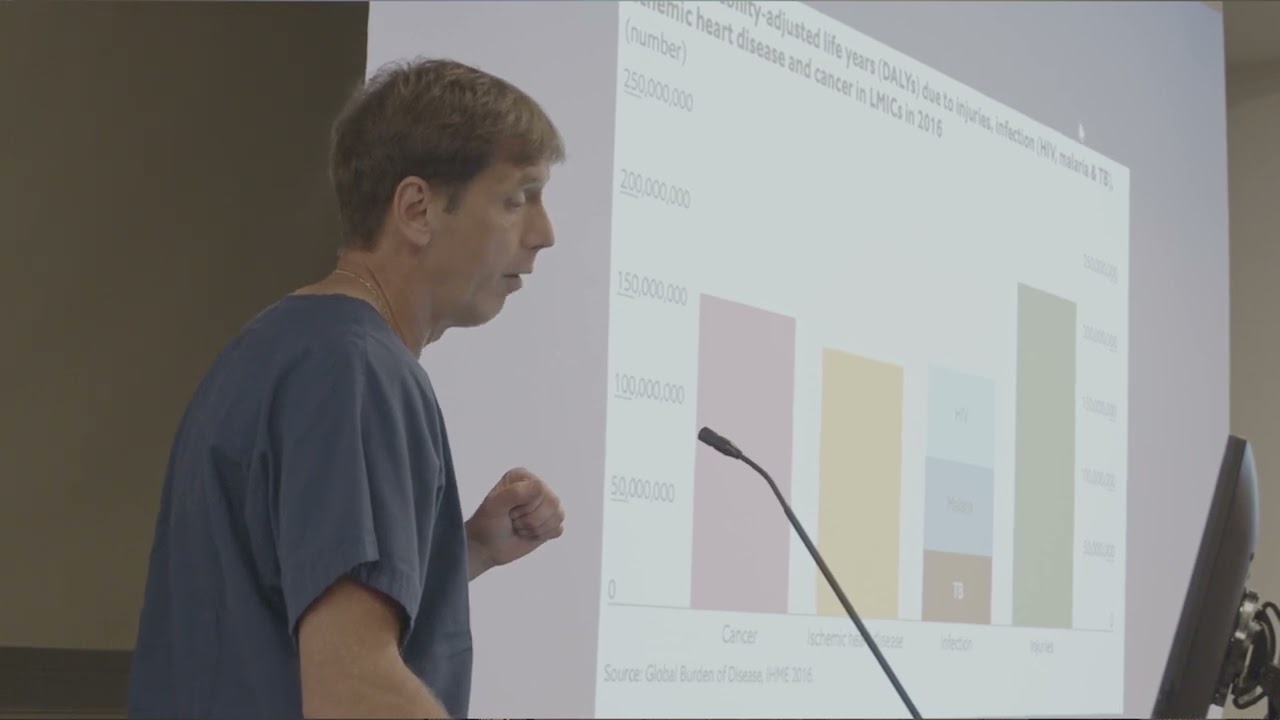
"A Brief Overview of the African Trauma Initiative" Lecture 10/1/24
ዶ/ር Archie Heddings ነርሶቹ Lauri Spriresweet እና Tessa Petersen እንዲሁም የአሁኑ IOTC ፌሎው ዶ/ር Beza ጨምሮ ከጤና ባለሙያዎች ፓናል ጋር ይናገራሉ። ATI የተፈጠረበትን ሁኔታ፣ ለመፍታት የተፈጠረባቸውን ጉዳዮችና ATI ከተመሳሳይ ድርጅቶች በምን እንደሚለይ ይወያያሉ።


ነርሲንግና የታካሚ እንክብካቤ 1
-
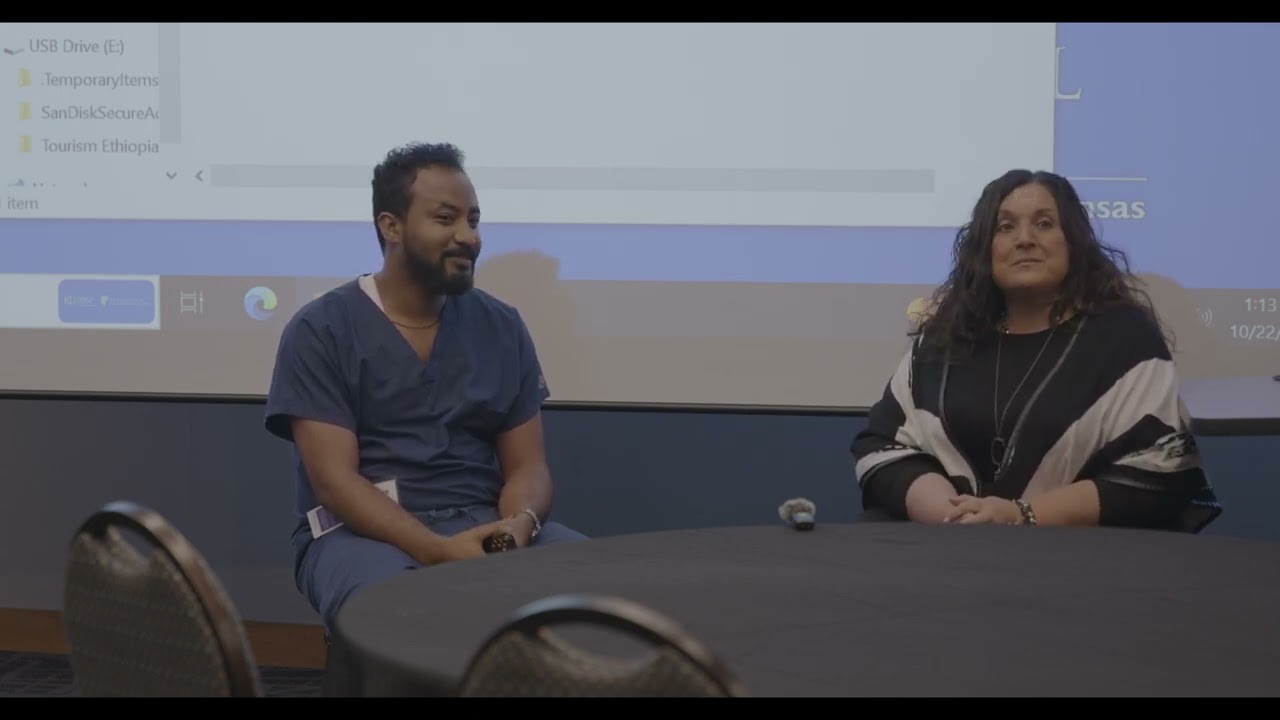
Bonus Talk with RN Connie Arnold - "What Makes Case Nurses So Important?" 10/24/24 Lecture Addendum
የካታስትሮፊክ ጉዳት ኬዝ ማናጀር ነርስ Connie Arnold የኬዝ ማናጀሮች በታካሚ ተሟጋችነትና ከቀዶ ሕክምና በኋላ እንክብካቤ ያላቸውን ሚና አስፈላጊነት ይዳስሳሉ። የIOTC ፌሎው ዶ/ር Beza ይህንን በአዲስ አበባ፣ ኢትዮጵያ እንደ ጤና ባለሙያ ካላቸው ልምድ ጋር ያወዳድራሉ።
ከፍለጋዎ ጋር የሚዛመድ ትምህርት የለም።
ግልባጮች
ግልባጩን ያንብቡ · Conflict-Related Deaths and Self-Harm - OIP & IOTC Lecture
I think if you saw the invite email, we're going to be discussing a rather sensitive topic. But it's one that needs to be addressed because if we're going to overcome or have an impact on this trauma epidemic, we have to address the issues that are causing it. And one of the major causes of death as a result of this trauma epidemic is conflict-related violence and self-harm, and these two are tightly related. When you look at the continent of Africa and you look at how much life has been lost due to conflict over the years, it's difficult to know exactly what those numbers are. I think many of us are familiar with the approximately 450,000 deaths that occurred with the Rwandan genocide when the Tutsis were massacred. More recently, estimates as high as 600,000 Ethiopians have died due to violence within its borders. And even more difficult to get an actual number of is the amount of deaths that have occurred in the Congo region with estimates as high as 5.4 million, 5.4 million deaths related to conflict-related violence in the area of the Congo, making that the highest loss of life since World War II due to a conflict.
And how many people here have heard of that? it's not something that we know a lot about but I think in order if we're going to treat this we have to understand what's causing it and how we can intervene and make an impact and that's the purpose of this talk today. The purpose of this talk today is not to point fingers at various parties or political institutions. The purpose of this talk today is to make the point that conflict does exist in Africa, the continent of Africa, and understand why it occurs, and not that it's something as simplistic as ethnic tensions or poor political regimes. I think it's much more complicated than that, and when we get an understanding of that, then we can then come up with plans in terms of how to impact it. So first to start, we just want to talk about some basic definitions. So So this paper here, it's called Conflict Trends in Africa, and it's produced by the Peace Research Institute of Oslo.
And it just looks at battle-related trends in Africa from 1989 to 2021. And they have some basic definitions. So you have state-based conflicts, and these are a contested incompatibility over government and or territory with at least one party being a state, and involving the use of armed force that results in at least 25 battle-related deaths within a calendar year. Then you have non-state conflicts. This is armed force between organized groups, none of which is a government or a state that results in at least 25 annual battle-related deaths. Then you have one-sided violence, the use of armed force by the government or a state, or a formally organized group against civilians. That results in at least 25 battle-related deaths. And then all battle-related deaths or fatalities, including civilian losses, caused by warring parties, and that can be directly related to combat. When you talk about Africa, the majority of conflict that you see are conflicts within states. They're within states. They're not between states typically, but these are conflicts that occur within states. So civil-type conflicts are very common in Africa compared to conflicts between states.
I think that's an important thing to point out. When you look at Africa in general, I have just these maps that show state-based conflicts, and then next to that you'll see non-state conflicts, and then after that you'll see one-sided conflicts. and what you'll notice is is that these are all occurring predominantly in the same areas right where you have got state-based conflicts you've also got non-state conflicts and you've also got one-sided conflicts so it's just an interesting point in terms of an area where you have conflicts they seem to be you know prevalent there all types and then in the areas that are stable for the most part those tend to be the stable portions of Africa and you can see the more stable portions are the more northern portions and the more southern portions. The total number of state-based conflicts was 30 in 2020, and of those, 11 were civil wars. The remaining 19 were internationalized civil wars. So when it comes to internationalized civil wars, that's basically saying some outside actor is coming in and they're providing arms or they're maybe fomenting a conflict. And if you look at the results of internationalized conflicts, sometimes it can be good. Sometimes other states, you know, like America or Europe or China can come in and help bring peace. But on the other hand, sometimes it can actually foment the war more, provide more weapons, and then increase the lethality of the war. So in terms of internationalized conflicts, state actors from outside Africa can have a positive impact, but their influence needs to be used wisely. When you look at non-state conflicts broken down between formally organized groups, informally organized groups, and informally organized identity groups, Africa is currently the region most severely affected by non-state conflicts. And I just have a list there of those.
so those can be terrorist organizations or those can be like a group within the country that represents a specific ethnicity or a specific religion and they declare themselves a group and then they start taking action due to some incompatibility that they have with maybe people around them one-sided violence africa is the region with the largest absolute number of fatalities from one-sided violence this type of violence is perpetuated mainly by non-state actors A lot of these can be terrorist organizations, but other ones can be state actors. So the state can act against its own people. And when African governments get involved in this type of violence, this is where typically you see the most fatalities. An example of this is the 540,000 deaths in 1994 that occurred when the Rwandan government got involved with the genocide. So those can be very lethal. When people, and particularly when you hear something like a genocide that occurred in Rwanda, you almost have this knee-jerk response of, well, it's tribal violence or ethnic violence.
These ethnicities can't get along because they can't get along. It results in this conflict and deaths. And that's just why Africa is riddled with so much conflict-related violence. But again, the point of this talk is to show that I think that is a very myopic view of what is causing a lot of this conflict-related violence in Africa. But it does need to be mentioned. It needs to be mentioned. So if you look, here's just a map, and this was taken from the Encyclopedia Britannica. If you look at this map, this shows the different ethnolinguistic groups within Africa, and then it's broken down by color into these large language families. But there is a lot of diversity in Africa. There are, if you look at this, how many, according to ethnologues, geographical distribution of living languages, there are 2,058 languages spoken in Africa, about 30% of the world's total 6,809 living languages. So Africa, even though it's 13% of the world's population, one out of every three languages used in the world is in an African language.
So it's true. There's a lot of diversity in Africa, right? So, and if you look at, say, the rest of the world, they average about 3.2 to 4.7 ethnic groups per country. Africa, on average, they've got about eight in each country. And then to further complicate that, to further complicate that, you have all of these different ethnicities in Africa. They speak different languages, but then Africa was colonized. So when Africa became colonized, you had countries from Europe coming in, and they started laying down borders. But when they laid down these borders, when France and Great Britain and other European countries started laying down borders, they didn't lay them down with respect to ethnicity. They divided their countries up in such a way that you would put within the same country some rival ethnic groups. So it did complicate the matter in terms of colonialization, and a lot of these borders still persist today. So you have borders that cut across ethnic groups, and you'll have rival ethnic groups within the same country.
And you can imagine that makes things difficult. So starting out ethnically, it does look like Africa has a challenge. But what you'll see as we go through this is ethnic diversity can actually be a safeguard against conflict. There's other things involved when it comes to conflict. And one of the things that seems to be involved most in determining conflict is the economy. If there's one thing that I've learned in preparing this talk, and I think people have learned in life, hungry people are angry people okay we've all gotten hangry before but imagine if that's your life imagine if you can't feed your children right that's different now you're really angry and then imagine if you see someone else who may live dear you or someplace close to you or within the same country and they're doing just fine that creates tension what are the economics of african nations and what are the economics of African nations that influence conflict? Well, you know, as we discussed in some of our previous talks, many of the poor nations in the world, many of the low-income nations of the world, in fact, Africa is home to most of the lower-income nations of the world. And what contributes to that? A lot of it is the fact that they have what's called extroverted economies. What's an extroverted economy? An extroverted economy is an economy that depends on exports. So what we have here, I have on the right of your screen is, or on the left of your screen, is export dependence within African nations. And what you'll see is in Ethiopia there, you'll see it's export dependent on agricultural products. You have some countries and blue energy, that'd be oil, natural gas.
And then if you look in the center there, DR Congo, Zambia, they are dependent on ores, metals, precious stones. And then you've got few non-commodity-dependent countries. And then if you look at the other two on the right, total export dependence, red means they're more export-dependent. And look at how much of Africa is export-dependent. Why does that matter? Well, here's a graph that shows the price of tantalum. So if you're export dependent, the value of your currency is largely dependent on that export and how it's doing. So if you look at tantalum, for example, which is a mineral or a product that's used in our cell phones, much of it's derived from the Congo, look at how that price fluctuates, right? What do you think that's going to do to your currency? You know, it's going to fluctuate, well, it's going to fluctuate with that a lot. What about copper? The Congo produces a lot of copper, and look at the fluctuations here. So if you are an extroverted economy that depends upon your exports, how your economy does is tied to these fluctuations. You can have good times, but you can have times that are very bad, particularly if you're somebody that's working on the lower end. And every day you only make enough just to feed your family. And if you don't show up to work that day, you don't have enough to feed your family. You can't take a sick day literally because if you don't, if you do take a sick day, you can't pay to feed yourself and your family. And then if the price of that commodity drops and there's no reason for them to be mining it currently, you're laid off. Now you're really in a situation. So that is something that lends itself to conflict. So we're going to go through this and we're going to go through a little discussion here. If you want to protect yourself from that type of fluctuation in your economy, you need what's called diversification. Not only do you need to depend on what you're exporting in terms of raw minerals, but ideally you need to have people that have other skills. In other words, they can come up with ideas to create things. You can have manufacturing that manufactures different types of goods. You can take the product out of the ground and rather than selling it in its raw form, like say an emerald, a raw emerald, you can actually cut it so it can be used in jewelry. You can have your own economy where you trade amongst yourselves so your economy can support itself. It's called economic diversification. And economic diversification protects you from these types of fluctuations. So I'm just going to go through a step, a process here in terms of just like describing how a poor nation can fall into conflict. So we're going to start out with a poor nation that's commodity dependent and it's low on the global value chain. And what does that mean?
Global value chains are what have developed in this global economy where you provide a contribution to making a particular good. Okay. If you're low on the global value chain, what that means is you just produce the raw element. You take something out of the ground. It's basically a crushed up rock and then you give it to somebody else. How much do you think you make off that? Very little. You make very little. Now, so if you then take, say, maybe that emerald that doesn't look that nice and just came out of the ground and you shine it and you polish it, now you can sell that for a little bit more. If you insert it into jewelry, you can sell that for something. And if you own the company that sells the jewelry, now you're basically taking all the profit from that. Does that make sense? When you're in the global value chain at the very bottom, you make the least out of it. What Asia has done is they've moved up the global value chain. Asia has moved, if you think about China, they've moved up the global value chain to where they're basically, They're producing so much of what we use. And they're even now getting into the highest part of the global value chain where they're innovators. Not only are they producing it, but they're looking at it and they're saying, how can this iPhone be better?
How can this satellite be better? And now you're at the top of the global value chain. So where Asia has climbed up the global value chain and they've raised the standard of living for their people, this has not happened in Africa. So we'll start out with a poor nation. and it's commodity dependent, it's low on the global value chain. Let's say they produce uranium. Lacking the finances to develop the mines, to harvest and pay for the roadways, to transport the raw material out of the country, it takes a loan, and it's a resource-backed loan. So in other words, a rich nation comes to them and says, we want you to get us uranium. We'd like to buy it from you. They say, we would love to get it for you, but we don't have the ability to make this mine or the roadways to get it out. The rich nation replies, happy to help you with that. We'll make the roads for you. We'll make the mine for you. You have to pay us back. But here's the deal. If you don't pay us back, we get your mine. It's a bad deal, right? But this is what's occurring in a lot of nations. But this country goes for that. So they signed the deal. The loan's taken from a nation that has substantial rival nations that are also investing in Africa.
So other people are eyeing this. Some other rich nation that's a world power militarily looks at it and says, boy, we would sure like that uranium. Darn it, wish we could have signed that deal. Low-wage jobs are created for many people, harvesting the raw ore and making roads. And while a few are made very wealthy that are in privileged positions in the government or from a land-slash-company-ownership standpoint, others are just making a measly amount from simply digging holes in the ground and gathering this raw ore. This is how it works a lot of the time. Those in the privileged positions are of one ethnic group, while those performing the low-wage jobs are of another. The government is politically aligned with the wealthy ethnic group, while the poor ethnic groups have no voice in government and little economic upward mobility. Now, due to decreased global demand for the price of uranium, all of a sudden the world becomes a very peaceful place. We decide we don't need to spend our money on making nuclear bombs right now. Nobody wants to buy it. An economic crisis ensues with the country being unable to service its debt and the poverty worsens within that country.
The country loses a number of its uranium mines to its creditor because they say, okay, you can't pay up. We're going to take that mine. That further worsens its losses of revenue caused by the decreased price of uranium. Now, who do you think is affected the most? The people at the very bottom. And dissatisfaction amongst impoverished ethnic groups with no voice in government and no educational or economic mobility start a conflict financed by a rival nation who wants access to that country's uranium. What money the government does have, now instead of being spent on education or health care or strengthening the government, is spent on a war effort, decreasing any money that was spent on education or strengthening government systems that need to be there to place basic citizens' needs. the economy worsens, decreasing prospects of diversifying the economy. You can't diversify an economy in that situation. And moving up the global value chain, who wants to invest in a country in terms of an outside nation?
Who wants to invest in a business in a country that's in conflict? The answer is virtually none. That further entrenches the poverty and increases its susceptibility to other conflicts. the country's propensity for violence scares off future investors further worsening its prospects for economic growth so that is that that takes you through basically kind of a stepwise progression of what happens over and over again in many african nations there are predictive models now a lot of them artificial intelligence machine-based learning that can predict civil war if it's going to occur or not occur. It's very interesting. And a lot of these go back to, this is a paper, I believe, from in the 80s or 90s, where they came up with a mathematical model to predict civil war. And the whole point of these slides is just to make the point that this is not just about ethnic or linguistic differences. My feeling is, when I go through this, if America, if we were in the same situation that Africa were in, America would essentially be like Africa.
There is just a complexity of issues that are contributing to this problem of conflict that we are seeing there. Humans are no different here than they are in Africa. We're all exactly the same. These models work all over the world. We are currently in a very privileged position. that does not make us susceptible to conflict. So if you look at, this is an early model that simplifies it. If you look at the AI models, they're very complex, but they can supposedly predict within like 93% accuracy or 97% accuracy if a civil war is going to occur. What did they find out in some of these models? So what this shows is the probability of civil war at low and high levels of political rights and variable ethno-linguistic fractionalization. And this is a parabola here, and you can see this shows the bottom, 10% of polity, and polity means that this is a government that is strong and gives voices to all of its people. So if there is a particular group within that society, by religion or ethnicity or anything else, that has a grievance, they can bring it to the nation, They can bring it to the government, and they'll feel like they're heard, and some response is made.
And what you see here is that when people don't have a voice, once you get to a little bit over about 50% of ethnolinguistic fractionalization, the chance of war is very high. In other words, they said, in this model, if you have about 60% of the nation of one group and 40% of another group and that 40% doesn't feel heard, the chance of civil war is incredibly high. On the other hand, if you just give a voice to people where they can voice their grievances and say, I don't feel like I'm being heard, look how it drops the probability of civil war. It demonstrates you need a strong government that lets different groups be heard if you're going to have something that protects against civil war. This shows the probability of civil war if you look at ethnolinguistic fractionalization, so differences that way, versus the gross domestic product. And you can see the bottom of the gross domestic product is here, and then you can see the top of the gross domestic product is here.
And you can see in this model, what was more important was people being heard politically. But economics does play a role here, right? If people are poor, it gets to that point. If you're a hungry person or a hungry group, you're an angry person, an angry group. This shows if you have an economy that is extroverted or highly commodity dependent. So if you're very commodity dependent versus lowly commodity dependent, the lower you are in terms of being dependent on commodities, the lower your risk of a civil war. And this one shows they just put democracy and income together. So in other words, if you look at this, your risk of civil war is really high if you're poor and you aren't being hurt. if everybody's doing well economically and everybody's being hurt, what's your chance for a civil war? That's a happy society. There's a recipe for achieving this.
And this just puts them all together. It puts ethno-linguistic fractionalization, commodity dependence, and gross domestic product together. And the more diverse your economy is, the more well off your citizens are and the more they're heard the less chance for civil war so the point of all this is that it's not just about ethnic and linguistic differences that it is about the economy it is about the ability for a group of people to elevate themselves within the world economy and it shows that we as a world if we're concerned about everybody in this world, that we have a part in helping some of these other nations to elevate themselves out of this trap, as I took you through that kind of whole circular process of poverty and conflict, to help elevate some of these nations out of this trap that they're in. Particularly, this feeds into my next slide, particularly if we are benefiting from those countries, which we are. So conflict minerals, these are called the three TGs, and that stands for tantalum, tin, tungsten. Those are the three T's in gold. What are conflict minerals? Well, conflict minerals primarily come from the Democratic Republic of Congo, the eastern part.
Many of them are used to make our circuit boards, our cell phones, and there's a lot of conflict related to this. Many deaths have occurred in this region. Like I said, estimates as high as 5.4 million. And what you have is you have rivaling factions that will want to harvest this raw ore and then put it on the world stage to enter it into these global value chains that are then used to make cell phones and these things that we want, or military technology. And this just shows how, you can move this product out of the DRC or out of Rwanda. It goes to Asia. In Asia, they take the raw ore and then they then make it into something that can be used in circuit boards. And then it will go to these places in China and Hong Kong where they'll make these circuit boards and then it gets shipped back to us. We benefit from these cheap minerals that are coming out of Africa. I think everybody here has a cell phone, and I think everybody here has some, if you've got a cell phone, you've got tantalum, you've got tin, you've got gold, and you've got tungsten. You can't have a cell phone without those things. All right, so the Dodd-Frank Act was passed to try and stop the flow of conflict minerals occurring from nefarious means. It has not been that successful.
Because what happens is you have people obtaining these conflict minerals from nefarious means and they're still getting dumped onto the world stage and we're still using them. So, and when I showed this to some of my children, I described this to them, they felt like, Dad, what can we do? We don't even know what we can do. I mean, if we're trying to pass laws to prevent these minerals that are obtained through conflict being dumped into our cell phones that we're not even aware of, I mean, we have to have a cell phone, Dad. You can't function in society without that. So it's not like we're going to have a boycott on cell phones. But what we do propose is this. A very tangible way that we can affect this is this. the conflict that is causing the trauma there currently is no great way to treat the trauma that's occurring as a result of this conflict if you want to have a tangible impact on that trauma let's build up a health system that can treat the people that are suffering as a result of it these laws are important i'm not saying they're not they're not but they're being circumvented and while we're trying to work out those things these circumventions that are occurring why don't we build up systems that can help the people that are suffering as a result of it?
I want to turn this over now to Betty, who's going to give a little brief talk on self-harm.
Well, good day, everybody. I hope you can see me. So we're going to be talking about self-harm for the next few minutes with me. My name is Betty Katha. I am from Ethiopia and I am a pediatrician and a pediatric critical care specialist who was working in Ethiopia up until very recently. So this is going to be a talk about what is self-harm. Self-harm is the deliberate injury inflicted upon oneself as a coping mechanism for emotional distress. It can be performed in different ways and all of them lead to an individual being hurt and having an impacted psychological trauma. Globally speaking, around 17% of individuals worldwide engage in self-harming behaviour at least once in their lifetimes. and the prevalence of suicidality or self-harm is significantly higher if somebody lives or is in an area that is war-affected as compared to non-war-affected regions. When you come to Africa as a continent itself, it's a growing public health concern in the continent and a larger percentage of suicide and self-harm happens in low- and middle-income countries such as the ones found in Africa.
and this is because there's a lot of vulnerable population in the continent of Africa, like they're disproportionately higher rates of self-harm due to people who are displaced internally or who live in war-affected areas, or because most or the majority of the population in the continent is young. Nearly 65% of the population is under the age of 18 years, so you can imagine. When we talk about the prevalence in Africa itself, the median lifetime prevalence of self-harm in the continent has been reported around 10% in adolescence. And there is a huge gender difference where women are more likely to be affected by it than men. And regarding the specific country where I come from, from Ethiopia, it is usually, it's starting to get, we're starting to see, as you can see here, an upward trend in the number of people who are affected by self-harming and self-harming behaviors. So one of the biggest issues we face in the continent is underreporting. We do not know how many people are affected because there is no reliable or comprehensive data on the subject.
And also communities often attribute self-harm to spirituality or moral failings. Or they generally discourage people from reporting when they have psychiatric problems or when they start have suicidal ideations in general. Some causes that are attributed to self-harm include the socioeconomic challenges that were being discussed by Dr. Headings, such as poverty and unemployment. And when it comes to women, it's really largely dependent on the fact that women are more likely to be affected by domestic violence, sexual, emotional, and physical abuse as well. There is family conflict as another cause, and depression and previous self-harm are also reported to be reasons. When we talk about self-harm or any mental health problems in the continent of Africa, we have to think cultural and societal factors because it's a deeply societally and culturally intertwined continent and things like social stigma play a huge role for people not to report when they have mental health problems. and they do keep it inside because it's usually regarded as somebody who's, you know, being attacked by some spirits or they're having moral weakness. That's why they're having the symptoms.
So families tend to conceal people who do experience these problems and they do not take them for medical care. The other is gender norms and iniquity. This is a big problem and there are high rates of gender-based violence in the continent. As well as women have limited autonomies, they're likely to live under societal pressures in the continent. And the most important, I feel like, is the collectivist norm that is within the society. One person does not make a decision for him or herself. Rather, it has to be seen on the context of how does it affect the community in large. So you're more likely not to be cared for, not to be seeking care as well. Conflict and displacement is another huge issue that we're going to be discussing in the next couple of slides, where refugees and internally displaced people are at higher risk for violence and loss of their home and their communities in general. And they do have less support as well, so they're more likely to be affected. The next slide is going to be me discussing gender-based violence. And it's going to be a few cases that I'm going to be presenting. And I wanted to present them because I wanted to highlight the severity of the situation, just to give you an idea of it.
So these are three cases that I have. They're courtesy from my colleagues, two from the DRC and one from Ethiopia. The first case is a 70-year-old woman. She was assaulted by rebels and she was suffering fistula when she presented to the hospital. She hid in a forest for three years without any medical care because there was no access to medical care. The second case is a 23-year-old woman. She was assaulted by 15 men. She's from the Democratic Republic of Congo and had chronic incontinence because of the trauma that she endured. And when she came to the hospital, finally, when she was able to seek care, the surgeons were unable to repair the fistulas because they were so extensive. They had to try six times. She will remain incontinent for the rest of her life. The third case was a 13-year-old Eritrean girl, which is a country neighboring Ethiopia, and she lived in a refugee camp in the northern part of Ethiopia. When she presented, she was sexually assaulted by individuals who were around 10, and once the assault was over, she was burned.
The reason she came to the hospital was because she had extensive burns, and she was getting care for that. The common pattern you see here is the women did not come for their emotional trauma that they experienced. The only reason they were able to come to the hospital was because they were physically having symptoms. You can imagine, this is the tip of the iceberg, how bad it's going to be for the rest of the people who live in these conditions. When we talk about gender-based violence, it is violence against women and girls. specifically it is severe in rural areas and in areas where there is conflict. And reports indicate in the continent of Africa around 42 to 90 percent of women, depending on the region, have experienced gender-based violence during their lifetimes. Factors that usually contribute is societal pressures, limited autonomy, and lack of support. The Ethiopian Demographic and Health Survey has reported that among the women within the country of Ethiopia, which is some 120 million people, aged 15 to 49, 23% of women have experienced physical violence and 10% experienced sexual violence.
And this is what is reported, mind you. And 4% of women who have experienced physical violence during their pregnancy. And the single largest reason for women experiencing violence is living with a man, married or otherwise. So when we talk about gender-based violence and self-harm, we should also see the impact it has. There is social isolation that comes from being abused, and this usually comes in the form of alienation from the community and being blamed for what happened to you. The other is the social impacts. There is increased risk for depression, PTSD, and anxiety. Because of the trauma that you endured, you are also being blamed. So this multiplies the kind of psychological trauma that you're going through, and you're more likely to resort to desperate attempts such as self-harm and suicide. And this also gets magnified when we talk about conflict and displacement. Self-harm comes in different forms. And the most vulnerable people during conflict and displacement are the refugees who are kids, who are women, and who are adolescents.
And displacement reports the highest rates of depression, anxiety, and self-harm when It was being studied across different parts of Africa. Many of these women, adolescents, and children exhibit signs of PTSD, and women who face sexual violence while their children are, I mean, women face sexual violence while children are forced to be recruited into the military in the armies. So you can see that these vulnerable populations are the ones that are being affected by it. A research showed that a refugee camp in the DRC had significant portions of their survivors of sexual violence reported trying to commit suicide or committing suicide. So what are the coping mechanisms for being internally displaced or being harmed in general? There are adaptive response and the maladaptive response. Mostly the adaptive response is when religion and spirituality supports you. There isn't enough support in the community or in the country regarding psychiatric support or medical care so most people go towards these institutions of religion and spiritual practices because they are the only options that are available.
But, as we're going to discuss again, those are not exactly the best options always. And most people resort to having maladaptive coping mechanisms such as harming themselves. When you talk about the long-term impacts of conflict in mental health, there is intergenerational trauma that comes with it. People who were raised in violent environments are more likely to have maladaptive coping responses and they're more likely to go towards violent practices. And kids who are raised in these communities are more likely to not have options as well, as we're going to see on this slide. Research done on the effects of war and displacement in Syria showed that children who were born or raised in the time of war and displacement, we're more likely when they grow up to have decreased cognitive functioning, decreased emotional regulations, and also decreased affective processing in general. So what are the challenges for us to address this self-harm epidemic that we're seeing within the continent itself and other low and middle income countries? One, there is less access to support. So care providers such as psychiatrists are rarely available. There's poor funding for care for any psychiatric problems that people might have faced, or counseling in general has poor funding.
There's limited access to care specifically in displacement camps and rural areas as well. And there is shortage of trained professionals in general. And the next thing is, as we said earlier, one of the coping mechanisms people use is religion. Usually, religion is both a supporter and a barrier to managing these cases. when people are being blamed for what is happening to them on the guise of religion, then it's going to be a huge barrier. Whereas sometimes the community that is produced from these religious organizations helps people cope with the circumstances that they're facing in general. Some helpful interventions that are going to help is integrating cultural sensitivity. We need to understand that what works in the Western world is not going to work in the communal society of the African continent. So we need to kind of like combine the two and create a different way of approaching mental health in the continent. And we need community-based approaches as well because it's a very communal society, as I mentioned earlier. And we need policy-level interventions that protect women, girls, and kids in general. Some of the most important things we need to do is we need to have awareness campaigns about these displaced people, about gender-based violence, and so on.
And we need gender-specific interventions in general, such as strong laws that should be enforced against domestic violence and sexual assault. In most of the African continent, women who are married, if they are raped by their spouses, it is not considered as raped. So it's that kind of things that we need to address. The recommendations I have, and I'm sure there is going to be more that needs to be done, we need enhanced mental health funding and policies. We need resources to reduce stigma through education and advocacy for mental health, and we need to expand access specifically into the rural areas. Thank you for your attention. Ames Aghanalo is what thank you means in my own language.
ግልባጩን ያንብቡ · "Etiology of the Trauma Epidemic; RTA's and Work Related Injuries" Lecture 10/22/24
Recording in progress. Hello, everyone. Thank you so much for joining us. I apologize again for the technological delay. Sometimes computers don't want to cooperate. I am Alexis Smith. I am the Educational Exchange and Event Program Manager with the Office of International Programs, and this is Foundations of Global Health.
All right. A little bit about foundations of global health. Global health is an area for study, research, and practice that places a priority on improving health and achieving equity in health for all people worldwide. Global health emphasizes transnational health issues, determinants, and solutions, involves many disciplines within and beyond the health sciences, and promotes interdisciplinary collaboration, and is a synthesis of population-based prevention with individual-level clinical care. And that's from the Consortium of Universities for Global Health. Global health is a varied and rich discipline to which many healthcare providers, researchers, and faculty aspire to being professionally engaged. With our being a globally connected world, this ongoing programming through the Office of International Programs is designed to feature those in our KUMC community engaged in the field of global health. KUMC's faculty, researchers, and clinicians. Our international partners... There's no sound on Zoom. Our international partners and our community partners. Presenters will share their personal journeys, educational backgrounds, mentors, books, and articles that gave inspiration, challenges, lessons learned, successes, epiphanies, life-changing moments, and even the heartbreaks.
The series is meant to provide a platform for both presenters and participants to participate in conversations while developing foundational knowledge and exploring best practices for engagement in the discipline of global health. Our next presentation will be on Tuesday, November 5th. And now it is my honor to present Dr. Archie Heddings. Dr. Heddings is a practicing orthopedic surgeon in the University of Kansas Health System. He is also director of an international orthopedic trauma fellowship that focuses on alleviating disparities in trauma care throughout Africa. Dr. Archie Heddings. Hello. I am not Dr. Archie Headings. I wish I was. But I'm Joey Maksud. I'm a second year medical student. I'm one of the M2s that works with Dr. Headings along with the esteemed Megan Lemons and passionate Cameron King. in the African Trauma Initiative. Here to talk to you all a little bit about road traffic accidents and work-related injuries.
We're gonna introduce this topic and then introduce Dr. Headings. So he will be speaking shortly, I promise. So a little bit about trauma. Trauma does unfortunately kill a lot of people. This figure we see here is in 2016, comparing trauma to other causes of death. In 2016, leading to about 5.8 million deaths in the year. And unfortunately, a majority of these deaths are in low to middle income countries. 93% of these deaths are there. So it's not as if this mortality rate is evenly distributed between countries. Unfortunately, certain nations have to deal with the brunt of this epidemic. And while this number is high, let me make this smaller. While this number is high, unfortunately, these numbers are also increasing. The World Health Organization predicts trauma mortality to only rise with a 40% increase by 2030. So for reference, a 40% increase would mean that over 8 million people are dying per year. And it's kind of paradoxical, actually. We'll come back to this in a later slide. Who is trauma affecting most? You know, while we see certain conditions like heart disease or cancer affecting older patients, trauma specifically targets younger patients.
unfortunately, under the age of 45 or 35. So what does this mean? Why is it significant? When you're dealing with death and you're talking about death, it's important to consider, you know, who's dying and the impact they could have had in the future. Obviously, any death is sad, but when you're examining the impact a patient's life could have had, somebody who dies at the age of, you know, for example, 90 years old didn't have many productive years left in their life unfortunately but when you're dealing with death at the age of 30 or 35 or 45 you know these patients have several years of productive life where they could have had an impact economically or an impact on society so this is you know truly disheartening age demographic and target audience for trauma to be affecting so when we're talking about who trauma affects these younger patients are plagued with disability adjusted life years you know whether they're dead, whether they die or they don't die, for every one mortality or one death in trauma, we see around 50 people who are disabled in correlation. So although trauma we saw in our first figure doesn't lead to the most deaths per year, it does affect a significant amount of people, it does lead to the most disability-adjusted life years due to injuries.
And when we're accounting for disability-adjusted life years, We're accounting for loss of productive life or, you know, the fulfillment of the life you can lead, which is a consequence of impacting this younger patient demographic. And as we've stated, we're mostly talking about low- to middle-income countries, unfortunately, when it deals to taking on trauma care. And the highest concentration is occurring in Africa. So for reference, I can't see my notes here, but we're going to free ball it. For reference, I think there's around 120 million people in Ethiopia with only two trauma care centers, was it? While we have 2.2 million people in the greater Kansas City area and six or 10, was it, trauma centers. So the difference is, you know, it's vast. And when it comes to resources, we're looking at about 10 orthopedic trauma surgeons in all of Ethiopia, you know, when dealing with like 120 million people. And I mean, you can just count more than 10 here in Kansas City for sure.
So, you know, the difference is significant. The brunt of the impact is devastating. When you see like what patients are coming in with most when it comes to trauma, it's going to be fractures. and the outcomes of this serious trauma when the resources are available when we have available surgeons available institutions that can take on these patients the reasons the outcomes can be good especially when early intervention is made but when you're dealing with you know millions of patients and only few surgeons or institution that's struggling to that's severely bottlenecked by the number of patients they can handle at once, it's incredibly difficult to partake in early intervention and have these outcomes that we're used to seeing here at KMC. So we have this beautiful animation here. I didn't make it. I wish I did. But it's going to talk a little bit, show you guys, like an image of the bottleneck that we see in some of these trauma institutions. So the majority of these cases are going to be orthopedic trauma cases, about 64%. And then neurosurgery, general surgery, and just other cases make up the rest of the bottleneck at these trauma centers.
So what we'd like to see is patients coming in through the bottleneck and making it out the other side with affordable care, good outcomes, and hopefully minimalizing disability-adjusted life years. But oftentimes, this is limited due to the care that some of these centers are able to provide patients. with the rate limiting step being the surgical equipment, well-trained surgical team, and the design of the facility. Oftentimes, patients, unfortunately, who want to receive care are unable to receive the care due to this bottleneck and end up here on the side. It's not as pretty as it is in this animation, unfortunately. In Ethiopia specifically, where we do most of our research, we try to find out what patients are receiving care and what patients aren't receiving care. If there's any trend that we can analyze and further understand, that's where some of our research is. But we haven't been able to find a definite answer. What we have found is that it's kind of ironic because patients with higher acuity cases are being admitted and are receiving care. And due to the nature of their problems, their higher acuity, due to the nature of the surgical teams and the equipment and this bottleneck that we see here, the outcomes aren't always as pretty as they might be here in the United States.
But the patients with lower acuity cases who are able to wait are sometimes waiting and are not receiving the earlier intervention, so they are also not receiving the best patient outcomes that they could possibly be getting. So this bottleneck is impacting cases of all sorts. Clearly. What is our proposal? So the African Trauma Initiative's proposal is to partner with teaching institutions, medical companies, and other organizations to create, and this is the key word, a self-sustaining trauma hospital that's able to take on these cases and handle, you know, high load of trauma patients efficiently with early intervention and successful outcomes. And this is my last slide, unfortunately. You'll get to see Dr. Hadding shortly. Today we're going to be talking about work-related injuries and road traffic accidents. As you can see by this gorgeous pie chart, road injuries here in the blue make up a significant portion of this chart and is one of the largest contributors to deaths resulting from trauma and injuries. Our speaker today is Dr. Archie Headings.
Not only is he a great trauma surgeon here at KU, but he takes the time to educate medical students and give us opportunities like the one you see right now. He's a leader in the African Trauma Initiative and a leader in the African Trauma Initiative's fellowship that we've been able to start to train surgeons abroad in American education. So without further ado, Dr. Headings. Thank you. Great work, Joey. I am looking for a timer up here. What time do we have? I just want to make sure I stop in time. It is 12.24. 12.24. Okay. Why don't you stop me at 12.45 to make sure we have time for our panel. Okay? The major causes of trauma, the things that kill most people when it comes to trauma, it's road traffic accidents, number one. And then after that, depending on the study you look at and where the study is done, It's either interpersonal violence or self-harm. And then following that is typically falls.
And when we're talking about falls, typically a lot of these falls occur from some type of work-related injury. If you're looking at trauma, there's different ways we break it down. In terms of medical professionals treating it, one thing we look at is, is it blunt or is it penetrating? Today we're going to primarily be talking about blunt trauma for the most part. But in addition to that, we talk about is it intentional or unintentional? So self-harm and conflict-related violence, those are intentional type of traumas. That will be our next discussion or one of our next discussions coming up. Today we're going to deal with unintentional type of trauma. So how can a university create positive change in the arena of trauma? So it's really interesting. When Joey was going over this, the conclusion that Joey came to me and he asked me was, he said, when I look at all the road traffic deaths that are occurring, it seems like the thing we need to do is teach people to drive safely, use safe cars, follow the speed limit, not walk on the side of the road. You're absolutely correct. But what I said to Joey was, I said, now how can a university affect that? I don't really know. But what I do know is this, what's happening right now is that you have people that are getting struck by cars and they're having various types of accidents and they need care now. And how can we affect that now? And we can have an impact there. We can have an impact there. But the first thing we need to do is we need to, if we're going to change, we need to highlight that this problem exists. And that's the first thing we're doing. If you look at funding that's been put into medicine overseas for the past several decades, very little has been put into trauma. So we need to highlight that this problem actually exists and that fixing this problem, it's an investment. It's not a cost. And I think if you looked at those numbers in terms of disability of life years and who's dying, it is an investment. If you're saving the lives of mothers and fathers and you're making those people productive so they can support their families, that's an investment. So when we talk about road traffic accidents and work-related injuries, this is a heat map. We showed this in our last lecture.
And this heat map on the left, it basically shows the highest concentration of motor vehicle accidents tend to occur in Africa. And then on the right, it shows the highest rate of work-related injuries and deaths occur in Africa. So we talked a little bit about that. What is occurring here? I've got two graphs up here. What the numbers tell us, let's bring Carolyn in, is that if you look at this top number here, starting at about 2007, what is what is this showing? On the left side of that graph, it's showing the total number or total amount of roadway in kilometers. And then this is showing the year. So starting about 2007 in Ethiopia, they had a dramatic increase in the number of roads and their total length of roads. So if you look at this from 2007 to 2018, roads, the amount of them dramatically increased. And And then look at this below, number of road traffic mortalities. Those also dramatically increased. They went together, okay? That's not so unusual.
You would expect as you increase the amount of roads that the amount of road traffic fatalities would occur. But they're occurring at a rate that's much higher than we would expect as if it were in a Western nation. So what's occurring there? this right here just shows the belts and road initiative which is an initiative by China to increase the number of roadways and railways and maritime passageways to deliver goods to and from China I am I do not want to say anything bad about China we work with Chinese physicians here I have some really good friends that are Chinese physicians they've given me gifts I love working with the Chinese. And the Chinese have been very good at producing goods. If they're going to produce goods, if you read about this, if you're going to produce goods, you have to have resources, right? And if you need resources, they're not all in China. And so they have to have ways to get their resources in to make these goods. And then if they're going to deliver their goods, they have to have ways to deliver them. So this is just their strategy as a nation for taking something that they do very well and getting the things they need to make it, and then also getting their goods out to the rest of the world. So, and here's Ethiopia. You can see they've helped make this railway from Addis Ababa to a port in Djibouti. And then there's a proposed pipeline here of natural gas that they're going to take about four, you know, about 80% or whatever of the natural gas that's produced here. It will go to this port. They plan on using that. But this is an agreement with the Ethiopian government. But what has resulted from this, it's called foreign direct investment. They've poured a lot into the Ethiopian economy to help make these roads. They're not the only ones. They're just the major players there to make these roads to get resources out as well as to deliver resources through within. Okay. So you have a rapid expansion of the roads.
All right. And who who is affected by this? If you have if you have a rapid expansion of the roads, you're making a lot of jobs. Right. To in order to have people, you know, to make those roads and those people have to be transported to and from those jobs. But at the same time, you're also helping having this this nation's producing goods and they're also harvesting their own natural resources. You saw there's a natural gas pipeline that's going in, and Ethiopia produces a lot of gold. So you have all of these jobs being created. You have roadways rapidly being made. But then you have people that need to be transported to and from their jobs. And what is the solution for this? Well, you can see here, this just shows a good example of how a lot of people are transported in many African nations. This isn't in Ethiopia. This was given to me by one of my last fellows. I believe this is in the Congo or Zambia. But you'll see pictures like this throughout Africa, where you have people that are being transported to and from their jobs on a daily basis, and this is how they're getting there.
Well, who do road traffic accidents primarily affect? Primarily young men. The major killer of young men in Africa, it's road traffic accidents. That's what it is. At least that's what the numbers show. And you can see how that can occur. If you have all these people piled into a vehicle like this, and then it gets in a road traffic accident, that's a tremendous amount of trauma. If that happened in America, that would overwhelm one of our trauma centers. And you've got a place that has much fewer trauma resources than we do. And the way these jobs are set up, in the words of my former fellow, Dr. Kendra, if any of you saw his lecture, is what he would say is these workers typically make enough just to survive for a day. So they go to work, they get paid, and that's enough for them and their family to eat off of for that day. But then they have to go back the very next day. And if they don't show up, they don't have enough to support their family with. What do the numbers tell us? If you look at the numbers that we have in terms of road traffic accidents, in particular in Ethiopia, and this comes from a United Nations study in 2020, we get most of our data on road traffic deaths from their police, from the police officers or police systems.
And those numbers are about six times lower than what the World Health Organization actually expects is occurring there. Because if somebody dies, at least at the time of the United Nations report, if somebody dies in a hospital, say two weeks after a road traffic accident, it's not recorded as a road traffic accident death. The way they define a road traffic accident is you have to die on the scene, and it has to be reported by the police officers. And even then, if somebody dies in the hospital from a road traffic accident, one thing the UN report said, a lot of times those aren't even reported because the police aren't aware of it. So if you look at that heat map and you think with those numbers that we have, which we think are six times lower than what they actually are, they still lead the world in road traffic deaths. That's how many people are dying from road traffic accidents. Now, why are there so many road traffic accidents? You know, I could talk to you about that, but I think one of the best ways is one of our first fellows, Dr. Solomon, took me on a drive through Ethiopia, and he just kind of walked me through this. I think if you watch this, you'll understand why there are so many road traffic accidents. Dr. Solomon, what's it like driving in Ethiopia?
Wow, wow, very good car driving, but you have to be cautious and fast, very fast, because you see a lot of cars coming and the people are also going, even saying, look, look, look. Yeah, are there no crosswalks? Yeah, there is a crossword, but they don't follow the principle of traffic. Simply they came and they challenged it. Yeah. What about stoplights? Oh, stoplights. No stoplights at all here. Stoplights? You see, I haven't seen the view. You haven't seen the stoplights yet? I haven't seen. Have you seen the view? what about a yield is there a yield sign yield also it is not available i don't know the stop sign is removed by sometimes by you know polydance
what about speed limit signs are there speed limit signs Now I am driving 20, 20, even not 20, no 0, 15. Look, look, the guy is inside. He's got a good boy. He's got a dodge. He is dancing. He is. No spin on the side, no stop sign, no heel sign. No stop sign. So, this is the problem of the car accident I mean it makes sense, I mean that's why we see like that 10 year old girl who got struck by a car. See they're challenging us. They wanna, it's kinda everything here is a game of... But now here is, anything that is 40, the screen should be 40 here. That's 40, that should be 40. We are going to be 10. Thank goodness we weren't going 40. Yeah. And there's a taxi. Yeah. And there's a bus. It's a bus. Yeah. But you'll see people just walk down the center of the street.
So all those people are waiting on the bus. These gentlemen. Yeah. That's how you just walk. Look, look at the people. Yeah. Well, I noticed that. You walk on the roads here because there could even be a sidewalk, but people still walk on the road. Look at the people. Okay. Okay. That's a little comical, but it really makes a sense. You know, I tend to think jaywalking rules are a little bit ridiculous until you go to a country where literally everybody jaywalks, you know, and then you see, wow. I mean, this, it is in some respects a cultural issue. You had roadways thrown down very quickly, and you have a culture that just doesn't understand the implications of not following traffic rules. And literally, if you look at the UN report, there are very few road signs there. The stop signs matter. I mean, it's just these common sense things. But when you put it all together, a lot of cars that aren't safe, no road signage people that really don't the the laws are not enforced the traffic laws aren't enforced it results in a lot of death and disability and it's it's true that you know i mentioned in there there was a 10 year old girl struck by a car that's not an uncommon thing it's the major killer of people or the major fatality in addis-ababa is pedestrians getting struck by cars. After pedestrians, the major cause of death from a motor vehicle accident is a passenger, which it makes sense, right? You saw that truck that was just full of people.
There's a lot of people that are going to die if that gets in an accident. So there is so much, there's so many layers going on here that are contributing to all this death. And then when we talk about work, so I'll just play this as I talk. How much time do I have? Okay, so just watch these workers. How is it people, you know, why are so many people getting injured on the job in Africa? you could just, if you watch this, so much of what occurs in work-related injuries are just lack of safety measures. It's just that simple. What you see in lower-income countries is richer nations, this has been going on for a while, like to take more dangerous work and just send it overseas. That just seems to be what happens. So, you know, you have people that don't have as much doing more dangerous jobs. And then in addition, when you have an economy that is just exploding, like Ethiopia is, or Africa is just rapidly industrializing, the bureaucratic system that looks out for the safety of these workers cannot develop at a rate as rapid as these jobs are.
And so you have people working in unsafe environments. And there's a lot of data out there that shows that the number of people that have had a job-related injury is as high as 80 some percent or one in three workers. It's really high. So, and if you look here, it's, you know, there's, there's not necessarily child labor laws. This is a mine. You have children working. I don't know who would want to work in a mine in flip-flops. You know, in America, you have to have steel-toed boots. You have to have all these safety, you know, equipment. Here's somebody working in a mine barefoot. I don't think my feet could tolerate that. I want to just talk about my feet could, I could not do that job. But these individuals do it every day. Here's, here's workers that are several stories up. This is very unsafe. And you know, this, this is why we have so many falls, right? So, so these are the conditions that are driving this trauma epidemic. what is jointly contributing to the death of both of these so this is a really big problem we have to get personal protective equipment for people we need a good occupational safe you know safety and health administration you know we need workers to to understand the implications of them not using safety equipment. All these things need to be accomplished. I don't know how to do that, but there is something I do know how to do. There's something we know how to do in this room who work in medicine, right? And so what is jointly contributing to death and disability due to trauma from road traffic accidents and work-related injuries? Here's another video that I think will just illustrate that for us. So we're just going to take a walk through a trauma emergency department in Ethiopia.
Let me make sure I'm up. Starting from... This is a work patient? This is your orthopedic patient. Emergency ward? Yeah. Yeah, waiting for surgery. They are all femur fractures, femur fractures, pain fracture, pelvic fracture, every fracture. Most are 20-30 days. We can ask them. ask them 15 days five days four days 22 days yeah this one a soldier came from america so he wanted to see something ARMM boundaries twenty days maybe recognised More than 20 days?
20 days? Ah! More than... ...
I think that makes a point. I could show you more. You know you're in another country when you see somebody who's waited two months and they look as calm as they are. Americans wait two hours and they're... This is not... It's amazing the tolerance that these patients demonstrated. So, there is a danger when it comes to dealing with this problem and being academicians, and that we want to gather a lot of data. But what is real is that these people are suffering right now. I would like to have lots of data in terms of the exact injuries that are coming in and the demographics in terms of the age and the mechanism of injury. But there's some data that we can get from this that we can have a response now that has a huge impact. And we can gather data as long as we are in the process of implementing these changes. And one way to do this is just looking at their workflow.
The workflow proves that the system is overwhelmed and needs to be changed. I don't have to have the absolute number of road traffic fatalities. You know, I don't have the absolute number of, you know, work-related injuries. I just walked through there and I can tell you that this hospital system is overwhelmed. Now let's look at the workflow. Because if you want to make impacts, we need to change that workflow, right? So we'll just go through the workflow really quick. How much time do I have? Two minutes. We're going to bring up Dr. Beza and Connie Arnold for a group discussion. But here we are. we have an open tibia fracture, which if you remember from our first lecture, 80% of the time is life-threatening. What, and it needs immediate care, what is their workflow for that? Road traffic accident with an open tibia fracture. There's three places it can go. To the Abbott ED or a trauma center ED, to the Abbott clinic, or to an outside hospital. Each of these are hours to days, to the ED, to the outside hospital, or to the clinic. From the ED, if you have an available OR, an implant available to do the surgery, and you've got a bed on the floor to take the patient, they can go to the operating room. But if one of these criteria is not met, is there a bed in the emergency department? If there's no bed in the emergency department, they lay on the floor.
the floor, the concrete floor. If there is a bed, they can sit in the bed and they can wait. And then you saw the numbers, days to weeks, they can finally make it into the operating room or go to the ward and wait days to weeks and make it into the operating room. If they go to an outside hospital, you can see they can either go to the, have an emergency department from there, hours to days, or they can go to the clinic days to weeks. And then from there, the process starts again. This is something that by American standards should be in the operating room either right away within as soon as it hits the door or within 12 hours. And this is their workflow because they do not have the resources to do better. Okay. So let's bring up our panel. We've got two on our panel. Dr. Beza is our current fellow. He actually is an orthopedic surgeon at Abbott Hospital in Ethiopia. He recently joined us for a trauma fellowship. Connie Arnold is a workers' comp case manager who helps me get a lot of patients from point A to point B. If you want to have good outcomes with respect to trauma, not only do you need to get people into the operating room, but you have to have good rehabilitative care afterwards, and you have to help that patient navigate the healthcare system.
We understand healthcare, but when you have somebody that either has barriers to receiving good healthcare because of just ignorance, they don't understand it, or some type of cultural barrier, this is when a workers' comp case manager comes into play. And it is absolutely essential to getting patients through the system. They don't have this in Ethiopia, and it's something that ideally we would like to develop throughout Africa in order to help their patients have good outcomes. So Dr. Beza, Connie Arnold, do you mind coming up here? And we'll just open up the panel for discussion. Megan Lemons is going to moderate the discussion for us today. Here you go. All right, you guys. So I have some prepared questions, but I'm sure after hearing this awesome panel, you guys want to hear lots of questions. So I'm just going to open it up to you guys first. Anybody?
We'll start with one of mine. And if you guys think of anything, I'll make sure that they answer your questions. So my first question is, what financial support systems are available for victims of accidents? And how do these systems interact with the public health experts? Most of the therapies I get is from the government. We don't have this insurance system to cover for the injuries. So they just either pay from their pockets, most of the time they just pay from their pockets and it's usually cheaper because the government provides most of it. Does those funds that they pay allow them to receive the care that you see patients receiving here? It doesn't cover much because you know especially these orthopedic cases they need gadgets like which you expand on the patient and it has to be you know filled when the instruments, implants get exhausted. So there are a lot of times that these things are not available and the government may not be available. So sometimes we don't treat them at all. We just do, I mean there are patients who need surgery because of these shortages. You don't do it so they just stay at home and get, you know, disabled. In fact this is like, it's It's our day-to-day activity. We just treat with what we have.
This thing that you see is not that we kind of designed it to treat our patients. It's just we adapt to it. And the workflow is not that much different from what you have with, because of the shortage we have, we kind of adapt to this and reach this kind of work flow there. Is it true, sorry, can I ask? Of course. Is it true that there are patients who actually get stuck in the middle because if you are someone who are not able to afford, you have to have clearance from a local government office stating that you're not able to afford to have the care and if you don't have that you are in just one big lump sum meaning that you are either able to do it yourself or you don't get the care and is it also is it also true that you have to actually dispatch the medication or the gadgets for them to bring at times for you to be able to do even local care later on the big side. Isn't that true?
Yeah, yeah, it's very true because like I said, there are shortages always. And so these people, there are people who just came and they can't do anything by themselves. The government is not going to provide them. We just stopped there and they stayed for weeks for weeks there and sometimes you go the options going to fall on their hand so I have to go home or you know stay there until the instruments are available and there are also a lot of times that it just gives them the prescription and they have to bring the implants by themselves to the hospital and do it you know, yeah, it is. So I'm going to ask, so once they make it to the ward and they're admitted and they've had their surgery and then they're ready to go home, who's making sure that they have what they need at home, their durable medical equipment like crutches, wheelchair, scooter, walker, where does any of that come from? You just don't, you just give them the prescription that what they needed. And they go somewhere to get it?
Yeah. And so? And most of the time, like these rehabilitation centers and everything, we don't have that thing. So we kind of appoint them frequently so that, and give them instruction by ourselves. If they are doing good, they are going to do good. Otherwise, in most of the cases, there are even surgeries that I don't do because I know the outcome is going to be bad despite me being the surgery. won't help the patient at all. You just cripple them more. So because of these things don't come with them. So for example, that's a really good point. We had a patellar tendon disruption that was chronic and Dr. Bezos said he would not do that surgery in Ethiopia because they don't have good care postoperatively. So even though they have the implants to treat it, they don't have good like a rehab afterwards so you won't even offer the patient surgery. So then the patient's crippled all because of lack of rehab. Which could be an easy fix to some degree. I mean if you could give them resources are the resources there? Do you guys have therapy facilities outside the hospital? Do you have places that you can restore or you know guide them to go to even if they're paying for it themselves? There's no places. So there's there's no no place for me to navigate them to go to yeah you know that usually for hard rehabilitation in telehealth the physical therapy is going to be attached to the hospital okay so they can come to the hospital they can come to us if they can get into the therapy yeah the problem is they are not like right away from the hospital some of them live far away very far away so and they don't come so it's gonna they're not going to come. It's very far. It's very far and it's cost them too much they don't come.
Because we are kind of a system that we give the care almost for free. So they can't afford to come here to come to my facility and get the surgery. So they just don't come. It's It's not available everywhere, so it might be available in my hospital, but they, I mean, it's very hard for them to come in and get the treatment. Sometimes they're needed. Yeah. Sometimes even if you have the money, you don't have the same person. Like, Dr. Bezhan, they operate on him, and you would say, okay, he needs a good rehab. The person has to have, if you're on due diligence, finding individuals that actually can take care of the postoperative rehab. You don't have a good rehab center. So we have to learn that to rehabilitate them at the same time. And I apologize. I don't have my watch on me, but if students have to go, don't feel bad about leaving. But we're going to continue this discussion. So could there be a way that you could have like packets together that they could at least have the education that when you do it?
We, for example, if they, let's say, let's say I'm going to treat this unstable type of femoral fracture which needs nano-H-bearing, probably prescribe him with drugs, pain medications, antibiotics then I'm gonna link him to the physiotherapy but those kind of things are getting by patients one we can afford them and one who are very close to the hospital otherwise they won't get these things so it just is just live left the hospital when they are discharged and try to figure out what's going to happen by themselves. Even if you give them the prescription. Do you have a physical therapist that meets them when they're in the ward to go over the exercises they need? No, it's very cumbersome for them. They just only do for patients who are appointed to them. They just don't come to the ward saying do the physical therapy. No, but like here in the hospital here, before a patient's discharge, OT and PT is meeting with them to assess their home needs.
You don't have anything like that. Yeah, I don't know how I would navigate in Africa. There's just no resources. I mean, even, I mean, they don't even have a closet. You know how hospitals used to have, I'm an old nurse, sorry. We used to have closets in hospitals where we'd send them home with crutches, walkers, you know, scooters, you know. Do they have anything like that? Well, we want to get it. We don't know. We do. Actually, we're planning on sending two shipping containers. We've already got a lot of these, like, braces and things that have been donated to us, which is nice. Those only go so far. But you're right. Those are huge needs. There is no hanger wrap there. There is not. No. But Don Joy has given us just a tremendous amount of braces and crutches to send. So, but that's not sustainable, but it's a start. It's something that we can do. How much time we got, Megan? We have a couple. Okay. We have a question. I had a question from the flow chart, the criteria, the three criteria to make it from the ED to the OR.
Is there one of those three that they get hung up on more, or are they all equally issues? For example, if there is no implants you're going to stuck there. If one of them is missing you're going to stuck at the ED. If there is no bed you can not just go home, say go home or go somewhere else. He's going to stay away on the floor. On the floor? Yeah. The floor floor. Yeah. One thing when I was talking with him, when we say floor, we mean you're going to unit 43. When he says floor, he means you're going on the floor. Yeah. But is there one of those that are a bigger issue than the others, or are they all equally weighted issues? They are equally. Equally weighted? Yeah, because we don't have the, you know, 10 years ago something like that, the national census that is our population is around 5 million it's like now double triple and my hospital is the only hospital as far as I know is a trauma center to accommodate not only not this but all over the country so when you think of burden burdens everything like the patients ton of patients we don't have paid for all of them and we have only in habit like four OR rooms and two of them are assigned to us one for a late even one for emergency and the emergency table is shared among the other disciplines so imagine we have this amount of patients but you got to treat and operate only one with one table so if there is no ICU and there are also there plenty of sick people because there are various people who need, especially post-op, which you want to transfer them to ICU.
There is no ICU. You don't get to it. You're literally going to kill them. So yeah, they are almost equally important. Thank you. Yeah. And there's one thing that's not mentioned. There's so-called waiting list. We have the waiting list. There are patients who are going to... Waiting for surgery. Yeah. Because trauma is a surgical disease, remember. So if you're going to fix a trauma patient, you need to get to the operating room. So waiting list for surgery. Yeah. So there are patients who are assigned, sometimes directly to that list. For example, those patients who need total joint replacement, hoping their service is going to be started. Some days in the future, they just directly put them there because we didn't start the service yet. There are also patients who stay there because of lack of bed, the waiting list, and because of lack of implants there. So probably not heard of these things, but we have this waiting list, which is crazy. Get this, how big is the waiting list? It's like 4,000. 4,000? Yeah, 4,000. The waiting list is 4,000, and tell them that story that you told me about when you called somebody on the waiting list to come back for their surgery.
Well, that's very terrible. I mean, yeah, when I was a 40-year resident, the 40s are the one who calls from the waiting list, and I was about to call this one person who needed this partial hip replacement, so I called them, I called the house, and someone answered that the patient already passed away. There are plenty of times who can, you know, yeah. Yeah, that segues into this point. Trauma systems are effective in saving lives and improving outcomes. And it's estimated that if all cause injury mortality rates in low to middle income countries were reduced to the levels seen in high income countries, more than 2 million lives, 50 million disability of life years, and 786 US dollars could be saved annually. It's that point that I said earlier, if you want to make change, you need to first highlight the problem and show that it's an investment and not a burden. And this is an investment. Two million lives saves is not small.
And what he's talking about is a hip fracture, which would be treated within the first 24 hours, maybe 48 hours here in the United States. But if treated non-operatively, the risk of mortality is 67%. So, and that's not surprising. So, yes? So talking about open fractures and things like that, being on the floor, waiting months, it brings the thought of, is there a percent prevention for infection? And is there a priority list for open fractures? And if so, how beneficial is that? And I guess the second follow-up question is, like how often, you know, waiting that long do you see patients that had this, you know, perfectly preventable, if they were in the west, you know, end up with like amputation and things like that? Yeah. We kind of have kind of tri-system. We prioritize these open fractures. But we have too many of them. So you can, like, use one emergency table. So you can probably do three or four during the night time, another three or four during the daytime.
You just basically, you just give them the wound care kind of stuff and put them on antibiotics, splint them and they just wait and whenever there is a chance, you get to operate on them. But sometimes the wound, especially if it turns out to be fine, the wound gets closed. It's no longer an emergency anymore. You just treat the complications that they have. Yeah. So who's taking out their sutures and stuff when you do the surgeries? You're sending them and they're going back to wherever they came from and they have to come back in for an appointment. They can get in the local clinics. They are like health centers. Yeah. So amputations, I guess there's no, they are amputated. There's no resources for them to get prosthetics or, you know. There is a process, but like still, it's only one place. I think the government is opening another one now. You know, we are doing, I think, terrible on amputations because we don't have this rehabbed in process for them.
It's because of the system. We just don't have one. So at your ED, I mean, do you have like, so I'm used to dealing with catastrophic injuries. So sometimes mine are orthopedic and vascular combined, and sometimes a head injury on top of it. Let's just throw that in there. So are you able to, those people move right up the list, I'm sure, because they're vascular. Yeah. When you have those resources there. Yeah. Okay. Yeah, we kind of prioritize life saving, life saving. But you know, everyone needs their treatment, they're right. There's no such thing called less of a treatment. So everyone needs the treatment they needed. At least that's how we learned it in school. So you just don't give it to them because of shortage of a lot of resources. So we kind of adapted to this one. We didn't make it. We just... Adapted to it. Yeah. Whereas here we triage and do things a little differently.
What does pain management look like pre and post-op, especially for patients with injuries that aren't emergent or aren't on that regular type list to go to the ED to wait for weeks, are they getting access to pain management and then at home too, they are in the case. We don't use these narcotics drugs, we usually use these non-seriodials and parastamol, we use them, otherwise, Because when you put them on those things, you may need to rehabilitate them to get out of it, right? We don't have the system. We just, we just, we don't want to add another problem to them. So we just give them this, I mean, little ones. Like NSAIDs. Yeah. And to be honest, kind of tolerate it. Do better with that. Because they don't know any different. Yeah. not presenting them with a narcotic. Yeah, we're gonna have to call it. Thank you everyone who came. All our students, thank you so much. We need to let them go. We need to let our students go. So for those who want to stay, I'm gonna have Connie talk a little bit about what she does.
But for everybody who needs to go to get to class, if I need to email a professor, send me I am happy to do it just make sure you're good okay all right okay okie-doke thank you so much thank you all so much
ግልባጩን ያንብቡ · "An Introduction to Orthopedic Trauma" Lecture 9/27/24
Today is the first one that we're doing about the African Trauma Initiative. What is the African Trauma Initiative? Well, the purpose of it is to combat the growing trauma epidemic, the development of self-sustaining orthopedic trauma centers in Africa. But how did that come into being? And I'll talk a little bit about that. I don't want to give too many spoilers because most of that will come out of our lecture next week. And today we just want to focus on what is orthopedic trauma. But these two men right here on this slide, the gentleman to the far left is Dr. Solomon. He was one of our first fellows in the International Orthopedic Trauma Fellowship. The other one is Dr. Abby. And both of these first fellows of ours, when they came to learn orthopedic trauma, it became very clear that as they were going through their training, that if we did not get them the equipment they needed, that they wouldn't be able to practice the things they were learning here. And then in addition to that, as they went back into practice, back in Addis Ababa, it became very clear that they didn't just have enough, they didn't, they did not have enough operating rooms. And so then that started this campaign that we're currently working on to build them a hospital. So one thing, and particularly as medical students or nurses or physical therapists, you know, when you go into medicine, particularly for students, because I remember when I was going into medicine, I felt like there were two paths to take. Either I could take this clinical path where I, you know, treat people and treat individuals, or there was this path of research where you could go down this career of trying to discover a cure to a particular disease or trying to discover a new surgical technique.
But one thing that I think will come out of this talk and these series of talks is that you do not have to discover a cure to a disease or develop a new surgical technique to have a huge impact on the health of others. You don't. Said another way, we're going to take that a step further. The impact of a discovery or advancement in medicine does not end when it just reaches your sphere. What am I saying there? There's lots of things we do here that you're learning as medical students or that our nursing students are learning in terms of how they treat illness or disease. and we practice these in America. But if you think about it, if you go to a part of the world where these things aren't practiced, it's as if these discoveries have never been made. So we all think and hear about, you know, wow, what an impact the measles vaccine had on America or what an impact joint replacements have had on America. You name the surgical technique or the medical technique. But when you take these techniques to a part of the world that haven't had them before, that is a huge impact.
And you can do that without being a researcher. You can do that by just being a clinician. And so that's what we're trying to do through this African Trauma Initiative. So the African Trauma Initiative then took off by Kim Conley is here on the far right here. None of this would happen without her. And then on the bottom here, as you had from, this is a Jack Nolte. then Jack Aries, and then Jonathan Dahlman. And those were the three founding medical students for this. This wouldn't occur without the work of these medical students. And for the medical students that are here that are on the team, you know, so much of the work of this is done by medical students. And then finally on the end is Adam Goodyear. He's someone who stepped in. He's an outside orthopedic surgeon that offered to use his skills to train our fellows in arthroplasty. And then it's grown into this, and you can see several people here. Yep, you're up there on the screen. Cameron and Joey, yeah. And so many people are on, and this just goes, it's gotten so big, really big, even larger than that. So there's so many people involved in making this happen, and it's a multidisciplinary approach.
But again, a lot of it is centered around orthopedic trauma. But let's start first with just what is trauma, because there's a lot of confusion around that word. When we talk about trauma, if we just get to the origin of the word, it's from ancient Greek, meaning a physical wound. So if you look at the definition of the Merriam-Webster dictionary, it's an injury such as a wound to living tissue caused by an extrinsic agent. How much trauma is there? There's quite a bit. You know, it's not the leading killer. So these are 2016 numbers, and they're the total number of deaths caused by injuries. If you look over here, can you see my pointer? Sorry, I'm getting used to this. You can. So, but if you look at this, injuries, they're not the major killer. They kill about 5.6 million people per year. They're less than cancer, less than ischemic heart disease. They are currently now more than HIV, malaria, and TB combined. So they account for quite a number of deaths. but where are these deaths occurring 93 percent of these deaths are occurring in low to middle income countries if you say to yourself i just don't see a lot of people dying of trauma well that's because 93 percent of these 5.6 million deaths are occurring in low to middle income countries so this is kind of getting at that point i was telling you about the impact of a discovery in medicine doesn't stop when it just reaches your sphere right there's a whole world out there that they don't have the advantage of having trauma care like we do.
Not only that, deaths due to trauma are continuing to increase. They're not on the decline. You know, if you look at these numbers of infectious diseases, HIV, malaria, TB, they're continuing to decrease. But trauma deaths are projected to increase, a 40% rise by 2030. They are increasing, not going down. And who does trauma affect? Well, primarily trauma affects young people. it is the leading cause of death among those 35 to 45 years of age and younger so about five from five to 35 to 45 that's the major killer and that leads into the next the next slide because when you talk about you know this is an academic institution we love to get grants and when it comes to getting grants or money when you talk to somebody and you say we need some money for doing research in trauma. And a lot of times you might get pushed aside by somebody saying, well ischemic heart disease or cancer, I've actually had this happen, it's killing more people. I would argue what is the effect though of that? We're gonna look at this a little bit closer just for a brief second. Some brief facts about cancer deaths. The peak incidence for cancer deaths is 90 plus years. I'm not saying that people 90 plus years of age should not receive good medical care. I'm not saying that at all. But when we talk about trauma and who it's affecting, it's affecting primarily 5 to 45 year olds. What is the impact on society when somebody in that age range dies versus somebody in their 90s? What is it? And then if you look at ischemic heart disease, the average age for someone sustaining a heart attack, their first myocardial infarction, it's in the 70s. So again, it is something that affects an older population. It's important, it is important, but if you look at this graph right here, it talks about disability-adjusted life here. So it talks about what creates the most disability in the world. This is a 2016 graph, but if you look at it, it's injuries. And why? Because the impact is on younger population, a mother, a father who can no longer support their family. That impact is profound. It's profound. Moving on. So trauma, it's the major cause of disability in low to middle income countries. If you look at this map, this is called the heat map.
It comes from the World Health Organization. You can log onto their website and it will show you all sorts of things you want to look at in terms of where's the place in the world that has the highest amount of cancer. This is on road traffic mortality. And what do you see there? The darker the green, the higher the concentration. And where do you see the highest concentration? It's in Africa. Road traffic accidents, the highest concentration is in Africa. Trauma, the highest concentration of trauma in the world is in Africa, in terms of trauma deaths, trauma disability. What is it that's killing people? This just shows you that the main killers of people are first road traffic accidents, after that it's conflict related violence, either interpersonal or war, then it's self-inflicted harm. So somebody trying to kill themselves. And then finally it's falls or other types of injuries that we'll see in work related type things. So that's what's killing people. That's what's responsible for the majority of those 5.6 million deaths. Again, 93% of them occurring in low to middle income countries. Well, why do I have a picture of a house? Here's why. Because the reason why we're going through this is if we want to alleviate this problem that exists in low- to middle-income countries where they don't have this medicine that we have here, we have to have people understand how trauma is treated.
It's a system. It's a system of taking care of trauma patients. So if you think of the human body as a machine, we're going to compare that to a house, right? And there's many ways houses can get injured. You see, there's a house that's been shot up by lots of bullets. That's a good example of penetrating trauma. We see there's two types of trauma, blunt and penetrating. So there's penetrating trauma, and then there's blunt trauma. We've got several examples of blunt trauma. You see this car that flew into a house, a plane that went into a house, a tornado. and then that lady sitting in front of the house, that's artillery. So, but if you wanted to reconstruct these houses, what do you do, right? Well, you're going to need carpenters. You're going to need electricians. You're going to need plumbers. You're going to need an HVAC person, eating, ventilation, cooling. You're going to need a structural engineer, windows, trim carpentry, siding and painting. And if you think about that, that's what we do. That is how we treat trauma. Now, orthopedics, if you had to take the human body, when a human body is broken by trauma, either by a tremendous amount of blunt trauma from a motor vehicle accident or penetrating trauma from, you know, bullets or an explosion, the frame is disrupted.
And who reconstructs that typically are orthopedic surgeons? The electricians. Well, I would call that the neurosurgeons. The plumbers. You can think of those as our general surgeons. So it's a whole, just like you have a team that reconstructs this house, this mechanical structure, it's the same way when it comes to reconstructing a human body. So what is orthopedic trauma surgery? It's a field of study focused on reconstruction of the musculoskeletal system following traumatic injury. So here's a good example. This was one of my patients. She was in a motor vehicle accident, head-on collision, I-70. she sustained bilateral femur fractures used to carry about a 50% mortality rate with it now we're down to about 17% the frame is disrupted what do we do? treat it with an intermeduline nail plate and screws for the femur fracture on the left plate and screws for the both bone form fracture and you can see how that basically reconstructed the patient's frame Kind of like the framework of a house. That's what we do. Seems so simple, but it has a profound effect on someone.
Here's another example. It's not just plates and screws or rods. Sometimes a bone is damaged so bad that you can't do anything other than to replace it. And so we've got some good techniques to do that. This person was initially treated with a plate and some screws. This failed. the majority of the time this works, but it didn't work in this patient's case, and they got a hip replacement, a new joint. Here's a patient that was in a farming accident, had an open proximal humerus fracture, could not be reconstructed, the patient got a joint replacement. So there's lots of tools we can use in reconstructing the skeletal frame, and these work. They work really good, and we're going to go through that. So what are the effects of untreated orthopedic trauma? We don't see this. But let's just take an open tibia fracture. The mortality of open lower extremity fractures, femur fractures, tibia fractures in the 1800s, the mortality rate was 81%. We don't see that today.
People don't realize when they come in with an open fracture and we're treating them, they're saving their lives. That is a life-saving procedure. And it was even said that your chance of survival was seven times better if you fought all three days of Gettysburg versus sustaining a gunshot wound with an open fracture to the lower extremity or a similar fracture by being run over and were treated in a city hospital. These were medical writings back in the time on how dismal it was if you sustained an open loric extremity fracture. The first series of management of open loric extremity fractures without a death was not until 1884. It's fairly recent that we have these, and the risk of death with non-operative treatment of, oh, sorry, jumped ahead. And that came after Lister described as antiseptic technique. So it was a big, you know, that obviously changed a lot in terms of medicine. So what you see here, this gentleman who's got the tibia fracture there that's an open tibia fracture I've kind of blotted out you know obviously the open wound but that is that is a life-threatening injury to the left of that what you see is a is a it's called a montasia fracture it's commonly sustained in children and it affects the elbow and you can see if you sustain that injury you really don't have good function of your arm. So if you don't treat orthopedic trauma, the effects are you can die, right? Or you can be so disabled you really can't work. Here's some other examples. You see a femur fracture, this one on the far right. This gentleman survived, but you can see it's, what happens if your femur heals like that? What do you think you're going to do? Well, He's unemployed. He's on disability.
In fact, he had chronic decubitus ulcer that could not heal until we corrected this malunion that he had. Here's a gentleman next to that, just to the left of that femur x-ray, is a gentleman that sustained a femur fracture, but it was treated in traction. He was doing okay, but you can see that obviously caused him considerable disability. And then here's a gentleman that sustained an injury called the galeotse fracture. It's called the fracture of necessity because if you don't fix this, the patient's going to do horrible. and he has tremendous disability with this arm. Has chronic open wounds here where that ulna protrudes through the skin and you can see the bone is kind of eaten away because of a chronic infection there. So fractures are the most common outcome of an injury requiring treatment. So you can see that without orthopedic surgery, people can become disabled, they can die. And then over the years, we've developed a good field of study, a good school of thought where we treat these type of injuries, and we can have a tremendous impact on the patient. So if you look at all injuries, and what you're going to find out in subsequent lectures is, if you look at the operating room volume of trauma centers, the subspecialty that rules the operating room in terms of the most numbers is orthopedics. And here's one of the reasons why, because the most common outcome of an injury requiring treatment, it is a fracture. And who treats those, and for the most part, orthopedic surgeons. So in addition, musculoskeletal injuries account for the majority of disability following trauma. 78% of injury-related disabilities are the result of a musculoskeletal extremity injury. How much time do we got? I just want to time check here. 12 things up. Okay. All right. What we're going to do is we're going to go through a brief little primer on orthopedics because I just want to talk through what you have to understand, what type of training you have to undergo if you're going to take somebody who's sustained a significant injury to their musculoskeletal system and then fix that.
So when we take our residents through an injury, the first thing you do is you just learn the typical anatomy. So this is actually taken from a lecture that I have on tibial plateau fractures, and we just start out with the basics. Here's the knee. The knee's made of four bones, the femur, the tibia, the fibula, and the patella. And these are the views that we get of it, typically, an AP view and a lateral view. This is normal anatomy, and you need to familiarize yourself with it. Then we get down into what are the parts of the knee. So you have a medial tibial condyle, you have a lateral. This is your lateral plateau, and this is your medial plateau. And then here's the lateral plateaus in red and the medial plateaus in yellow on your lateral. Okay, so you familiarize yourself with the normal anatomy. And then we get into how does this break? If you apply too much load to the musculoskeletal system at the knee joint, how does it fail? And this is one of the ways it fails. And it fails in a very predictable fashion.
I don't know why it was a shock to me, but it was so interesting to me as I traveled the world and we'd go to other hospitals and I'd see injuries and everybody broke the same way. I don't know why you would think that maybe they break differently in Africa. No, they don't. We're all human. We all fall the same way. We all get in car wrecks the same way. If you're trained in America on how breaks occur, it's the same way in Africa. It's the same way in Romania. It's not any different. It's the same in China. So this is, and bones break in a predictable pattern, and because of that, we can tell our residents, we can take them through this and say, when somebody falls in this manner, when somebody gets in a car wreck, this is how their frame's going to fail. Look for that. And it can make you look really smart, but it's just because you know what you're looking for. So this is called a split depressed tibial plateau fracture. fracture. This is called medial tibial plateau fracture or Schatzker IV and we know this pattern is associated with arterial injury so it can be limb threatening. So if you see this pattern, you need to get an ultrasound to make sure that the artery is working. So there's value in learning all this. This one's called a bicondylar tibial plateau fracture or Schatzker VI.
also can be associated with vascular injury.
And now let's talk about the mechanisms that cause them. So if you apply a load like this to the knee, say you're playing football, and somebody strikes you with their shoulder from the side, what happens? It's this, right? And it's important to understand that because you need to know the forces you're working against when you reconstruct this. They typically have a valgus malalignment. What if you get struck from this side? This is your Schatzker IV, and you can see how it kicks the tibia all the way over, out laterally. It's a knee dislocation, and that can rip the popliteal artery. or this, you fall. And what does that do? It gives you that. You'll see, if anybody gets into orthopedics or anybody works in the operating room, you'll see because what we do is we counteract those mechanisms of injury when we're reconstructing these. So here's a bicolinar tibial plateau fracture.
How do we treat it? just put that in your mind what we've done is we've applied this called an external fixator here and you can see there's two pins in the femur above and some pins in the tibia below they're connected by these bars here and by applying traction just by applying traction to counteract that axial load sorry I went crazy with my animations here so you pull on this here we are before look at that yeah all from just a we call that the pathophysiology just by you understanding how did this blow apart and just by you having that understanding counteract that and that one simple move makes you look really smart you didn't do much so and then you can take that blown apart thing, and now it looks like this, right? And all you did was pull on the leg. You spend all this time studying right now, all these things you're memorizing, and then the answer to this problem is pull on the leg. So I appreciate the smiles, yes, because you memorize so much. You memorize so much, right? Okay, let's talk about outcomes. So here's a horrible plateau fracture sustained in a, because it gets to the point. This is good work. Orthopedics does good.
It saves lives. It changes lives, right? And so here's a young man. He was in a motorcycle accident, sustained a bicolinar tibial plateau fracture, had a popliteal artery injury, vascular surgeon intervened, got his blood flow restored. We reconstructed him. You know, this looks kind of crazy. It looks like somebody dumped a bucket of screws into his knee, but there's, I promise you, their stot put into this you know and here here he is you know he's walking normally this is a one of the fractures I feel like I see commonly overseas that's not treated people will come in with profound disability profound disability so here's another case you know sometimes people lose limbs. As we go through these series, the advances we have in prosthetics here, people in lower- to middle-income countries don't get to take advantage of. This gentleman was in a sleeper, in a semi, and the semi flew off a bridge, and then it burst into flames, and then he lost his legs below his knees, but we were able to reconstruct this pretty bad femur fracture. Let me go back. Sorry. so um here he is at 12 weeks he's lost both his legs three months out he had nine kids i really related to this guy i've got nine kids he had nine kids so we kind of bonded over that but he had to get back up and work he had that many kids he can't be down talking about a motivated man.
Yeah, he sent this to me on his phone. Because he was out of state. He was a trucker.
But yeah, to think that somebody could lose both their legs. And to tell you, I have a number of patients that lost both their legs. There was one time, a couple of winters ago, they closed the clinics due to snow. and I said, I'm going to be here. I don't want to have to deal with the aftermath of my patients not coming in and then they pile all your patients. If you miss a clinic, then what they do, the schedulers, they just take those patients that weren't in that clinic and they just shove them in other clinics. Tessa's really familiar with this. It can be very painful. So I said, I'm coming in. I'm coming in. I'm going to be there. I came in. I sat there the whole day. My patients knew I'd be there. They could come in. Not one patient, well, one patient showed up And it was a gentleman who had, it was snow everywhere. It was a patient who had bilateral lower extremity amputations. So, yeah. So people can function really well. And he was a bricklayer. Bricklays with bilateral lower extremity amputations. So it's not just lower extremity trauma. I've talked a lot about this. This is upper extremity trauma. I think you can see that. This is a scapula. It's blown apart. This guy got his arm caught in a PTO, a power takeoff. Had a vascular injury associated with this. You can see these vessel clips here.
from them repairing an axillary artery injury. But, you know. Your hand above your head. Here he is. Right here. He's got his arm. All right. And this is one of those, this saved a life, by the way. I mean, if he didn't have his axillary artery and his arm would have died, he would be dead. So not only did this prevent disability, but this saved a life. Overall, outcomes after serious trauma are good when appropriate trauma and rehabilitation care are rendered. So I want to, we're going to do a couple things. I thought this was kind of a powerful animation, so I'm just going to play this for you because I think it will bring home kind of everything we've been talking about. I don't know how that hits.
It's kind of an older animation, but it's not hyperbole. That is not hyperbole. That's real. I have patients like that. because I thought, well, you're going to show that, and it's just, it's so animated, but I have patients like this. When I first saw that video, it kind of gripped me emotionally because I know that patient, not the one in the assisting chapel. I never helped somebody in the assisting chapel, but I know because that's right here. I have two of my patients. This is Denise and Stan Wood. I talked to them yesterday because I wanted to know if I could use their story because Stan had as a dream when he retired of starting an area where people could just go and get away and just rest, a retreat, not a resort, because I called it a resort first. I said, do not call it a resort. Call it a retreat. And what he does was he went and made a series of tree houses, which they're not actually tree houses. They're kind of built around these trees but they're places where people can come from the city and get away.
This is in Leavenworth, Kansas. It's called Hidden Valley Wilderness Retreat. And he fell when he was making this tree house here and he fell and he sustained an acetabular fracture. And other injuries as well but we reconstructed him and they put me in that cabin. They gave me a gift certificate and then they put me in that treehouse and then when I got there, they said, this is what he completed after you put him back together, which was really kind of nice. And then I talked, and then Denise, actually, she ended up falling too. They haven't fallen anymore, but, and we fixed a fracture on her as well. So, and they're both living very full, productive lives. So that was a tremendous gift to them but then you know i talked to denise i said what is it like having this retreat and she said i've encountered things i never would have expected before she said for example i now know if i see a young woman or any a female uh scheduled to come out here by herself i need to be a little bit aware of that.
And the reason why she said she's had two ladies that have rented out these units and with the intent of going out there and killing themselves. And so she talks to her tenants and she says, in both cases, there was one in particular. She just went and talked to the gal and she got to know her and she didn't kill herself. I mean, because she got involved with their lives. So it's this whole ripple effect. When you talk about, when we try and measure things in terms of disability, of life years, when you save the life of somebody in the prime of their life, those connections they form are incredible. You wouldn't even think about it. This is a couple that's in their retirement even, but they put together this resort, and you wouldn't think an outcome of putting somebody's acetabular fracture together might be that some young woman didn't take her life. But it is. It's an outcome. It's a very interesting thing. So anyway, the point is, this is good medicine, but it doesn't exist for everybody. But the work we're doing is to try and bring this to everybody. So, OK, that that I'm just five minutes behind.
So happy with how that worked out. So we're going to go to our panel discussion. So today I have with me a number of my team. Tessa, my clinic nurse. and where's our zoom how do we pull up the zoom alexa help me out lori my or nurse um and then we have tiffany um our uh nurse practitioner who takes care of patients on the floor and then heidi my administrative assistant transcriptionist and it's really important that and there's much more on the team by the way but i think when you look at this you could get the impression that, okay, all there is to treating orthopedic trauma is you just need an orthopedic trauma surgeon and then that guy falls from the ladder and you put them back together and that's it. But that's not just it. That's not just it. If we're going to do good orthopedic trauma and if we're going to do it in lower to middle income countries, it's not done just by a fly-by-night type of technique. They have to have well-established health care systems that are optimized for treating this, and that means they need a team like we have here.
So for our panel discussion, we're going to bring up members of our team, and we'll just open it up for questions in terms of what it takes to get somebody somebody from point A to point B after a major trauma like this with respect to orthopedic trauma.
Hello, Kim. Okay, I see Ankara. Okay, so any questions?
Yes, OGIS. So the way you have presented a little bit was up. Yeah.
Just as you said before, it takes a whole team. But there's a lot of structures in place. And I think that's kind of important to maybe understand, because I don't know all the structures in place that bring a trauma patient all the way to, from the injury to the end. So what kind of structures are necessary for us to, you know, a patient that has a fall, has a traumatic injury, what's the process that they go through until they can come back to your clinic and you can say, hey, they showed me this video of them walking. That is a great question. that that let's work through the whole team so here's what we'll do so number one i'll just start off with the patient comes in the hospital they need appropriate diagnosis so and as we gave that one fact the most common outcome of an injury that requires intervention is a fracture so somebody sustains a significant fracture let's say a femur fracture i make the diagnosis and i say i need to do an intramedullary nail schedule the patient for the operating room pass that mic to laurie Lori, what does it take? She'll tell you. Do I just show up in the operating room and everything's magically there?
Yes. And who are the elves? There's a lot of magic. Exactly. Talk to us about them. Yeah. So, yeah, there's a lot of kind of organizational elves that go into this. And one of that is it's scheduled. at first it's scheduled through either nursing or schedulers to the operating room and then it might come through the team leader so each service has a team leader and they'll see okay well this case is scheduled so they'll pick a preference card for that particular case so then there's a team of people in who will pick all the instruments and all the supplies so that they they'll make sure everything's ready and then it gets sent up to the operating room and then that morning myself and or any operating room nurse I guess and a stroke tech will be in there and we'll get the room set up and that can include getting whatever necessary bed that will use any necessary equipment that didn't come up with instruments and the supplies so tourniquets that kind of other equipment, positioning devices for during surgery, usually an anesthesia person is in there also getting things ready. And a lot of times in orthopedics we use radiology, so I'll need to call radiology and we need to get, you know, a serum set up. So we have this interdisciplinary team even just in the operating room. And then we'll open the supplies and open the instruments and make sure everything is sterile. So if there's anything that you know happens in that process too like if an equipment is not sterile or not working you need to get a new one or what might need to be scheduled surgery or I am just rambling no but you know Lori it's it's what you're illustrating though I think is how many people it takes to get the operating room ready and the person who heads that by the way would I've been in these committees where we talk about problems that can occur in the operating room and then we say you always have to make somebody responsible for a problem in the operating room and and who who we make responsible is the circulating nurse that's laurie's job so yes right yeah you coordinate everything a lot of the things we're coordinating with anesthesia we're coordinating with the pre-op nurses we're uh coordinating with you know radiology we're kind of the coordinators during before the procedure during the procedure and after the procedure we hand it off to the packing nurse who generally after that point we won't really be involved but then they'll go on to recover and then maybe be seen in clinic later and I can pass the mic to Tessa. Well let's see is Tiffany on because that gets to the floor. Yeah I'm here and pass them on to me on the floor. That's right that is thank you so much Tiffany for joining so talk a little bit about that what does that involve?
Sure. So we admit the patients to the floor and generally we start involving other teams as well. If they have comorbid conditions, sometimes we'll consult internal medicine to be involved with that piece of it. So we can, you know, focus on the fracture care and they can help out with the medicine portion of their recovery. And then if they have infection needs or open fracture needs, we'll treat that with antibiotics. and also consult infectious disease if it's a really nasty open wound. And then the anesthesiology pain team, we get them involved if the patient needs a block on the floor to help with local pain medication for pain control. And then sometimes we'll have, you know, the POE, can you guys hear me because i can't hear you responding no nobody's okay we can hear you um and so yeah so we get their pain under control we have the therapy team involved with helping them mobilize um and uh just making sure that their wound cure is done i'll have kate jump out of the or sometimes to help me with splint care and just making sure that the patient is uh wrapped in a bow before they leave the hospital and they're stable.
And Tiffany, if you don't do your job, will patients die? I mean, I don't know if I'd go that drastic, but they are at risk for higher mortality, yes. Yeah, it's the truth. No, it's the truth. Tiffany keeps patients a lot. You know, even for that matter, same with Lori. When it comes to getting equipment ready for the operating room, her making sure that cell savers in there, the blood's available, all these things. Right? Right? If you want to deliver trauma care, and if we're just talking about orthopedic trauma care, it really takes a large team of thoughtful, trained people. And then let me ask you this. What's the toughest part of your job? Making sure all the T's are crossed and the I's are dotted. I feel like if you don't have every little piece of the puzzle put together just so, then things can go wrong really quickly in these braille patients. That's right. Yeah, you do an excellent job at that. Then they get discharged, and that leads to Tessa, my clinic.
So talk a little bit about that, Tessa. What does that involve, getting patients from point A to point B, graduate? You're the one that graduates them. Yes, we get them to the finish line and all healed, which is very fun to witness and be a part of. So patients, I would say I've been thinking about this since you kind of asked me to define my role. And I've noticed a lot of my job is psychological coping because patients kind of go home and they're like, what the heck just happened to me? And I have all these questions I couldn't think about when all of it was happening. So just a lot of coordination of their follow-up appointments when they're in clinic, you know, helping with wound care, fulfilling any orders Dr. Headings needs me to fulfill to take care of them on the outpatient side. And, yeah, like I said, just a lot of talking on the phone and sending messages back and forth with just answering all their questions and making sure they have peace of mind through the whole ordeal. And I'll tell you, Tessa keeps people alive, too. Tessa has to. The tough thing about Tessa's job, and Tessa's been, how long have we been together, Tessa? 11 years in October. 11 years, and she makes it look easy.
But the problem with patients once they discharge is you have stoic patients that present tiny complaints that are life-threatening, and then you have patients that cannot cope, and they're presenting minor problems as life-threatening. and somehow Tessa has to differentiate between the two. And it is so true. Her point about being like a psychologist or a counselor is she has to have this skill of reading people, even over the phone, and determining, is this a real problem or is this something I can talk the patient through? It cannot be emphasized enough. Patients die directly as a result of their trauma. Patients die in the trauma bay, if not managed appropriately. Patients die in the operating room. Patients die on the floor. Patients die after they get discharged home. If you look at the mortality of some of these injuries, you know, it's like a, it's not just a, you make it past the first hour, you're okay. It's not that way. I mean, you got to get them quite a ways out. So lots of things can happen along the way.
Dr. Henning? Yes. That was really loud, so I'm sorry, yes. Hey, I know a few of us have to go to our professional development at one, but I wanted to ask a quick question for people who may be curious. Can you kind of talk about how people are able to get involved with IOTC and kind of the African trauma initiatives and kind of what it would look like for them to be involved at this step in our development? Yeah, thanks so much, Cameron. Well, we really, the whole reason why we launched this lecture series is we want to broaden our reach. We need people. We want to raise awareness. So, and all throughout KU, this is a large project that involves the School of Architecture, the School of Business, the College of Liberal Arts and Sciences, as well as, you know, here at the Med Center, Nursing, you know, Medicine, obviously. So if you're interested, you can email me. For the nursing side, you can email Lori. Lori is the Director of the Nursing Fellowship. But on the medical student side, you guys have a mechanism for bringing in medical students. I know that. And I do kind of defer that to you guys.
If you want to talk about it, we can. Yeah, go for it. Yeah, talk about it, Cameron. We're going to have a rotation that will come in November where we send out applications for the new M1s. They'll be welcomed into the program where applications will be sent out and interviews for those physicians. and we'll select three M1s for the new ATI group. And that's kind of like a following system for that. That's sort of the medical student side specifically. Depends about how it goes. Is there anything I'm like forgetting? Yeah, should we go? Thank you. We got some comments on the chat. Yeah, there's a question in the chat. To places like here in Africa, most especially in Uganda, where we have very few trauma and orthopedic surgeons at large, What are the most things as a student at the emergency department that should be done or those that shouldn't be done in a patient who comes with an open fracture?
To moan, the most important thing is administer antibiotics as soon as possible. and the type of antibiotics you give depends on the degree of soft tissue injury as well as bony injury and degree of contamination. So antibiotics and there's a here we typically use ANSEF for grade ones and then for grade twos and threes we use unison or zosin. So antibiotics tetanus prophylaxis and then it's a matter of of cleaning the wound and stabilizing the wound and truthfully for a lot of worth a lot of open fractures you don't have to have an orthopedic surgeon you can simply do those life-saving things antibiotics tetanus prophylaxis clean the wound and then stabilize the wound which can be done with a cast or skeletal traction so if you can if you can do just those things, those things can save lives.
There's a question right about that too. Oh, Revali, sorry.
Oh, what does this look like in third world countries? Yeah, what does the process look like in third world countries? Well, I don't practice there. I have spent time in lower middle income countries, and it's highly variable. But I will tell you, I've seen situations where the trauma system is so overwhelmed, someone may be in a motor vehicle accident and they're just sent home. So if you can imagine that. If you can imagine that, so there's nothing there. People are lying on the floor. People are lying outside the hospital waiting to get in. And then, you know, people are sent home. There's some hospitals that have walls around them and guards because otherwise the hospital would just be overwhelmed by people. So it's interesting, but when you have very limited medical resources, you have to protect them. um and so yeah it's just it can run from no care at all period uh to you know a little bit a little bit of of something um and i have been impressed with what i've seen doctors do in other countries with with not the same resources we have so with a little bit of ingenuity and good education it's pretty impressive how far I've seen patients brought following significant trauma.
Your thoughts on that, Lori, from a nursing perspective? Yeah, I will say, just to kind of build on what you were saying, a lot of times if that patient gets to the point where they're being treated, kind of if you get through that triage process, a lot of the processes are the same, at least in speaking from my perspective in Ethiopia. A lot of the processes are the same, however, they're just doing this with so much less. There's less resources. They don't have the C-arm capability. They don't have the same equipment. They don't have the same implants. They're still doing a lot of the same processes, but they're having to do it, like you said, kind of with this idea of ingenuity. So just getting into the process is very difficult there. but a lot of them I noticed a lot of the procedural type of structure is the same it's just and they might not get sent home they'll be they'll stay in this hospital sometimes for months at a time to recover so yeah that's been my experience All right.
Well, we've spent a lot of time. That worked perfect. Alexa, Kim, thanks for setting this up and making this happen. And thanks, everybody, for coming who participated. Thank you. reporting stopped
ግልባጩን ያንብቡ · An Introduction to Global Surgery
Thank you all for coming today and thanks to the Office of International Programs. Without the Office of International Programs, really this program wouldn't be existent here. This year we're starting out with an introduction to global surgery. I'm an orthopedic surgeon here. I do orthopedic trauma at the University of Kansas here. Some of you may rotate with me. And I will tell you it's an honor to address this room full of future surgeons, future medical practitioners of various subspecialties, maybe some future chairman here. We don't know, but you guys are the leaders of the future. And it's an honor to speak for you, and thank you for taking time out of your day to come and listen to this, because what we're doing, I think, is very important. This represents an opportunity for you as a medical student, but it also represents a pathway of your career that I hope some of you will take. So I'm just going to introduce you to global surgery today, and I am currently the president of the International Orthopedic Trauma Collaborative, which it is a nonprofit that works closely in conjunction with the program here at KU, the African Trauma Initiative, and its purpose is to combat the growing trauma epidemic in low- to middle-income countries through education, equipping, and the building of trauma-mitigating infrastructure.
Who we have right here are our first two fellows who helped come up with this program. On the far left, you'll see Dr. Solomon, an orthopedic surgeon, now a foot and ankle surgeon, the first foot and ankle surgeon in Ethiopia, trained here at the University of Kansas. And then this is Dr. Abbey in the middle here. But one thing I want you to understand, as you enter medicine, and a lot of these talks, all of these talks, and I want you to ask yourself this, why are you here? Like, why did you get involved in medicine? and you really need to consider this now because medicine is changing quite a bit. It's changed so much from the time that I got in medicine. I mean, we'll talk about that a little as time goes on. But if you got into this because you want to help people, then you have to be very intentional about how you set up your practice so you can do that. And so you won't end up with a practice that's not driven by you, but driven by external factors where you're a tool used to generate money for a system. That may sound like I'm coming off as anti-capitalistic and I don't like market forces and those that drive the way medicine's practiced.
I'm not saying that at all. We have to be responsible with our money, and if you're going to deliver health care, you have to be able to do that. But you need to understand how health care structures are set up in the United States and the forces that will be working against you when it comes to delivering care to your patients. So you don't have to discover a cure to a disease or develop a new surgical technique to have a huge impact on the health of others. And there's different ways you can do that, but we're going to talk about one way in which you can do that today through the practice of global surgery. So if you think about it, the impact or the discovery of an advancement in medicine doesn't just end when it reaches your sphere. There's lots of things we have here in America in terms of the way care is delivered, that there's many things that if they weren't treated, they wouldn't just be pediatric disease like, say, a cleft lip, but it would be lifelong disease. But in America, because we know how to treat these things simply, it's just a pediatric disease. And so there's discoveries here in America that take something that, through time or attention, could result in death. that we don't even have to worry about that.
But in other parts of the world where it's not practiced, it's as if it was never discovered. And if you find the way to take that technique or that technology and practice it in another part of the world that doesn't have it, guess what? It's almost as if it was discovered there. And there's lots of opportunity to do that type of thing. If you look at this organization and what we do, and we're talking to you today because we want you to become involved with us because we can't do what we do without your help. And so, but even if you don't get involved with us, there's lots of good work that needs to be done in terms of extending medical care to humanity in general. And if this does nothing more than spark in you doing that, it's profitable. So all of this started out here with the individuals you see up here on the screen. I've already introduced myself and my fellows, but up here on the far right, that's Lori Spiresweet. She's our chief operating officer of the International Orthopedic Trauma Collaborative. And then on the bottom, you see three medical students, two Jacks, Jack Aries, Jack Nolte, and Jonathan Dahlman. And these medical students really helped kind of start this whole thing.
And then on the far right, you have Kim Conley, who's the head of the Office of International Programs, who helped start this fellowship. And it's grown today to include people on the main campus at KU. It involves architects. It involves producers of film and media. It involves engineers. And then several medical students you see, some of our former fellows. It involves so many people to accomplish the goals we want to in terms of improving trauma care in low- to middle-income countries. well I want to go through this kind of quickly because I want you all today to have time to ask our medical students questions because I'm just going to throw out the very basics of this I want you to think about it and then I want you to ask questions if you're thinking about getting involved but let's just talk about the success in global disease treatment so from the time that Hippocrates did his first writings in about 400 BCE. Medicine has advanced a lot, right? And one example of where medicine has advanced a lot is in infectious disease.
Up here you see penicillin. And if you think about penicillin from its discovery in 1928, it saved some 200 million to 500 million lives. So that discovery had a huge impact. impact. And you've got other modern examples of discoveries like vaccines, which have saved also hundreds of millions of lives. But the reason why we see these impacts of these discoveries is because there's something you'll find about both of these. Penicillin, pretty easy to get almost all over the world. Vaccines, similar. You can travel to almost any country of the world and you can get vaccines because there's been a concerted global effort to ensure that these medical discoveries are rolled out to pretty much everyone. It's not just sending medications and it's not just sending vaccines also. If you look at the history of trying to solve disparities in the delivery of health care, what you'll see is there's this ladder we've been climbing. You know, first it can start out simply, maybe with the discovery of a drug that can be delivered somewhere.
But when it comes to infectious diseases, oftentimes it's not just a vaccination campaign. That makes it a little more complicated. And I have up here the tetsi fly, which is responsible for African sleeping sickness. And if you want to solve this problem here, it's not just giving the medication to treat sleeping sickness, but it's also public health campaigns in terms of managing this fly's propagation and following patients who have the disease and treating them appropriately. And if you do that, if you can develop these types of infrastructures, you can save hundreds of thousands of lives. So at the beginning of the century, sleeping sickness was killing about 300,000 people. But last year, or back in 2023, there were only like 1,000 cases. So with medical treatment, as well as a good concerted public health response, you can save thousands of lives. All right. And here's just a graph or some graphs. And what these graphs show is they just show, if you look, what's happened in Africa since about 1990 to present. On the left, you see a graph showing injuries, how injuries have declined.
and on the right you'll see communicable diseases and nutritional diseases and how those have declined over time and I think you can see there's a big difference between the two right injuries I mean the deaths per 100,000 boy that really hasn't changed since the 1990s but with respect to the delivery of primarily medical care for these other non-communicable problems or infectious diseases, what do you see? You see a significant drop in mortality. What about if you look at the developed world? What do you see here? And this is kind of a complex graph, but what it basically shows is this is the United Kingdom, and these are their numbers. and this goes all the way back to the 1900s. So actually it goes back to 1915. So when you look over here, you see this is causes of female deaths in the United Kingdom in 1915 and now in 2015, right? So what's happened in the developed world over the past 100 years in terms of deaths?
And here's men. So here's men and look at infections. So infections are in green. In 1915, look what everybody was dying of. Almost across all age groups, with the exception of this here for women in heart disease, but infectious disease was taking everybody out in 1915. Your age group, the brown is senile decay. So it seems like if you made it to 75 or 79, you hadn't received an infection or obtained a significant infection by then, probably weren't going to get one, but they attributed your death to senile decay. But now look what happened, and here's something interesting. Motor vehicle accidents is this kind of, I'll call that olive drab. There was a period of time where for younger people on both sides, motor vehicle accidents, which kind of is in the injury category, that was responsible for the majority of deaths in the United Kingdom. But look at it now. it's not the leading cause what's killing young people now is primarily external which is like drug misuse, suicides things like that so the developed world has discovered if you will, if you look at this we've figured out a good way we've figured out a really good way to treat these injuries but that is not obviously what's happening in the underdeveloped world, in the poorer parts of the world.
What are the challenges in global disease treatment? And if you look at the major killers, the major killers across the world, it's heart disease and it's cancer. Always in the top 10, almost always are injuries. They're like, they kill somewhere around 10% of the world's population. Now, who they kill primarily are the youngest people. You know, in terms of, I got to be careful, not youngest, not like neonates, It's about five to, you know, 30, 40. That's who injuries are killing. It's taking out mothers, fathers, highly productive members of society. But when you look at the challenges in treating global disease, the poorest nations experience 70% of the world's cancer deaths, 80% of the world's deaths due to ischemic heart disease, and greater than 90% of the world's deaths due to trauma. and this is just a map kind of showing where injuries are concentrated throughout the world and you can see the highest concentration this is one thing we talked about the highest concentration of injuries or trauma throughout the world it is in Africa that is where it's at that brings us to global surgery because you know you could ask yourself well why why is it that you know you see maternal health mortality decreasing and why is it that we see such a decrease in infectious disease death and things like that but we're not seeing that with respect to surgical problems to surgical disease because there's different types of disease there's there's medical disease and that's primarily infectious and and cancer and things like this so you've got medical disease things that or treated diabetes.
And then you've got surgical disease, right? And trauma is a surgical disease. So what we're seeing is we're seeing, we don't see this decrease in death due to problems that are surgical disease. In comes global surgery. Global surgery is the study and practice of improving access to timely, quality, and affordable surgical care for all. A third, one third of the global burden of disease can be cured through surgical care. It's not the leading cause, but it does cause disability. And it does cause death. And when it comes to trauma, it is, as I said, the major killer of this younger group of our population. So is it that, and when you hear global surgery, is it that it's just location? Is it just that easy? Is it that, well, Africa just hasn't made it over there yet? But it's not that simple. It's not just a location problem. And you'll see that as you go through your career. It's kind of sad, but it's not that it's just the location of Africa that prevents people from receiving this care.
What makes it so difficult is surgical care is costly. It's costly. And what you'll find is you could travel to almost any part of the world. But what you'll see is when it comes to the delivery of certain types of surgical care, if you're in a certain socioeconomic class, if you make enough money, your rate of getting surgery is the same as somebody in a richer nation. It's just that in Africa, we have this high concentration of some of the poorest nations on earth. and the litmus test for people receiving surgery is what? It's not just the indication for surgical care oftentimes. The litmus test is can you pay? It is true in America. It is true in other parts of the world. And the poorer they are, the more surgical disease they will have that's under-treated. So to illustrate that, I just have two hospitals here. one in Ethiopia that's for pay and one that's public, that's open pretty much to everyone. The one here was financed by a very wealthy gentleman that some of us in the room have met because we were actually looking at developing this hospital into some type of public trauma center.
But it was developed into a for-profit center. And then here, this one here on the right, that is a hotel that's four stories high and was refurbished into the Level 1 Trauma Center for 121 million people. So, but here, this is, take a look at this.
So this was their ad when they opened. and please understand I'm not trying to say something negative about this this is clearly a very nice hospital but it's for-profit and one thing you'll see because I visited some of these for-profit hospitals as I've traveled through Africa is they're very nice, but they don't have many patients. They're all competing for a very small part of the pie. So what are some things that global surgery can treat? Because I'm an orthopedic surgeon. Some of you may not be interested in orthopedic surgery. So there's lots of things that global surgery can treat. Postpartum hemorrhage, probably one of the largest causes of surgical death there is across the world. if there is to be a concerted effort in the world with the delivery of surgical care, what really needs to be focused on first is maternal, because that is what is taking out the majority of patients in terms of those with surgical disease.
Trauma is also a leading cause. Heart disease, blindness, obstructive uropathies. For those of you interested in urology, we have two people in our senior class right now who are interested in pursuing urology. And there's a lot of obstructive urologies in these underdeveloped nations. Cancer, infection. All these things are things that can be treated through delivery of good surgical care. so and what you'll see here is this is just a group of surgeons at St. Paul's Mildred Medical College this is Abby and this is Dr. Abby this is Dr. Solomon and they all got together to help develop this fellowship that we now have with KU I will tell you the desire for surgeons on the other side of the world is it's it is tremendous in terms of them being able to learn to deliver the type of surgical care that we have here. I want to talk to you just a little bit about why is it so hard to deliver surgical care around the world. Number one, most surgical pathologies are not communicable and thus they don't rank as a public health problem. It's just that simple. The global financiers of health care across the world primarily focus on infectious disease and maternal health for good reason, right? If you stop infectious disease in another part of the world, not only do you save thousands of lives, but you prevent it from coming here. So it can be seen as this self-interest thing.
We're not just treating other people, but we're also helping ourselves. So there's kind of a selfish interest in it. Number two, there is this irreducible complexity to surgery that exists in all of medicine. But when it comes to the irreducible complexity of surgery, it is very costly and the training demands a lot of time. So if you just look at this mousetrap, which is a good example of irreducible complexity, it has a base, right? It has that board. It has the spring. It's got the hammer, which snaps the neck of the mouse. It's got the trip where you put the bait. and then it's got the holding bar. Take away one of these things and the mousetrap doesn't work. It is the exact same way in surgery. The exact same way. If you don't have all the things you need in surgery, if you don't have a surgeon, you have the equipment, guess what? It's not happening. How long does it take to train a surgeon? You guys know this. A long time. It's not like we're trained overnight and then once you get out of residency, how long does it take you to become really competent in what you do? Probably about four years. So you have to train.
How long does it take to train a surgeon? And then how long does it take to be in practice to become comfortable with what you're doing? You just don't grow surgeons overnight. Right? So you have to have surgeons. Then you have to have the team. You've got to have nurses. And not just any nurse. You've got to have nurses well-versed in surgery that know how to do surgery. That can keep your operating room sterile and provide you with the equipment you need. You need an anesthesiologist. Don't, you know, you need appropriate operating room tables. you need appropriate equipment, you need an appropriate design facility. And if you lack any of these, you can't do good surgery. There is no mosquito net equivalent in surgery. Mosquito nets are great for malaria, but you just can't solve surgical disease with something that easy. There is no surgical equivalent of a vaccination campaign. But what we find ourselves in now is this renaissance. It is a renaissance of delivering surgical care around the world. Renewable energy and with things, you know, developments in artificial intelligence and things like this are opening the door for us to be able to extend our services like surgical care in some of the most difficult parts of the world.
And you all are coming up in that time period. So it's important to think about now. So, and this is basically what I said, it takes three main things necessary to perform good surgery. You need an appropriately trained surgical team that's appropriately equipped in an appropriately designed hospital. That's what you need. And if you don't have one of those three, you can't do it. This is just a picture of my resident operating with one of our former fellows, Dr. Beza, in Ethiopia at Abbott Hospital. And you can see this is not a standard operating room. This is a hotel room that has been turned into an operating room. All right, I'm going to have Barry come up here. Barry's one of our M2s. He's going to talk to you a little bit about how you guys can get involved. We'll have Josh come up as well. Josh and Barry went to Romania just this past summer. That's one of, we do, we travel several places. We travel to Romania. We travel to Zambia. We travel to Ethiopia. We travel to Madagascar. Those are our main places we go. Those are the main places we work. But I'll turn it over to you guys.
So, my name is Barry M2, as Dr. Henning said, Josh here. Josh, nice to meet you guys. So, this slide, before we get into the Romania trip, just very quickly, because a lot of you are probably sitting there and wondering how you can get involved from this lecture. So, the main thing right now is, as you see at the bottom there, we will send out applications for new ones in November, December area. so and we'll answer some questions today if you'd like but the main things right now are some of you have already been but the project cure nights we'll have the next one in september september 22nd it is and then just these lectures are a great way to stay informed get involved so our next one um october 6th and hev 2249 so just some practical things because we just want to put that out there because a lot of you are probably going to ask about the application if we didn't. So moving on to the Romania trip, I can let Josh start. Yeah, so Barry and I got two weeks to go to Romania this summer.
Really cool experience. It was a really good surgical experience because we got to be in the OR every single day. By the end of it, we also got to scrub in and help out with some of the cases, which was awesome. but outside of that you can see how they treat the patients in a middle to low income country and how it differs from here in the U.S. They're very smart with using their resources and it was really cool to see the difference between how they do it here versus there. I will also say adding on to that, if you are in the OR like at KU or in med school, a lot of times your initial experience will be kind of like staying in the corner you might get a scrub in but something like this is a great experience because gradually we got to do it more and more we got to do casting we got to scrub in we got to help with some of the surgeries so I would just say that it's not only an opportunity to travel but you get a lot of experience just in the OR getting comfortable with some of those things to where now we could come back here and it would be a much much easier experience in the OR and these are just some pictures you have on the I guess that's the upper right side of the screen for you guys me totally standing in front of Josh there it's a great picture Dr. Melancho right here he's on the he's on the grill right there making us a nice Romanian feast and then we have on the bottom there just another case we're in the OR this palace really really nice place in a city there and then a nice spread of some Romanian food that we got to try so and and they're the hospital that you'll be working in if you do go is a public hospital and in Romania they only work from eight to two because the government can only pay them until that time so outside of that you get a lot of time to just explore and hang out with them is a lot of fun.
So next we have, we can have Talyn and Alex or one or the other both come up and talk about Madagascar. Hi, I'm Taylor and I'm one of the MQs. And yeah, this is Alex. So when Alex and I were able to go to Madagascar, we went with Laurie and Dr. Headings as well as well as Vacker, who's over there taking photos. But so our experience there was a little bit different from Romania in the sense of like, we weren't in the OR every single day because we were in different parts of Madagascar. And then some of the time we were even like at the medical schools there, we were able to talk to the students there. But I think a big part of like what I took from this experience was we all kind of like want to be helpers, right?
We're like, okay, like what can we do? What can we do? And in Madagascar, it is a place that has less resources than the U.S. And there are things that we can do as an organization in terms of like supplying them those resources. um but when it came to sharing knowledge uh I as an M2 did not have the level of expertise that was needed in order to like actually make an impact in that regard like how Dr. Headings and Lori were able to do um so my time there and I think Alex was the same we just took it as like a learning experience exactly as how we would here um and a lot of it was like okay what are things that these physicians are noticing, are prioritizing, are doing that I wouldn't have recognized or that like I wouldn't have thought of. So the U.S. system and the Madagascar system are very different in terms of like how they approach care but I think at least for me I don't want to like speak for you but it'll make me a better position in the long run so selfishly it was an amazing trip in that way but also yeah Alex is in the photo in the OR taken by me there were not photos of me that would be on this because I was like a sweaty mess the whole time but yeah so he kept it like calm cold and collected hey my name is Alex just kind of piggybacking off what Taylin said for me personally this was more of a learning experience and a chance for us to kind of build relationships with the people that we met there. A lot of the things that we did were kind of impromptu and just kind of did whatever we could. Given the time just to help out when we could and just meet the people, like we went to the university and we're able to meet the medical students there, build relationships with them.
There's a lot of research opportunities for collaboration there, and we have ongoing communication with people there. I don't know. I mean, there was research going on in Romania. I don't think anyone ever really elaborated on that, but there's research opportunities that come with these traveling abroad experiences. and yeah just to be able to see how the medical care is provided there and how it differs from here I know a lot of people were saying the same thing but coming from someone who's never been outside of the country traveling overseas and having this experience I'm just extremely blessed to do that and I look forward to having more people join the team and just to piggyback So in terms of research, since that has been talked about, that is an area where as medical students can end up making an impact for sure. And like, that's kind of our focus in ATI, because essentially, the physicians there, and the residents and medical students as well, they're just like, extremely busy and really don't have the time to be conducting different types of research. So essentially it's like they end up giving us the data and like telling us like, hey, we're wanting to like figure this out. And then that's kind of what we do. So yeah, it's a lot of just if you want to do research, you have to do it. You have to be a go-getter and make things if you want to make a difference. And that's what it takes to do that type of thing. So I was just wondering like what the our financial expectation is is there a financial expectation well wait josh didn't you have to buy some tequila but i reimbursed him for it yeah that it's right true i dollar for dollar yeah okay yeah so occasionally that that was for a gift so seriously the romanians love their liquor and so when we travel places we like to bring gifts so i will tell you usually everything's covered you get a stipend when you go places but sometimes we will ask you to like do something like that but i'll we will reimburse you when you get back yeah because we understand you guys are in a lot of debt i mean it's just it is a reality I was there, you're there now, so we want to help you through it.
I was wondering when we are filling up applications, clearly there's different locations and there seems to be differences. How much of our time and this and that, is there somewhere we can go to look at those differences? Is the application one and then you get assigned to a location or how does that work? So, part of, I should have mentioned as well, well last year the m2s did for us but as we get closer to the application we as the m2s will probably host a little like informal just further questions about the trips um specifically so um but dr headings if you want to i don't know how the assignments will work for trips this year if you want to comment on that yeah so we always travel to Romania in the summer that's a given the other locations Madagascar Zambia and Ethiopia are somewhat fluid because they're just not is stable. Although Zambia is pretty stable. So it just, it really kind of depends.
And so I wish I could say we have a set schedule for those countries. We do not. What I do like, my favorite is that you all travel someplace in the summer of your first year. And then if you want to close it out, usually it's like February of your fourth year. We take another trip. So Colin, who's one of our residents in orthopedic surgery, he did his first trip in Romania with me, and then he did his last trip in Zambia with me. So he was able to kind of, it was a really good international experience for him. It set him up. It set him up for, I think, a career in global surgery. I don't know of any fellowships in global surgery. I don't know. I'm going to plug this whole thing again because we can't make this change, right? This is a passion of mine. This is my academic career, what I focus on. We can't have an impact in terms of eliminating disparities in the delivery of surgical care if we don't get you invested and it has to start early. So this is the training program. Like I said, there's kind of this renaissance going right now.
Just understand, you guys, you are at the forefront of this whole thing starting. So give us some grace, because we don't exactly know how to set up a schedule with some of these countries. And then, if I'm a save, this would actually be invigorated to you, if you don't have any other purpose. This is Dr. Abebe, for those of you who don't know him. So I've been lucky to be working with these excellent people who have shown me what it means to be selfless, give to others. If you don't have any purpose, just going there and seeing what others go through makes you really appreciate what you have, how to best use it, and be more purposeful, and you become so enthusiastic and you'll have a lot more appreciation of what others go through. Sometimes you'll be on your own silo and it becomes very difficult for you to know what you have and what you don't. And you learn to share, you learn to appreciate, and you learn to deal in one form or another.
Also just to like answer it kind of like directly on in terms of if it's on the application, no. application is mainly like us trying to figure out okay what are your reasons for wanting to be involved and like what motivates you that kind of thing for us to see if it's like a good fit for our team and then there's a written application and then an interview process as well but yeah we'll talk more about that at the future meetings but don't worry it's not on that I wanted to ask how you guys go about choosing the countries that you go on and help. Is it just based on our communication and connections to those countries, hospital systems, and planning? Like you said, there needs to be certain things for surgeries to be performed. So is it based on the prior knowledge of, okay, we can have a schedule with them and a place to do all these things with the right equipment? And do you guys plan on expanding to different countries in the future or not? That's a great question. capacity, number one. Number two, it's relationship. So this program could be seen as a twinning program. And when you talk about global health, we're twinning our university and our nonprofit with various hospitals overseas. In these twinning programs, you need to be deliberate.
We twin with the only public trauma center in Ethiopia. So it's public. We know they're delivering care to all people. In Zambia, we twin with, it's a mission hospital that it's for profit, but they take some of their profit and they use it to perform surgery on children. So they have a, you know, view to delivering care to everybody. And then in Madagascar, it's with a hospital and a group. The hospital is Bethany Hospital that delivers care to pretty much everybody they they can um also a mission hospital and then island reach uh is something on the western side which is a medical vessel that delivers care to 5 000 some villages that can only be reached by sea and then they work in conjunction with the university of mahajunga which has at its core treating everyone. So we can't do more now. That's, we're kind of like capacitated out. And, um, we met them all just through various connections. So, and we don't jump, we don't jump around. So just how long does it take to train a surgeon? Years and years and nurses, years and years. Right. And so that's why we've kind of, we established these relationships and continue to build. And of course, Romania, Romania was the start of all this. So.
so just to clarify too because I heard you kind of saying like if there's equipment if there's this we don't go and just operate like a traditional mission so we like he was saying we have relationships that we've built most of them are with our fellows that we've had that we've hosted here and we follow them we maintain relationships with them and we sometimes will get invited back for certain reasons and usually it's not just for Dr. Headings to operate like all day in fact Dr. Headings rarely operates unless he's being asked to like assist. So we're there learning kind of like how when they come here, we're learning. So we're kind of on their schedule as far as surgery. It's not like a traditional mission trip. And we have a lecture about this where we kind of talk more about how we're a little bit different than a traditional like surgical mission trip. So just to be clear, it's not about like us going and like operating all day, just getting through numbers. It's more about, so when we, the fluidity that he was talking about too in some of these other locations, it's like we just sent a shipment to Zambia and we had gone out there just to kind of assess the needs. So we are trying to work within their needs so that we can respond to what they need and as well as giving our med students an opportunity to learn from them. So, but we'll talk more about that, but I just wanted to make that clear to anyone who's like wondering exactly what we do when we're there it's it can be very different too just like a tiny point to add on that sorry uh in terms of like when we're um like in the OR and like assisting and things like that it's like we're not gonna go past what we would do here so I just want to clarify that like we're not the ones actually performing anything I was just a sweaty mess because it was genuinely hot in the OR like I wasn't sweaty because I was like oh no I'm gonna like mess something up like so i just wanted to make that very clear my question was is this like its own summer like in one summer experience or did you guys do like other like experiences through the school because i know you said this was like two weeks so i was wondering if that was like its own thing or if you could do multiple other summer experiences so yeah the timing of it again in Berries by trip because Josh and I went late June, July, and I think they went in just mid-late July.
So I think a lot of us also did research through the men's school and other programs, so you definitely have time to do something else, your own research project. Again, there will be research opportunities from the trips, but it doesn't by any means take the entire summer you have. The only limit is money. and yeah and the funny thing about it is it seems like however many medical students that we need to send we always come up with that amount of money so i've yet to have a situation where we've had more medical students uh you know who want to go but we don't have opportunities so i would say if you're interested just sign up and let's see it's yeah so yeah and as this grows will probably have more opportunities to develop. And we do fundraisers to try and raise money for this. And there was a lot of talk about it's not a mission, but the mission is, I mean, you guys, the mission is here and our fellows. The medical students are the mission and our nursing fellows and our fellows from Africa. That's the mission. It's passing on this knowledge and skill.
So, yeah, so don't let that worry stop you. I think if anything, it'd be really awesome for us to be able to see who's interested. And yeah, there's many ways to stay involved. And then also in terms of the global trip stuff, if ATI doesn't work out, there are other global trips as well that KU does. I know that's a good separate thing from ATI, but I've gone on a couple, so if you have questions, like funded ones, so yeah.
Any other questions? Okay, if not, again, feel free to reach out to us. We're here to answer any questions, help with anything. But yeah, attend the lectures, do your best to come to Project Cure to help build out those shipment containers. And if you have any questions, just reach out.
ግልባጩን ያንብቡ · "A Brief History of Medical Missions and Similar Interventions" Lecture 11/5/24
Hello everyone in Ballard Conference Center and online. Thank you so much for joining us today for Foundations of Global Health. I am Alexis Smith and I am the Educational Exchange and Event Program Manager with the Office of International Programs. Before we get started, I would not be me if I didn't make a plug to remind you that today is the last day to vote, So if you have not gotten out and cast your ballot, please make sure you get that done today before 7 o'clock when the polls close. All right. Just a little bit about foundations of global health. Global health is an area for study, research, and practice that places a priority on improving health and achieving equity in health for all people worldwide. Global health emphasizes transnational health issues, determinants and solutions, involves many disciplines within and beyond the health sciences and promotes interdisciplinary collaboration and is a synthesis of population-based prevention with individual level clinical care. And that definition is from the Consortium of Universities for Global Health.
Global health is a varied and rich discipline to which many healthcare providers, researchers and faculty aspire to being professionally engaged. With our being a globally connected world, this ongoing programming through the Office of International Programs is designed to feature those in our KUMC community engaged in the field of global health, KUMC's faculty, researchers and clinicians, our international partners, and our community partners. Presenters will share their personal journeys, educational backgrounds, mentors, books and articles that gave inspiration, challenges, lessons learned, successes, epiphanies, life-changing moments, and even the heartbreaks. This series is meant to provide a platform for both presenters and participants to participate in conversations while developing foundational knowledge and exploring best practices for engagement in the discipline of global health. Our next presentation in the Partnering to Solve a New Trauma Epidemic series will be on Tuesday, December 3rd. So we hope you will join us again then. All right. Our speaker for today is Dr. Archie Huddings. Dr. Huddings is a practicing orthopedic surgeon in the University of Kansas Health System.
He is also director of an international orthopedic trauma fellowship that focuses on alleviating disparities in trauma care throughout Africa. Without further ado, Dr. Archie Huddings.
I'm not Dr. Archie Headings, but he will be coming up here in just a couple minutes. And so my name is Megan Lemons. I'm one of the medical students, part of the Acron Trauma Initiative here at KU. And I'm here to just kind of give us a very basic introduction to today's lecture topic and just really reiterate the mission of ATI. So to start things off, it's really important to understand the impact that trauma has on millions of people around the world. As we all know, trauma causes significant mortality. In fact, the number of people who die from traumatic injuries outnumbers that of people who die from HIV, malaria, and tuberculosis combined. Each year, approximately 5.8 million people die due to trauma, with more than 93% of those deaths occurring in low to middle income countries. And so this is a very significant issue and unfortunately it does not affect communities around the world the same and that is something that our group, the African Trauma Initiative, is really really passionate about doing something about. So trauma also causes significant morbidity. As you can see here on this chart, the number of people who experience disability adjusted life years resulting from traumatic injury outnumbers that of cancer, ischemic heart disease, and major causes of infection around the world. And so why is that you might be asking? So trauma tends to affect younger people. That's not to say it doesn't affect older individuals, but by and large trauma is a young person's disease. And so when a person has a traumatic injury they have more of their life to live than maybe someone who's older and has been diagnosed with cancer or ischemic heart disease, not to dismiss the importance of those, but just understanding the impact and the lifelong effect that trauma can have on people's lives. And so research has shown that the vast majority of trauma cases are handled by orthopedic surgeons, accounting to about 64% of trauma cases every year.
26% are handled by neurosurgery on average. About 7% of trauma cases are treated by general surgeons, and the remaining 3% are treated by other surgical specialties. And so this graphic is really just highlighting the fact that orthopedics carries a tremendous trauma burden, and that is something that our group, again, is really passionate about supporting orthopedic trauma organizations in low to middle income countries who need extra support in order to treat more patients. And so it's important to understand this bottleneck effect that can happen when you do not have everything that you need in order to treat trauma patients and to meet the demand that there is for trauma care. And so the three big things that you need in order to have a successful trauma outcome is a well-trained surgical team, access to necessary equipment, and access to a well-designed trauma facility. And so if you're missing any of those three things, what you get as a result of that is this bottleneck effect. And so ideally, we want patients to be able to pass through this funnel when they have a traumatic injury happen.
We want it to be treated as soon as possible to provide them the best long-term outcomes possible. But what happens if you're missing any of those three things I previously mentioned is you lose patience to this system. And as a result, many patients don't make it through the system in time and experience unnecessary mortality and morbidity as a result of that. And interestingly enough, the acuity of a patient's injury has a significant effect on whether or not they make it through the healthcare system in time to treat their injury and to maximize their long-term outcomes. in that people with high acuity injuries are the ones that are most likely to be treated, while the lower acuity injuries are the people who most likely have to wait. And in waiting for care, they may die. They may die from their injury, or they may ultimately develop a disability that they have to live with for the rest of their life. And so this has a very, very big impact on millions of people's lives around the world. And so one way to think about trauma is you can think about trauma as being a surgical disease. And some consider surgery to be the neglected stepchild of global health.
And what do I mean by that? So research has found that major financiers of public health do not regard surgical disease as a priority in comparison to other communicable diseases that you often hear about on the news. Surgical disease is among the top 15 causes of disability worldwide and also accounts for up to 15% of total disability-adjusted life years lost every year. So it has a massive impact, again, on millions of people around the world, particularly those in low- to middle-income countries. International health programs have been very focused on communicable diseases like HIV and AIDS for the past several decades. And, of course, while those are incredibly important, as a result of more of the focus being on those diseases, trauma hasn't gotten the same amount of attention. Most surgical pathologies are not transmissible, they're not infectious, and as a result of that, they're typically not ranked to be public health priorities in comparison to other diseases. And so it's really important to understand that even minor pathologies, if they're left untreated, they can become lethal, they can leave people disabled for the rest of their life, and even things like congenital abnormalities that can be fixed with a simple surgery can remain lifelong.
afflictions. And so as of today, trauma surgery and global health efforts are not able to meet the demand that there is for trauma care. So many patients are impacted by trauma, and many of these patients are unable to receive the care that they need. In fact, 5 billion people do not have access to safe and affordable surgical care. In low- to middle-income countries, approximately 90% of people lack access to basic surgical care. Of the 313 million surgical procedures done every year, only 6% of those occur in the poorest countries, and those countries make up roughly a third of the world's population. And it's been estimated that 143 million additional procedures are needed in low to middle income countries every year to prevent tremendous amounts of disability and mortality within these communities. And so tying all of this into the topic of today's lecture, it's important to just know that there's many different types of global health initiatives, and they all address this need for health care in different ways. For example, there's short-term medical missions. These typically last a few days to a few weeks, and they typically focus on more acute things. And so these provide surgery, dental care, vaccinations that are very acute in nature and are often carried out by small teams in response to things like natural disasters, conflict, things of that nature. There's also long-term medical missions that extend over months to years and are often carried out by healthcare organizations and non-government organizations like nonprofits. And these really aim to strengthen the local healthcare infrastructure in remote and underserved areas in order to provide sustainable health care for long periods of time in these communities. There are surgical missions that, as the name implies, are dedicated to performing specific procedures, things like cleft palate repair, cataract removal, even orthopedic surgeries. These require highly skilled team and also specialized equipment, so this can require a lot of resources in order to do surgical missions. Dental missions provide dental care predominantly in areas that either have very minimal access to dental care or lack it, period.
There's emergency response missions that are typically organized in response to natural disasters, conflicts, very sudden things in which there's a very big need for care. There's public health missions where local public health professionals are educated and trained and this really just allows for them to improve the health of their communities and again provide sustainable health care. There's also educational training missions that are very similar to public health missions and really focus on the community as a whole and educating the health professionals within that community. There's even mental health missions that are focused on providing psychological and mental health services in areas that have experienced conflict and things of that nature. There's even specialized clinics like HIV AIDS clinics that aim to vaccinate people against certain diseases and very, very specific specialized medical issues. And then the last thing on my slide here is faith-based medical missions. I feel like that is probably what most people hear about, but it's important to acknowledge that not all global health initiatives have religious associations or backgrounds like ATI. We are not religiously based and there are a lot of medical missions that don't have religious affiliation.
And so, really just reiterating the mission of our organization, the African Trauma Initiative, our primary mission is to partner with African teaching institutions, medical companies, nonprofits, government institutions, to develop self-sustaining orthopedic trauma care hospitals in communities in need of this type of medical care. We are aiming to alleviate the current trauma burden on African and public hospitals so that they can treat both low acuity and high acuity traumatic injuries that may not be treated as they have such a high resource demand and burden placed upon them. We want to do something about that. And we also strive to inspire the next generation of health care providers to continue this work with the ultimate goal of ridding the world of health care inequities. And so with all of that said, I'm done with my spiel. And so I'm going to welcome up Dr. Archie Headings, who is the leader of the African Trauma Initiative.
Thank you, Megan. Great job. So if you may not realize it, but you're on the cutting edge of something. and what you're on the cutting edge of is you're on the cutting edge of how do we provide equitable treatment for people with surgical disease, focusing on trauma. And if you want to understand how to do that, and it's in the auspices of us reaching out, working transnationally to help people in need. And if you think about a lot of medical care, this has been worked out really good for things like vaccines or other types of infectious diseases. This has not been worked out very good for surgical disease. As Megan pointed out, the tremendous burden of surgical disease that's present and our lack of ability to treat it. So we're aware of this need, but we don't know how best to solve it. And so this is kind of a forum. We're presenting ideas. And a great place to do that is at an academic institution, and we're open to criticism, and we're looking for the best way to solve this.
And if you look at the organizations that are involved in doing this type of work, it's primarily it's faith organizations, it's humanitarian organizations, and it's academia. It's these three types of organizations. If we want to figure out how to do this, one of the best ways to do it is understand the past, so it's good to look back and see what's done in the past, what's worked, what's failed. in my own lifetime doing work overseas. I've seen things that just haven't gone that well. I've got an example of me doing something poorly. It's going to be very open with everybody today when I share this video. And I want to be cognizant of time because we've got to make sure our panel speaks. 1218, okay, thank you so much. So stop me at 1230. So let's go, we're just going to step in the past. We're just going to look in the past. We're going to talk about the history of mission work, reaching out overseas to help or transnationally to help people in need medically. And then hopefully I'm going to end with something that unites everybody. It's great to do that on Election Day, too, in a very polarized nation. But we're going to end with something that I think everybody's going to look at and say, oh, that's me. That is me. But if we look at international health timeline, let's look at the first hospitals.
The first hospitals, these were termed Zinadokia. And the first one, you can check me on this, but what I found, it was in Rome. It was the first hospital. These were the first hospitals. They were made by Christians who wanted to provide care for aliens from other nations who were sick, basically. And they needed these hard structures to recover in. So these were formed, and they were quite popular throughout the Byzantine era. And then the term missions gets introduced by the Jesuits around the 16th century, and it refers to an expansion of the faith, but also with that occurred medical care. And then we have humanitarian organizations come into play with the development of the Red Cross in 1863. and then the League of Nations Health Organization, which later became the WHO in the 1920s, 1946. And some of these secular humanitarian organizations formed after conflicts because what happened with World War I and World War II is these weapons of mass destruction developed and the amount of battlefield injured was just tremendous that overwhelmed the healthcare systems.
And these people who formed like the League of Nations health organization, the Red Cross, they looked at all the suffering, all these people that needed care. And so they formed these organizations to reach out to all these people that were injured in conflict. In the 20th century, about the 1960s, you see some formalized Muslim humanitarian medical care come into being. The Aga Khan and the Islamic Association of North America, 1971, another humanitarian organization was formed. Doctors Without Borders were all the quintessential medical missions, if you will, organization. And then look how recent this is. 1980s, the American College of Surgeons begins to focus on global health. That's really not that long ago. So there are success and there are failures of these. So the success of the early Christian hospitals, it's really interesting. I guess the Roman Empire wasn't too interested in caring for the sick. They didn't think it was something that was that important, I guess. But when Christians came along, they thought this was important.
And as you can imagine, it helped with their popularity. They were caring for the poor. They were caring for the sick. They were touching the untouchables. And there was one of the emperors, Roman Emperor Julian, even noticed, he made comment of this, that it was amazing that where Christians seemed to be at, that the poor were taken care of and the sick were cared for. And this was later something that he then, if I'm correct in my history, that he then helped implement, you know, some more of these type of public works that the Christians were doing. Go out a little bit further when you look at early Christian mission work that occurred in Africa, that occurred alongside colonialists. You'll see that it was in a missionary hospital, the Church Missionary Society Hospital at Mingo, February 11th, 1901, that the first published description of sleeping sickness cases occurred. And it was through understanding that that they were then able to implement different public health programs, different public health programs that saved thousands of lives. So there's something good that came out of progress.
Sorry, there's something good. All I'm saying is there's something good that came out of this mission work. And the thing, when you look, in particular, when you look at Africa, you know, you had imperialists coming in. And then at the same time, you had people coming in that were doing mission work. And it's interesting that they didn't both necessarily have the same goals. In fact, if you look, the people that were going in for purely reasons of compassion, a lot of times the colonialists did not want them practicing in their area. um so um i think but at the same time there were other there was medicine that came in through the colonialists that was there primarily to benefit themselves and i think that's an example of of health care that's done you know you're helping out in particularly infectious disease you're helping out a local group uh in treating an infectious disease but the end goal is it's because you don't want the infectious disease yourself right there's good that comes out of that, but the motive necessarily isn't the best. A good example of a recent type of faith-based organization with respect to delivering surgical care is the Cure Hospitals. And this Cure Hospital, Dr. Baby, Lori, and I actually visited when we were in Addis Ababa. And it's where Dr. Nitsonet, who's the chairperson of the orthopedic department in Abbott that we work with, It's where she trained at.
But they do a lot of good children's surgery there for treating different types of deformities and things like that. So these are examples of successes. Secular, humanitarian, global successes, I think we're all very familiar with this. They're very numerous. If you go to the WHO website, they've just got a section on things that they consider successes. 1980 smallpox eradication. I just picked out a few. 1983, HIV was discovered. Then after that, treatments were discovered. Then after that, they were implemented. I don't think anybody would argue that these things are good. 2014, you have the Ebola outbreak with a successful international response. 2021, they announced a malaria vaccine for children. So there's examples of successes both on the faith-based side. There's examples of successes on the humanitarian side. Here's some examples of secular, humanitarian, global health success on short-term mission trips. And some of you are familiar with these or have heard of these, Operation Smile or Smile Train. And then Mercy Ships, which the U.S. Navy has, right, which is a traveling overseas hospital, and they deliver surgical care.
You can criticize all of these. All of these things can be criticized. If you look at each of these, whether faith-based, whether humanitarian, whether academic, there's ways to criticize these. There's ways things can be done better. But I'm focusing on the good, at least first in particular, because I think it's important to note that good can be done. And I don't think our response needs to be, things have been done bad by each of these, and therefore we should walk away from this problem. That's not the answer. There's a problem. People are dying and becoming disabled. We need to help come up with a solution. So when international health goes wrong, there's a good article. I have it at the end of my references on this talk. And the author's name is Welling. And he just talks about the seven sins of international health. We'll go through these quickly. You don't want to leave a mess behind. A good example of that is a sick or dying patient or a patient that has complications. If you're going to go in and do surgery, you need to do it so you minimize your risk of complications.
Failing to match technology to local needs and abilities. Don't go in with technology to treat or do something, and then once you leave, that place doesn't have the technology to follow or help the patient. Failure of non-governmental organizations to cooperate. Boy, you'll see every nonprofit needs money. They're all reaching out to the same donors and that can sometimes lead to them not working together We have to work past that all right the same is true with working with military organizations I some of you know, I was former military. There's some good that can come out of working with the military And I think if it's done wisely using those resources can be used to help people Failing to have a follow-up plan allowing politics, training, or other distracting goals to trump service. That's one of the big, you know, criticisms of academic models is you're just sending your students over here to train. You're not sending them over here to benefit us. Going where we're not wanted or needed. You may like the surgery you do, and you may want to do it in some foreign land, but if they don't need it, don't force it upon them to go over there and do it. Particularly don't take their operating room time to do a surgery that they really don't need, and then that blocks them from doing the surgeries that they need to do and then doing the right thing for the wrong reason.
And here's this. This was something that I thought it was, you know, funny, but it came from The Onion. But it just says a six-day visit to rural Africa village completely changes woman's Facebook profile picture. So, right, it's just a funny, you know. So anyway, along the lines of being a poor guest, I just have my own confessions here, And I'll show you an example on how you can be a poor guest sometimes and not even pick it up. So I knew that this interaction went bad. But until I went back over the video, I just didn't realize how bad it went. And how it started to go bad before I even realized it. So I'm just going to play you this video here. So we'll just go through it first and then I'm going to go through it again. So just watch this. Let's see, where's my cursor? Here we go. So the context is I'm being driven into the hospital. And there's one street that I just like for whatever reason. It just stands out to me as like, this is the classic African street. And there's some things that I see that I like. But I want to film it. So I'm going to take my cell phone out. I want to film this. Just, I want to teach you what not to do.
I want to teach you all what not to do. I just hate hearing myself talk.
All right. At that point, the person that was driving me literally jumped across his seat and swatted my phone out of my hand. So it doesn't seem like it's that big a deal, but for him, it was a big deal. Yeah. Yeah. Just this is a stupid thing. But it's, you know, in the same it was a contingent from KU that went. And one of the staff from the radiology department went. He did something almost the same day, very similar. but he was out in the marketplace, not in a car. And he almost got accosted with his cell phone when he was filming people that didn't want to be filmed. But let's go through this again. If this doesn't work out great, I apologize for my editing. But let's go through this again.
Look at that look. Nothing bad has happened yet. Yeah, right? You think I would have noticed that? No. I just kept going.
I'm being very open here. But for my students, don't make this mistake. Don't make this mistake. So let's go on a little bit more. Beautiful pictures. I didn't realize it until I looked at the picture last night.
One, two, three.
Let's introduce our panelists. Okay? All right. It's just a point of I went there with the best intentions. Right. And I wanted some people to see some things. And so I think there's a lot of beauty there, particularly the two kids playing the mother with their daughters. I love these things. But boy, I was being offensive. Things you have to be aware of. And medical care is the same. You have to be so sensitive to the way you deliver it. So without further ado, let's bring in our panel. Dr. Abebe, who is on staff here, one of the best people I know, who's part of the African Trauma Initiative. He's our chief of staff. He's going to join us for the panel discussion. Why don't we come up here at this table? Dr. Beza is our most current fellow in trauma. Cameron King is going to be moderating. And let's see, can I pull up our Zoom audience and see if Dr. Kindham made it? Is Dr. Kenda on Alexa? Patrick, are you there?
And a D-Sue. Okay, Patrick was going to try and make it, but it's his operative day. So the thing about Dr. Kenda, he was our fellow last year, and Dr. Kenda works at a mission hospital. Okay, okay. Okay, all right. He couldn't make it. He was going to try. Okay.
Oh, I have one more. Hey, he just... Click past that slide. Okay. I got to share the screen again. Yeah, share that. Because this comes down to the common thread. Let's see. yeah the common thread and it's why you're all here i would bet you if you think about this this is why everybody's here the common thread yeah and the common thread is basically you're doing some compassionate act right transnationally and you're doing it with an appeal that it's somehow related to the transcendent something bigger than you if you're honest with yourself that's why you're doing this right you're here because you think helping other people it's the right thing to do and and the conclusion there is it's related to something transcendent and that's why i think you see faith-based organizations involved that's why you see humanitarian organizations involved and academia because that's what drives all three of those types of institutions okay I don't want to take too much time so I want to get time to hear from dr. baby and dr. Beza in a DC
okay I'll go ahead and start with this my name is Cameron King I'm one of the second years with who works with Dr. Heddings as well as Joey and Megan and I have the pleasure of being the moderator for the panelists and discussion so if you guys want we'll go ahead and introduce you guys can introduce yourselves and we'll start with some of the questions so Dr. Obese do you want to talk? My name is Dr. Obese from Abelka Hospital I just started I'm involved in a lot of of American Student and Red National Initiative. And I'm glad to say I'm part of IOTC taxing Delta Heavy, the most accurate because I'm going to ask more. All righty. Well, so I'm going to go ahead and start here. Can each of you kind of give me a little bit of a share with the group about your understanding about the history of some of the medical missions that you've been on and the evolutions of that?
and how some of the interventions that you've seen change over time with the medical mission that you've been on.
Medical mission, I came to understand about that term way back when I was in high school, and there was a group of type of surgeries that came up and I know someone in the neighbors were talking about going to get that surgery, And that's when I came to my medical mission at that time. But what was interesting at that time was they were not able to take that because they told them that there were people who had most immunity. It was a sort of disappointment at that time. In the same way, they felt all true for someone I knew who had a cardiac problem, and they were having hopes to get surgery, and they were not selected because the people who came in You didn't have the manpower to take care of all the people, so you would see a public coming in and doing things. I remember my disappointment at that time. I was like, how did you come to this? Nothing was able to support this, and I think this is one of the drives that propelled me to become a physician eventually. And moving forward, when we were in medical school, we didn't have enough teachers.
So we have physicians coming from Canada, from Cuba. So it's kind of an extension of what we mission to care more, the core of the need, by treating physicians like ourselves. And during the off hours, there were doctors from Cuba, Canada, I had an idea when they come in and they would probably have to talk about their own time. And after going to medical school and practicing, I hear all about medical missions, people coming in here and there. And I didn't feel like it was one, it's kind of, I call it like a parachute or a helicopter kind of thing. they do their thing and they go out, it doesn't leave a whole lot of impact both for the people and for the health support of persons with that activity for the patients that they take in the world. And moving forward, obviously, I came to the US and so different kind of organizations and we can contact with a lot of folks in.
And I'll be very honest with you, we do things at random, We don't have a very organized way of carrying out mission but I was involved in medical missions to people that I know. But the overarching thing that I realized was always were just interventions that were just come and go, come and go, come and go. And it didn't feel like I didn't even have the desire to be involved in the community. When I came to know Dr. Heddington, I knew that he started this with actually working my efforts, looking at the mission of his training positions, his training fellows. Oh, by the way, it's in Cuba. The hospital that they work with, because I know how dire things are, it's funny. I wrote it and did it finally say, man, every time I cry, I don't like people to know that I'm a physician for many reasons, and I hear just as a regular person. and I know where to go and I know where to think, I know who the physicians are. And sometimes I come to realize, well, if I was just a random person, I would be in trouble. Even for me who knows stuff, it was very difficult.
So moving forward again, so it was really great to know that we equipped the physician and eventually these lines would be able to find the hospital. So I'm more into the kind of setup that Dr. Hayden is leading on nothing. It's hard to have missions that just come on and do stuff. And I like the kind of mission where it's not based on religion, politics, and more into kind of helping humans know who they are. And I feel like Dr. Hayden is in an organization that is . Thank you. I have also some experiences in regards to this medical mission. From my understanding, medical mission is to be through the local people of non-developmental This will provide medical care to those who are under the roof.
So whenever I think of medical mission, I think of this. And there will be short-term medical missions which have been done in my hospital when I was raised and so on. It was a good experience because at that time the impact was great and we got to see what the mental health care is in other places and we got to learn something about it. But if you think the impact those people came and provided is very good and it was difficult after they go back home to follow the station. One thing, we need to be equipped to manage conflictions if it happens. And even we have those occasions that there is a operation in the late moment, there are a couple of people who got conflictions and we were not able to give them the care that the missionaries should have given them. So even if it has a good impact, it's better than not having anything, especially when I think of my country.
And there is also this mission. Now I have to get the experience with the veterans and the APIs in the island. It's a long-term mission and it's going to start its own, in our consulate. It's going to take a lot longer time. It will drain the money, your time, funding, but it has a long term and also thought like it's going to build hospitals, it's going to teach physicians and you're going to have time to learn the culture of the people that you're going to give them medical care. And it's going to be sustainable in some way. You've got to be, because you have the person, the human being, and the hospital to treat and manage the patients. So, I am kind of in that perspective right now. I mean, it's a good opportunity to be part of this AI. And I'm just continuing. Definitely. I just wanted to make sure that Dsu on the chat, did you have anything to add about that question about what you knew about the medical missions and just kind of the history of it, how it's kind of impacting you where you're at?
If you can unmute, I just wanted to make sure. If you had anything to add, that's fine if you don't. Okay. I'll go on to our next question here. Dr. Hedding's hit on a really good point about the development of medical missions with technology and things like that. Can you two speak on how this organization is kind of combating the issue of changing technologies and kind of developing that in Africa, how they're trying to kind of close that gap of the technology differences between countries? I mean, my experience, I'm an orthopedic surgeon there. I have my own residence program which I run. And I got to see what you guys have been doing in local and also in the work, the floor and also in the OR. And to be honest, the place where I work, I didn't even have one set of the equipment they are on the operating team and also the team they have. It's not even to compare.
In outpatient clinic, the patient is the one, in your set of this, the patient is the one who sits in the room and we have to make the lounge and have their own privacy and we have take them as much as they needed. But back home, a lot of people in a single room, we work, it's difficult to examine patients and even to listen to them. So it's not even to compare. So I came here, I've been here for about one month now, I got to see a lot a lot of technology that I can, it would be so nice to have back home. And it's a hell of an experience. And I'm dedicating myself for this mission. Did you have anything to add to that, Dr. Vega? I'm not excited.
Adizu, I just wanted to check, are you able to unmute now? Sure. Oh, good. Good afternoon everybody. Can you hear me? Yes sir, we can hear you good. Good luck with your election and let's add some of the points. Thanks Adisa. So as all of my colleagues tried to explain it, so almost it has its own points and thoughts, and the points but in most of the case so the issue of these missions is you know it's it's helpful for short term you know it has short term outcome but long term you you might not even you will be mainly depending upon uh those missions to you know satisfy your patients but considering the patient load and then the problem is almost you know the problem is a diceberg problem so you cannot try to cover all of the things most of the machines you know they stay maybe one to two weeks in most of the case and the issue is even they will not try to you know put or left the equipment and the materials there for those persons who are in need. They bring it back from where they came. So overall it has a short term outcome which is good but it will not satisfy both the patients and also the physicians. Let's tell you one example. One of the missions when we were like at a resident, not actually a resident, at a medical school, they came and the And the total replacement was done as a mission.
They came from the USA. Then meanwhile, I think when I tried to recognize what was happening, what went wrong at that moment, it seems like that the antivirus was not good and the patient had a complication of dislocation. Then they went and the dislocation happened after the missionaries went back to their home. So there was no one in that space which can handle the problem. So, you know, it will give you only a short term outcome, otherwise longer time, you cannot, you know, help a lot, both physicians and also the community. Overall, all of the, you know, the missionaries, everyone reached here because of, you know, which starts from small and reaching to the, you know, So all of them they have helped but if you're not reaching to the expected outcome. Absolutely. Thank you so much for that perspective, Adisu. We've had a lot of discussion today about the sustainability, the necessity to be sustainable on medical missions. For all the students in here, in what capacity do you kind of advice that you can give to to them and the way that they can help you, help us in this initiative of kind of the epidemic that we're talking about.
Let's go specifically to the question. What ways can they help you guys kind of get to your goal for medical missions? What are ways that they can get involved and things like that? One thing that this community can do is that we have to understand what the mission is It's not going to happen very soon, but you have to believe it's going to happen sometime in the future. This is a long term mission. It's going to work in a way to train the... You have to build your human resource first, who knows the culture, who understands the community. and then you have to keep them with some of the materials that's needed. And also they need also a place to work. So this is I think the mission of this ATI, and make it sustainable. It has to be sustainable. You just don't leave it there. So this is the mission and everyone around here can help by at least talking about it, spreading the message.
That's something they can do. I think it's actually that it's getting into the mindset of priorities and the first thing is understanding that we're going to be bringing a huge impact into the population of the community. And the first thing is first to know what needs to be part of an organization that you're going to train, keep, and build a hospital. and then you'll be the vehicle of information for your community, both at the EU Medical Center and in your individual community, at home, if you will. The next step is including people that they like to find either in helping directly or indirectly in financial means to help. the first few steps, everything, you know, we always say in our country, you know, egg works, and eventually becomes, kind of works on its own. So, it will be part of an organization that eventually will be a model in my view to provide a sustainable layer under their organization.
I think of it as doing a good thing when actually fostering your education, which is just caring for patients where you are, but going into the local world and bring them back to the community. So I know a lot of the N2s will have to leave here soon for PBL. Do we have any questions in the room before I move on to the next one? You got one, John? So one of the things we do with the trauma fellowship here is that we train the fellows that can go back and use some of this equipment back in their hometowns. How does sustainable care look like in terms of having equipment available to you back in where you're from? Does that make sense? Yeah. If you look at the models, so this is where I said we're on the cutting edge. How do we make global surgery work? And if you look at what's being written about this, the thought is these three groups, faith-based organizations, humanitarian organizations, and academia need to come together.
Because the training really needs to be done by academia. and the openness that comes with humanitarian organizations serves everybody. Faith-based organizations some time ago actually moved away. A lot of, most of them moved away from making their medical work focused solely on proselytizing. So a lot of the cures are a good example of that, I think. But if you need a constant source of cash in terms of bringing that cash into the system to maintain implants or to maintain care for people who can't pay for it, the best place to get that pool of money is from a faith-based organization. Academia is not great at that. But faith-based organizations aren't necessarily the best at doing research and training, if you think about that. So, yeah, that's my brief answer to that question. But we're developing these models in terms of how do we solve this problem, and it seems to be bringing these three types of organizations together, which can be tricky as you know because they they all have kind of different opinions on things
that you can make this thing sustainable. You can channel money to organizations who are actually net-willed in funds. And maybe someone else could be having maybe, maybe, you know, maybe parcel of that kind of thing. But I agree, if you just send a fund and they're run out, it's probably not sustainable. But I think you have to also look at it from a perspective of trying to find initiatives from different organizations. And that's what we're trying to do. And one thing that's actually been really exciting that we've got an opportunity to work through with Dr. Headings and Abebe is we have been formulating shipping containers to ship to Zambia and other places like that. So it's been exciting to be kind of integral in that part of composing what goes into those shipping containers. Lori and I were talking about it earlier, about kind of looking at some of the actual medical equipment that goes into the, I think they're called sets, right? Yeah, the instrument sets that compose that. And again, as students, we have an opportunity to get involved with that, and that's been really exciting. I do want to make sure all the M2s have enough time to get to PBL.
So if you guys, we'll go ahead and excuse you guys as M2s who want to make it there. As far as anyone else, will the panel be continuing after we have to go to PBL? We can stay a little bit longer. Yeah, probably like 15 minutes longer. For those of you who do want to stay, you're more than welcome to. Unfortunately, I have to leave to PBL. But if you would like to stay and kind of encourage some of our panelists to answer more questions or find ways for you to get involved, you're more than happy to. And for everyone who came, thank you so much for coming here. We really appreciate you guys being willing to listen. And can we give a round of applause to all of our panelists? Thank you all for taking the time to come. Thank you guys so much. Yeah, absolutely. And Joe just reminded me too, for all the M1s too, we're going to be looking for the next three students who are going to follow up in leadership for ATI for us. That's going to be tomorrow from 12 to 1, and it's in or major 1037? Yeah, it's in the email. If you guys look at the email. So if you guys want more information about ATI and IOTC, We'll be giving that to you guys then. So, again, thanks you guys so much for coming to this lecture series.
We appreciate y'all being here.
Thanks, Cameron. Yeah, absolutely. Okay. Is this your phone? Yeah, that's my – any questions? Let's just open up for questions. Yeah. Here. Let's pass this over. Well, I'm not a med student. I'm an employee. But just in hearing, and I so appreciate your heart, and medical missions has always been something that's been very near and dear to my heart, even not as a medical student, but as a civilian, and being able to go and provide care in different places. And understanding how the three entities are kind of comprised, and understanding also that we need to figure out a way to break down those barriers to get those organizations to work together, what do you foresee as being kind of, if you could devise the perfect plan, what would that look like? And how can we as civilians even kind of help support that? Or are there things that are within our ability to provide change? Can we do something to do that? So, can you hear me or do I need this? You need that.
I did. Okay. So in a perfect world, we would match academic institutions in Europe and North America with academic institutions in low to middle income countries. they they would intertwine their teaching you know in terms of medically and you would have this uh cross-pollin is this cross-pollinization where basically an academic institution would would send and receive students from their sister organization and that would help develop the training because you know like dr bezas said he said he didn't even have one of my sets well you can't, you can't train and learn how to do state-of-the-art surgery if you don't even have the set. So unfortunately they just have to come. But, but then in addition to that, you need to go over there. Our surgeons need to go over there because there's things that we can see in terms of, uh, like when it comes to equipment saying, Oh, you want to use my arm? Actually, you're going to need this, this, and this. So it's not, it really goes both ways. So that develops relationships and friendships, and that's just the glue that keeps this together.
But then in terms of the funding, the funding mechanism, really humanitarian organizations and faith-based organizations, that's their call. It's just a very, it's like this, it's, we're not arguing about the importance of serving people who are suffering. It's something that just in those organizations, it's expected. We've identified a problem. There's people that are suffering and we can solve this issue. Help us out. Give us financial resources. And so, and they partner. You would have, you know, basically faith-based and humanitarian organizations that have a pot of money that would be able to sustain some of these needs until these societies become self-sustaining themselves. Because if you look at Ethiopia, the growth, the economic growth there is incredible. At some point, that will become a nation that doesn't need to rely on donations. Their GDP, I think it was like 8%. It runs between 8 and 10 or 12. It's just tremendous. They're growing so quickly. So that would be an ideal model, I think. And I'm not the only one saying that. This is being written about in other academic journals.
I don't think you have anything different than that. I think the thing that you can understand for that, it's always good to be involved in an organization which probably has a more sustainable form of care in Europe. we can have an organization that is kind of learning for small or short-term admissions but making the community being aware of this kind of organization and that they are actually involved in teaching and having fellows coming in and and see the decisions that are going to help them. And if you find people like yourself who are going to be part of the understanding of a group of people that are able to help and pursue funding and other proposals that are helping that you do.
I have a question right there. Could you just speak a little bit about the origin of ETHI and how the connection is going to get for you guys to do? I think I'd be a bit more. How does it all start? So I started doing short-term mission work, and I went to Ethiopia. I spent two weeks there, and I operated with them for two weeks. and as I was leaving, one of the surgeons there, Dr. Solomon, just sat down with me in front of their whole department. Their whole department sat down with me and he looked at me and he looked me right in the eye and he said, we don't need more American surgeons to come here and operate. And then he said, teach us how to do what you're doing and we can do this. and I don't know how many people they had said that to, but I said, I said, okay. Um, you know, that whole trip was just a blunder. You got to see my video. I was just blundering all, at least I was operating well, I guess the, the saving grace was at least I was operating well because they said, just teach us how to do this. But, but so, um, so we became friends and, uh, and so that's, that's how, and then we just started working together back and forth, back and forth and we developed this fellowship. And then once the fellowship started going, when they came over here, when Dr. Abbey and Dr. Solomon came over here and had the same realization that Dr. Beza did of, we have none of this? If you've never been to a place, like they've never, if you can imagine, they just saw Americans come in and bring some equipment and do a surgery and they thought, oh, that's all we need. And they're working in a trauma center that is a hotel that's been converted to a trauma center.
That's their world. And then all of a sudden they come here. You know, they come here and they realize, whoa, we need a lot more to do this. So then we said, okay, what exactly do you need? And they said, we need equipment. And then so we said, okay, we're gonna make that a component of this. We started ATI and it was about equipping and educating. And then they went back to their country and they, it was a horrible start, a horrible launch. And, uh, this is literally, I just bought a plane ticket and I flew out there. I said, should I come out and help you guys? I said, we don't even know this is going really bad. And I won't say one of them was crying. They were just like worst decision of my life. It was really, this is a very emotionally enriching thing. And, uh, so I just said, I'm just coming out there, Abby, I'm coming out there. I just bought a plane ticket. I didn't even know what I was doing. I got out there and I just, and they were coming out of a civil war. So all this stuff was going on. And then as we kind of were working through this, I looked at Abby and Adisu and we all said, I don't know who came up with it, but I think I said, you guys need a hospital. And they said, yes, that's exactly what we need.
And so then we put it all, I kind of, we put it all together and we were like, oh, So this is really big. If this is going to work, it's not just doing surgery in a converted hotel with state-of-the-art equipment. It's doing surgery with well-trained surgeons with state-of-the-art equipment in a state-of-the-art hospital. Isn't that what you would want for your loved ones? And that's what they deserve as well. So that's, in a short description, that's how we got here. Yeah. Any other questions?
I love hearing about how as students, you can partner with you guys. Fund raising and getting the word out and going to come to Zambia. Are there opportunities for as medical students? Or is it more of like, let's get the word out? But feel so forward. What do you think about this, Dr. Baby? I think I will take it in two ways. One, you know, it's a personal achievement going to ECCC and an early training, finding out, kind of, I would call it, it propels you to do more on your part from enriching your own education, but also, like when you're done, you want to be part of this organization. My field is, I don't know how to observe a study of this, like if someone is behind your own, she's one of my students or a coach, but I think if it's my way, I would like to have students be part of this field, because it's just so eye-opening. There's nothing better than having a personal experience.
Just nothing, it's lacking everything in person. It's better than anything. my way of being happy to be part of anywhere that you guys go and be part of this thing. Instead of you going outside, instead of you go. Yeah, it changes you. I mean, it does. Yeah, going for the right motive or it I would like all my students and all my residents to work overseas in a low-income country. That's my dream, that it's a rotation that all American students that have been vetted get to experience. It's a funding issue, but I want to find a way that everybody could go. It may not be Ethiopia, because you can't just put everybody into one institution, but there's different, you know, we're working with Uganda now. We've been asked to work in Cameroon. So Uganda, Cameroon, with this mission. So Zambia, Ethiopia, there's a place, if we can raise the money and build the endowment up, we can get students going. And it will make you a better physician. Absolutely convinced.
Make you a better human. Yeah, agreed, 100%. Make you a better human. So, yeah. And I think you also learned a new culture, a new everything, just completely transforms you in ways that you've never imagined, the same way it has been transformed to the United States, in both directions.
identity it's like when i came here i saw something that i didn't see before because the democracy the democracy is different here different type of patients and there are also different type of patients that you can see but in my country or in other countries so it's good to have you know knowledge experience in that way it can also help in broad ways I was worried this table was too quiet. We needed a question. Careful what you asked for that. This is probably a bit of a question. Megan was speaking earlier a lot about the public health infrastructure approach that he will. And I think that a part of a lot of that is that with infectious disease, there's you know you can prevent it almost outright with the proper intervention and so forth but the same thing you said with trauma uh you know with there being interventions that reduce the probably what i think we're working on is more secondary tertiary intervention what i guess from a public health perspective and could primary prevention be as far as intervening here because that bottleneck is continually dividing growing population, expansion, and so forth.
Is there anything that organizations can do at least to try to provide data or information or things like that because it's true that public health is political to public health source, but in nature that it will require political discourse to address all of the other organizations Yeah, that's great because really the best way to solve the issue with road traffic accidents is to have safe roadways and have people drive the speed limit. And that's, if you look on that WHO site about successes, it was like in 2015 or 2010, they declared like road traffic accidents like a worldwide problem. And so there's, it's recognized by the world, but they've all the targets they set like back in 2010 to reach in terms of road traffic accidents they haven't reached. It's such a difficult problem to solve because everybody wants to progress and they want to progress as quickly as possible. And that unfortunately seems to eclipse safety. But in our charter for the International Orthopedic Trauma Collaborative, we have written it in such a way so we can do public health. It's just, I don't do public health. But if somebody wants to get involved and run public health, they are more than welcome. But no, that is a huge key component. Did that answer your question?
I think you hit it on the nail. It's political, it's economical. When I can see the United States, it was early 2000, 2001 to be perfect. It drove there, that everything was right, but it was real life, so fight and everything. It moved forward, I went to the Kenya, February, except like thousands of different countries. So we used to make a joke about how Indian streets or places in Nigeria, how the drug was so important, it became a reward. I think the way I see it is, especially back where the capital is, the population has grown tremendously, because it flows through the capital for many different reasons. Unfortunately, some of the roads are made in such a way that they didn't have the mindset to think of the people who are driving one and the whole change of economy. I just want to get there. It's bad history and people who worked on the whole road, they have done. and I think there has to be a change from the park environment.
The last idea is click on road traffic, lines, how you drive and so forth. It's very difficult to find a course at a small level. Sometimes you keep waiting for that. That's good. Then you go to other places, you go to a crazy, you can jump. And I think there is a highway sometimes. It has to go so long to actually be able to quote what people think, where they might not jump over some of the videos. So it's a much bigger problem to be addressed just as a public health officer. It has to be a tall person in a political economy. Anybody else? Thank you all so much for coming.
ግልባጩን ያንብቡ · "A Brief Overview of the African Trauma Initiative" Lecture 10/1/24
Hello and good afternoon. I apologize so much for the technology delay but now we are all up and running. I am Alexa Smith and I am the Educational Exchange and Event Program Coordinator with the Office of International Programs. Thank you so much everyone joining us in person and online. We got some people on zoom as well and this is Foundations of Global Health in conjunction with the International Orthopedic Trauma Collaborative. Just a little bit about foundations of global health. Global health is an area for study, research, and practice that places a priority on improving health and achieving equity in health for all people worldwide. Global health emphasizes transnational health issues, determinants, and solutions, involves many disciplines within and beyond the health sciences, and promotes interdisciplinary collaboration and is a synthesis of population-based prevention with individual level clinical care and that is from the consortium of universities for global health global health is a varied and rich discipline to which many healthcare providers researchers and faculty aspire to being professionally engaged with our being a globally connected world this ongoing programming through the office of international programs is designed to feature those in our KUMC community engaged in the field of global health, KUMC's faculty, researchers and clinicians, our international partners, and our community partners.
Presenters will share their personal journeys, educational backgrounds, mentors, books and articles that gave inspiration, challenges, lessons learned, successes, epiphanies, life-changing moments, and even the heartbreaks. This series is meant to provide a platform for both presenters and participants to participate in conversations while developing foundational knowledge and exploring best practices for engagement in the discipline of global health. We will be back with presentation number three. Wow, we just got started on October 22nd, so we'll be back in about three weeks back in Beller and on zoom at noon. And it is my pleasure to introduce Dr. Archie Dr. Hutchie Headings is a practicing orthopedic surgeon in the University of Kansas Health System. He is also director of an international orthopedic trauma fellowship that focuses on alleviating disparities in trauma care throughout Africa. Without further ado, Dr. Hutchie Headings.
Thanks everybody for coming. We're a little bit behind so I want to kind of dive right into it. right into it. I know a lot of you saw our last lecture we did, which was an introduction to orthopedic trauma. Today, we want to step a little bit further into this. And for everybody that was at that lecture, particularly the students, you know, one thing I told you was they said, you may not be going into orthopedics exactly in terms of like orthopedic trauma. That is, you may go into orthopedics or you may go into another field of medicine. But if you get anything out of these lectures, hopefully what you'll get out of them is kind of is a roadmap maybe of whatever type of medicine you go into, how you can take that medicine that you're doing, and then you can use it to help people. Maybe you don't have the advantage of receiving that type of medicine. So what we're discussing is a brief overview of the African Trauma Initiative. I have up here our first three fellows that we've graduated. If you go from left to right, Dr. Solomon, Gosiu, Dr. Abhi-Werkew, and Dr. Patrick Kenda. Dr. Solomon and Dr. Abhi are from Ethiopia. Dr. Solomon is the first foot and ankle surgeon in Ethiopia. Dr. Abhi is the first American-trained orthopedic trauma surgeon in Ethiopia, and he's one of six orthopedic trauma surgeons there.
and Dr. Kenda is the first orthopedic trauma surgeon in Zambia and he also serves in the Congo as well where they have no orthopedic trauma surgeon as well. What is the mission of the African Trauma Initiative? It's to combat the growing trauma epidemic through the development of self-sustaining trauma centers in Africa. So we're going to talk a little bit about how we came to that mission today but we're going to at every lecture there's a couple things I'm going to repeat because they're just kind of a basic principle of what we're going after here. And that is this. You do not have to discover a cure to a disease or develop a new surgical technique to have a huge impact on the health of others. Said another way, the impact of a discovery or advancement in medicine does not end when it just reaches your sphere. Here in America, we have a lot of medical technology. And if we sustain certain injuries or if we happen to contract a particular illness, those things can be treated. But that doesn't necessarily exist in other parts of the world. And in those parts of the world where they can't receive that care, it's as if that discovery was never made.
So you finding a way to bring that technology to that part of the world has a huge impact on them. Well, this was the core group of our African Trauma Initiative. And we have a lot of medical students here. I just want to point out three medical students here. Jack Aries, or excuse me, Jack Nolte, Jack Aries, and then Jonathan Dahlman, all in orthopedics right now, and all without which this never could have started. And then up on the top right, Kim Conley. This project also never would have happened without her. And on the bottom right, a community orthopedic arthroplasty surgeon who also volunteered his time to teach our fellows. We grew into this, and you'll see a lot of people in the audience will see their picture there. And then we've expanded beyond this as well as this continues to grow throughout the university. So what's trauma? We just need to lay a foundation. If you look at the Merriam-Webster Dictionary definition of it, it's an injury. We're speaking of physical injuries that occur to living tissue. Trauma kills lots of people.
All right. If you look at it in terms of global numbers, it's not the major killer of people. And you can see that the two main killers of people worldwide is cancer and ischemic heart disease. But if you put trauma up against say HIV, malaria, or TB right now, trauma kills more people than all of those combined. And these numbers are increasing. In fact, if you look at the numbers from the World Health Organization, trauma is expected to continue to increase into the 2030s is what they're expecting. Can somebody help me put up the view so I can see my notes? I'm so sorry. Does anybody know how to do that? Do you know how to do that? Sorry, we're streamlining these lectures. I just want to make sure I don't miss something. Thank you.
Okay, but basically trauma, it's a public health crisis.
But it's a public health crisis that affects a particular part of the world. Because when you look at all those trauma deaths that are occurring, which are quite a few, 93% of those are occurring in low to middle income countries. That's where they're occurring. So, and as a result, not only does trauma kill, But trauma also disables. It's the major cause of disability in low to middle income countries. And let me back. I'm going to do one more thing. And it's the leading cause of death in those under 35 to 45 years of age. So when you're talking about trauma and the population it affects, it affects a relatively young population. Mothers, fathers, college students, adolescents, young children. That's who trauma is killing. And that's who trauma is disabling. So this is just a graph. We went over this in the last lecture. We'll go over it quickly. But if you look at disability adjusted life years of all these illnesses that we discussed, discussed, so cancer, ischemic heart disease, infection, you'll see injuries, injuries, this is at least the 2016 numbers, injuries produce the most of disability adjusted life years.
And that's because of the population it's affecting. You know, when you're killing people in their 40s and younger, that's a much different thing as opposed to cancer. The peak death for cancer patients is in their 90s. Well that doesn't, I mean, people don't live much past that. there's not a lot of disability years after that. Ischemic heart disease, most people sustained their first heart attack in their 70s. So, and that's not necessarily the one that kills them. So you can see trauma is affecting a much younger population. As a result, it has a much heavier burden on society. If you take out a mother, it just doesn't, if you kill a mother, or if a mother, if a mother dies or a mother becomes disabled, what effect does that have on the family? It's tremendous. As opposed to somebody dying in their 90s. So that's just the purpose of this slide, it's showing the burden on society that trauma has. Well, what causes trauma? What is it that's causing it? It's four main things. If you look at this graph here, it's road traffic accidents. That's number one. Number two is interpersonal violence, either conflict-related or between individuals. Number three is self-harm, so people committing suicide. And the number four or falls. And this category of falls is kind of a category that consists of older people. It's a bimodal age distribution. Older people that fall and fracture their hips, but then also people who are working unsafe jobs and they fall and they get injured. So those are the four main causes of trauma. So as we go through this, what you'll see we've done in the African Trauma Initiative is we've tried to come up with a cause of this epidemic.
So just to give you an idea of how I started in international health, I first started going to Eastern Europe and Romania, and that was one of the poorest countries in Europe. When I started going there, it had recently entered the European Union. It was coming out of the fall of the Soviet Union. And they didn't have a lot of health care resources. they had a lot of trauma. They couldn't treat it all as quickly as they would have liked, and they didn't have all the medical technology they needed. Over the years, I saw as the European Union put money into Romania and education, how that healthcare system changed dramatically. So I was able to watch this occur in a country. Then for the first time, I went to Africa. and what I saw there was eye-opening in terms of the numbers of patients that were overwhelming the system and the amount of resources they had to treat those patients. Why is that? You know, when you see a problem like that and you want to alleviate it, you have to ask yourself, why is this occurring? Why is there this epidemic of trauma in Africa? So we have a solution, but the solution is based upon what we perceive the etiology to be.
And we're just going to kind of quickly go through that. And let me check my time here because I don't want to talk too much. Okay. All right. So we're going to go through this kind of quickly. And by the way, everybody feel free to get food because, I mean, I got so many people to come here by advertising this food. So, yeah, do not feel bashful about getting up to get some food. So, but the highest concentration of trauma, it occurs in Africa. So let's go through the four main causes of trauma, and let's look at that, how it pertains to Africa. So if you look at workplace fatality rates per 100,000 workers, look at this map of the globe, and then if you look at the incidents here, the more dark you get in terms of the red color there, like I said, the burgundy, that's the higher incidence rate. Look at Africa. So, and if you look at these numbers, the highest place of workplace fatalities in the world is in Africa. Road traffic mortality, we looked at this at our last discussion on an introduction to orthopedic trauma.
You can see that road traffic mortality rate, you know, compared to the rest of the world, it's very high, it's very concentrated in Africa. In terms of conflict-related violence, Africa rules the world in terms of conflict-related violence deaths. And in terms of suicide rate, Africa leads the world in suicides. I'm not getting down on Africa. I put a graph up here that you can see all throughout the world, suicide rates are coming down. It's interesting. But if you follow this graph, if you come out here, this goes up to 2019, you can see Africa just inched out Europe, I believe. So they're all relatively close, but Africa still leads the world in suicide. Well, you put all that together, you can see why Africa has such a high incidence of trauma. But why is it? Why is it Africa is so affected by trauma? What is it? So it's a public health, right? Trauma, as I've put it forth here, it's a public health problem. And if you think of other public health problems, how have we solved those? Like take, for example, neural tube defects.
When I was younger, you know, I can remember as a child raising money for March of Dimes. March of Dimes was a campaign to figure out how to solve neural tube defects. And one of the things we found out was it's due to a folate deficiency. As you guys have gone through school and you found out that early on in pregnancy, before you even know you're pregnant, if you have a folate deficiency, it can lead to a neural tube defect like spina bifida. So we came up with these campaigns. or these policies to supplement our food with folate. And it resulted in a dramatic decrease of our neural tube defects. So we figured out the etiology of neural tube defects. What we're trying to do here is we're trying to figure out what is the etiology of this trauma epidemic? What's causing it? Well, one reason why Africa, I think, is so susceptible to trauma is because it's the youngest continent. I have here, this is just some of the people. By the way, our newest fellow is here, Dr. Beza, right there. Raise your hand, Dr. Beza. And so this is part of his team. These are young physicians, but right here, this young lady right there is the chairman of the department.
It is, when you go to Ethiopia, the average age in Ethiopia is 15. It's hard to wrap your head around that. The average age in America is like 40 something. So it is a young country. By the way, I love that environment. It's a lot of fun. But this is a young group. Well, it's young because just in general, the continent is young. But with that youth comes a lot of human capacity. I mean, there's a lot of people that can do a lot of work. Think about how hard we have finding people to do a job in America. That's not a problem I've seen in Ethiopia. There are a lot of people there, young and willing to work. they have a tremendous amount of human capacity. Poverty strongly affects Africa. If you look at the World Bank estimates, I'm sorry, I had these in my notes. And if you want them specifically, I can get them for you. But there's like 56 nations in Africa, and 23 of them are considered low to middle income, 23 of them are considered low income. And that is just, that is, if you look at the world over, a large number of the low income countries in the world are concentrated in Africa. And then in addition, Africa is rich in natural resources. Why is he talking about this? What does this have to do with the ideology of trauma? We're going to get to it. But if you look at what Africa has to offer in terms of natural resources, it's rich in diamonds, it's rich in gold, it's rich in copper, it has the world's largest platinum and chromium deposits.
The Manhattan Project, which was what America used to develop its nuclear bomb that brought it to global dominance, the majority of that uranium came from the Congo. So there are huge uranium stores in Africa. So and I just have here a news clipping of second largest diamond ever, 2,492 carats unearthed in Botswana. And you can see this gentleman holding it up. But if you look here, who owns this? A Canadian mining company, right? This isn't an African company. This is a Canadian mining company. Where am I going with this? What does all this have to do with trauma, okay? Well, let's put some things together, okay? We have the African nations, which have a tremendous youth and human capacity, tremendous natural resources, largely impoverished, and they desire to elevate themselves out of poverty. Who wouldn't? If you're impoverished, if you have to fight for your next meal, if your children are sick and you can't take care of them because you can't pay for their medical bills or you can't even get medical care, you know you want to elevate yourself out of that and you'll see if you look at like Ethiopia Ethiopia even has a document of here's how we're going to move from a low income country to a middle income country they want to do that for their populace they think any good government would do that you know what I think I'm going to do? I think I'm going to say this table go get food so let's rotate because everybody needs feet so let's start over there you guys go get food, and then we'll move to this table. How's that sound? So don't feel guilty about getting up to get food. And then if you have questions, you can ask as we come to the panel discussion.
But moving on. So that's what you've got on the African nation side. Tremendous youth, tremendous natural resources, largely impoverished, and the desire to come out of poverty. What do we have in the richer nations? We want African resources. We wanted them, Really, during World War II, we needed that uranium. We needed to win a war. Now, if you read on this, everybody's moving toward renewable energy, right? We're trying to be responsible stewards of the energy that we use and of the earth. A lot of these resources that we need to develop renewable energies are in Africa. They're not all just there, but a lot of them are there. And we need human capacity, right? We need somebody to do labor for us. Just look at how much migrant labor occurs here in the U.S. And we have the ability to make financial, political, and military investments in Africa. So if you have richer nations that want something out of Africa, and then you have Africans that want to elevate themselves out of poverty, and in some respects, the countries are competing against each other.
It's not just like one country has the diamonds and one country has the gold. So when these countries are negotiating with richer nations, they can say, look, either you give us the best deal or you can't negotiate with anybody. So what do you get when you take richer nations that want something from a continent and a continent that's impoverished and desperately wants to come out of poverty? Well, here's what you get. you get chaotic industrialization, rapid societal change, political unrest, and internal conflicts and proxy wars. Where am I going with this? Let's talk a little bit about chaotic industrialization. This is one of the things why there was such a disconnect in my mind when I went to the trauma center in Ethiopia. They made this trauma center, Abbott Hospital, it's where Dr. Beza comes from, in 2015. Here's part of the skyline to Addis Ababa. And then next to that's one of our business interns, Sterling Anderson. So he's done a lot of work for us on helping develop our hospital business plan. But look at this skyline. This skyline is more impressive than Kansas City.
But this is their trauma center. It is a hotel that was converted into a trauma center. Now, how many trauma centers do we have in Kansas City for a population of 2 million something? You know, we've got like 4 to 6, depending on who's calling them a trauma center. But that's what we've got. How many orthopedic trauma surgeons do we have? About 10. This serves the entire nation. So, yes, this is chaotic industrialization. You say, wait, these skyscrapers are amazing. The skyline's incredible. But you have a trauma center that is a hotel that was converted into a trauma center. How is that? Well, there's reasons why. Well, chaotic industrialization is this process whereby certain industries are built up in a society. whereas others are neglected. So you have rapid development of, let's move to this table right here. Dr. Baze's table. Carrick, will you feed my fellow? Make sure he... We need... Yes. So if you look at official statistics for Ethiopia, road traffic deaths more than doubled in the 12-year period between 2007 and 2018. If you look at their conservative numbers, about one person dies in Ethiopia every two hours from a road traffic accident, those are conservative numbers. If you look at the World Health numbers, they're about 10 times that. That's kind of hard to wrap your head around. But this increase in road traffic deaths occurred during a period when the road network was more than doubled, and it plans to triple its express highways over the next 10 years.
where is this money coming? It's coming from what's called foreign direct investment. Why are roads being built? Why do they need so many roads? Well, if you need a resource, if you need a diamond or if you need platinum or you need chromium, you need to make a mine. You need to make the mine really quickly, but then you just can't. Once you harvest it, you got to have a road to take it out of that mine to a port. So roadways are if you're going to mine something or produce a good, you have to get it out. So that's why roadways are being made very rapidly. And we're going to talk about this. We don't want to get into the weeds of it, but it just makes the point. These roads have been made not by Africa paying for these roads, not because they said they need these roads necessarily, but because they've been paid for by richer nations who want something. There's a kicker to it though, but then after they make the roads for them, they then make them pay it back. So here, so they make them pay the money back for the money that the foreign nation paid to build the road, even though it benefited that nation. So here's just a graph. And this graph comes out of this United Nations Economic Commission for Africa on the Road Safety Performance Review for Ethiopia. So even, and by the way, The chaotic industrialization there is so bad with respect to the mismatch between the amount of roadways compared to the amount of trauma centers to handle the road trauma.
Even if Ethiopia right now tripled the number of trauma centers it had, it still would not have enough trauma centers to handle the amount of trauma that's coming in. What about how does chaotic industrialization affect workplace-related injuries? think about what it takes to make a mine in America. Think about all the checks and balances you have to go through to ensure the miners are safe, to ensure that the waste disposal is done in a safe fashion, to ensure that the roadways in and the roadways out are safe. Think about all that goes into that. Those checks and balances don't necessarily exist in these African nations. Remember, they have a desire to get out of poverty. And so what you'll find is, as this one article points out, is that the rate of occupational related injuries is dramatically increasing in Africa. the Organization of Occupational Health and Safety Services in these nations where they're getting lots of money to build up industries very quickly, their bureaucracy in order to oversee these industries is not growing at a comparable rate. So if you have a bureaucracy that checks out workplaces that's not growing as fast as workplaces are being created, they can't look out for the workers. In Ethiopia in particular, we're talking a lot about Ethiopia, but there's been some studies there that show one in three workers have sustained a significant work-related injury. And as we go through this, and if you look at some of our reels and you look at some of the working conditions that these African workers have to work in, you will not be surprised at the amount of workplace injuries that occur. Well, with the harvesting of resources comes competition for those resources. And if you look at conflict related deaths around the world, I think back in, it's Africa, even with the Ukraine war, even with the Gaza conflict, Africa still leads the world in the number of conflict related deaths. It's just not something we hear about. But this is just a, this is just a graph that comes from the Peace Research Institute, out of Oslo. And it just shows state-based armed conflicts in Africa from 1946 to present. And if you look at this light blue level here, you can see, look how that has grown. This is internationalized civil conflict. What is internationalized civil conflict? Internationalized civil conflict is where you have two warring parties, they may be within a country, and they're each vying for control of the country.
But say that country is the Congo, which sits on a lot of uranium, and say China wants the uranium and America wants the uranium. But one side is sympathetic to the Chinese and one side is sympathetic to the Americans. Well, what are you gonna do? Well, each richer nation starts to arm the other side. What does that do? What that does is it gives those sides weapons that they never could have afforded before that have a tremendous amount of increased lethality. And so by, yeah, I see people shaking their heads, but that's what happens. And so by other nations wanting something, they want a government sympathetic to them so they can get from that nation what they want, they increase the amount of deaths due to trauma to this conflict by increasing the lethality of the war here's a good example of that happening if you look at burkina faso it's a country in africa rich in gold i mean you see this gentleman saying that's a president putin but it says burkina faso was a close ally of formal colonial formal former colonial france but it's pivoted towards Russia since the military seized power in a coup in 2022. It's just an example of how you get this back and forth, back and forth between different powers in Africa competing for different interests. So this is huge, right? This is a huge problem. And what we're proposing is we're proposing that this university can have an impact on this problem.
That's what we're proposing. Which it seems, you know, it's kind of hard to imagine. But here's our proposal. How can we do this? Well, what is the etiology? I'm just curious as I talk through this. Does anybody have an idea of what I think the etiology is? What's the etiology? Let's go back to this. There's a common theme here. On the African side, we have a desire to elevate themselves out of poverty. On the rich or nation, who said it? It's desire. How much does desire get us in trouble? Right? desire. And I don't think it's wrong. I don't think it's wrong to desire something. You know, I don't think it's wrong to desire that we would want to become a greener nation. I don't think that's wrong. But what I think we need to add to our desire is a thoughtfulness. We need to add a thoughtfulness to our desire. So, and this is where we're going with this. So how do you increase thoughtfulness? Well, it's through education. What is a university great at? I mean, that's our thing, right? We educate. And so right here, I've got a picture of Matt Jacobson. Next to that's Dr. Abby Warku, one of our fellows, and then Baca Ramada, and then Dr. Solomon. And then Casey, where's Casey? Raise your hand. I didn't have a picture of you, but they make up our film and media team. Dr. Jacobson is a film and media professor.
This project, in many respects, wouldn't be going without him. I just sent out an email to a professor in film and media at KU, and I said, I have this problem. I need help with raising awareness about. And he just responded. This is how a university comes together because through this, in my notes, I have the number of reels we've done. How many reels is it, Bakker? How many reels are we up to? 50, 60 reels we've produced. And we've got a short form documentary on the trauma epidemic that we're getting ready to drop into film festivals. So plus we're doing a lecture series. So everybody can be a part of this. There's so many ways we're reaching out to people to raise awareness about this, and we're doing research on this, you know, to make a change in the scientific community. So number one is, if you want to affect desire, you educate. And there's plenty of examples in American history of how people being educated about a particular problem have changed their attitude about something, and then that's made a tremendous impact. So that's one way. um oh this just shows our team in ethiopia um here we are i'd call this our situation room we're just when we were in ethiopia and we would film we'd come home at night and this is a multidisciplinary team of people on the business side uh people on the film and media side nurses medical students um residents and we're all just looking at what the you know this is just one of our trips we took. We've taken a couple of these and we're just kind of talking about how do we best get this message out. So it's a lot of fun, but you can see it's late nights.
We would work late into the night. All right. How much time we got? Okay. Do you guys have, do the medical students have to leave right at one? Okay. All right. So we're going to blaze through this for the sake of panel discussion. We discussed in our last lecture how trauma is treated and I gave the analogy of reconstructing a house and you can think of orthopedic surgeons as a carpenters of that house. Fractures are the most common outcome of an injury requiring treatment. Musculoskeletal injuries account for the majority of disability following trauma. What are the effects of trauma? I give an example of an open tibia fracture. The mortality of that is about 80 to 90% untreated. So orthopedic trauma, when practiced well, saves lives. And here's an example of an upper extremity injury, a montasia fracture. This is a galeazzi fracture of the, here on the left, and on the right's ephemeral malunion. Both of these are examples of crippling injuries. And the fact that overall outcomes after serious trauma in orthopedics in particular are good when appropriate trauma and rehabilitation care are rendered.
We have looked at what is coming into the Ethiopian trauma system. One of the places where we're trying to make an effect. What is it? 64% of the cases are orthopedic trauma, about 26% neurosurgical, 7% general surgical, 3% other. And that just goes with this fact on the majority, fractures are the most common result of an injury requiring surgical treatment. So what is the bottleneck? The bottleneck, in order to receive a good outcome following a trauma, is a well-trained surgical team appropriately equipped in a well-designed facility. How can we achieve that or how can we unload this funnel here? You want this. You want somebody going right through the funnel. But oftentimes it's this. The wait list at Abbott Hospital is about 5,000. 5,000 people come in and they'll be turned away. And oftentimes when they call the family to call them back, the patient has died, right? It's a significant problem. How can we unload this bottleneck?
what we can do is we can develop an orthopedic subspecialty hospital. By doing that, we can take the majority of these cases here off the hands of the public trauma system. That's one of the things we can do. And here's the problem with orthopedic trauma. If you have an open fracture versus a neurosurgical emergency, the neurosurgical emergency or even the general surgical emergency is going to get the operating room. The orthopedic trauma will be turned away, Even though that patient may die a month later, they get turned away. So you have this acuity problem. But here's the thing, that neurosurgical patient that got in right away, their outcome is not that good. They'll still more likely than not have neurologic deficits and be dependent on society. However, if you would have treated the open fracture, you could have got that patient back to doing what they did before. So the irony of this whole system is that the higher acuity, more resource demanding, and poor outcome trauma patients are often the ones that receive care, while the lower acuity patients do not receive care, and as a result, die or become disabled, rather than achieving the good to excellent results with fewer resources had they been treated initially.
our proposal is to partner with an african teaching institution whether in zambia or whether in ethiopia where we're currently working right now medical companies other non-profits government institutions and faith communities to develop self-sustaining orthopedic trauma hospitals doing so will alleviate the public hospitals of the majority of operative trauma they are seeing allowing them to treat the higher acuity more resource demanding trauma sorry i brought that to a close so quick, but I want to have a time to ask, have people ask questions. For an American university to accomplish this, it requires a collaboration of multiple schools of study to include medicine, nursing, allied health, business, architecture, film, and media, history and philosophy, economics, and other liberal arts. All right. So helping do the panel discussion today is our 2023 Romanian team, who traveled with me to Romania, Colin Frecking, Laura Jackson, and Michael Brahman. Why don't you guys come on up? Lori is a nurse who works with me in the operating group.
She's also on the board of the International Orthopedic Trauma Collaborative. She's also going to join our panel discussion. And OGIS, also a medical student here, recently graduated, who spent some time in Ethiopia. Okay, go ahead, Colin. Yes. And if you have to leave, feel free to leave. Yeah. I know it's getting close to one. We'll actually have to run out here round one as well. But if you guys have any questions, especially students, about the medical student perspective of why we're involved in this mission, the impact we feel like we can have in these countries, as well as our experiences of traveling internationally and working within the North Beach Toronto community, I'll open the floor to the questions now. I would love to hear just briefly because I know we're short on time, kind of what each of your individual responsibilities looked like in the lead up to your trip and then once you were there, what did that project look like from you guys' lens and what were you individually responsible for? Yeah, so as you can see there's been a couple trips to Ethiopia and after our first year of medical school there was conversations about going there but at that time the civil and the Civil War going on was so dangerous that we were not able to go and so we traveled to Romania where Dr. Hedding started his kind of dive into international health and there we worked with their orthopedic traumatologists who have in the past decade exponentially increased their resources as well as their training in treating orthopedic trauma and they kind of I would say and I don't know if you agree with this Dr. Hedding, are kind of the example of the impact that you can have when you provide these surgeons that want to help their community with the resources and training necessary to have an impact so we got to go work with them and see firsthand the great work that they're doing now and the ability they have to care for the people in their community.
I'll talk just briefly about like responsibilities before and then I'll let Mike will talk about the paper that we ended up doing while we were out there. But a lot of the work before, like we, us three specifically, we joined in around December ATI. And then, you know, we're involved in the weekly meetings. We're involved, we, you know, us as the medical students, we're in charge mostly of the research, like what kind of research are we going to perform in these countries. One of my research projects I have have is actually in Zambia, so working with the doctors in Zambia and Dr. Kinder. So a lot of it is finding projects that will help what we're trying to accomplish as part of ATI and then obviously going out and having the experiences and we talked a lot about how medical students and medical professionals, especially in the U.S. get jaded, you know, from the first year of medical school through that, you know, even into being an attending and going and seeing different environments and different patient populations, different positions, I think just gives a really good perspective. That's something that I at least think about all the time now and like how I want to treat patients and why things important. But I'll let Michael speak about the paper because I think that's the most important.
Sure, yeah. So I think, you know, everyone's touched on good points. I think kind of we spent some time talking about the fellowship that Dr. Headings had started with the focus on Africa, but another piece kind of getting back to this theme of how education can change a lot of these outcomes and particularly where all of us come in is you know Dr. Headings is so you know focused on also having us be able to have these experiences internationally like Laura mentioned to kind of you know increase our exposure and also you know deal with some of that burnout that's so common when we're getting you know crushed by the first couple years of didactic work and then you know hand-in-hand with that Dr. Hennig has also astutely noticed that research can be a vehicle with which we can also develop new understandings, kind of find other etiologies in which we can approach these types of problems. So my time in Romania was a little bit different than my two colleagues that also went. I spent most of my time with the anesthesiologists in Romania, and anesthesia is pretty interesting there. They are responsible for surgical and perioperative anesthesia as well as critical care and the ICU all at once.
So it was very interesting to get to spend time with them. Really when we had embarked on that journey, the kind of research question of interest that I had had, which is something that I've thought about for a long time. My mom is a pharmacist by training and she spent a lot of time working at the state level related to the opioid crisis, not only in our state but nationally. So it's something that I had just kind of had exposure to growing up and was something I was sensitive to when we went there because the way in which obviously dealing with perioperative pain management is incredibly significant in not only in surgery but also very specific to orthopedic surgery, some of the most challenging perioperative pain to control. And the unique part is that unfortunately the United States is a bit of an outlier in how poorly our outcomes have diverged with the use of opiates. Particularly, we have this landscape of medical transition into this new wave of synthetic opiates and how terrible overdose death tolls that's had on the national level. And the unique thing about it was going to Romania, they don't. They use basically zero opiates. I asked a handful of anesthesiologists how many times we prescribed an oral opiate for for anyone, either in the perioperative setting or for some other sort of chronic pain.
And I think I only had one person say once, everyone else said zero. So that kind of, obviously, when you hear something like that, it begs the question like, then tell me what you're doing to manage pain. So I got to spend a little over a week there kind of observing and there were a handful of different medications that they utilized, one of which really caught our interest and that spun off into kind of a handful of papers, is this unique drug called metamazole that we're actually, we can't use in the United States. Actually ended up being a bit of a kind of investigative endeavor, more so than research, where it's been in the United States. Turns out it looks like the original data that that decision was made by the FDA doesn't really make a lot of sense. It was done concurrently in people receiving high-dose chemotherapy. The concern was agranulocytosis, but high-dose chemotherapy also caused agranulocytosis. So just opening our minds to the potential that maybe Western medicine isn't all-knowing, and there are big things that we might be missing. Times where we go wrong. Such a good point. I mean, we learn from them just as much as they learn from us. And we never would have been exposed to that medication had we not traveled there.
And the work Michael and Colin and Laura's done has just been tremendous. So it could have a huge impact on the way we treat pain in America. There have been other people jumping on board with that, too. seen but but the advantage we have is we get to work in a place where they routinely use this medication all the time yeah I mean just to summarize what everybody said here I can talk more about like experiences because I've had a lot of chances to go to Africa through my PhD work with the Office of International Education as also with through ATI going to Ethiopia twice now one for a week and one for a month as a rotation. And just experience-wise, like, you know, here, we just don't have the numbers that they have. So like, you don't get to work as much with the team. And I think that's one thing that like, when you open your eyes to another culture, and open your eyes to what they do, like we said, we learn a lot from them. There's different approaches. I think Dr. Haddix has told me that he's even thought of non-operative options, so humorous factors that he learned from Romanians that he was never taught here.
So there's, like, when you diversify your education that way, that's one way that you just learn more. I've learned a lot. Like, I've been on a bunch of orthopedic rotations here, and I'll say what I learned in Ethiopia was, like, three times more than what I learned in the rotations that I had here. And that's not to knock on our education system here. It's just the volume that they have. and the amount of opportunities you have to get involved. Other than that, so I highly encourage everybody to try to get international work. I think what Dr. Headings was saying earlier when it comes to collaborative work, I think in that collaboration is where you really learn where your weaknesses, where your biases are, and the biases of our education. They're not biases that you personally may hold, but it's just the way we've been educated. That when we share that we actually uncover something new and more like holistic from that. Research has a big part of that. That's one avenue. One is just talking with the other colleagues and seeing how they do things. When you're in a resource-lower environment that has a lot of infections, you learn how to deal with infections very well. Whereas we don't have that. And we can be very wasteful here.
But when you don't have the technology, like we have here, you can see the outcomes and how much difference. and we do have papers on that that show like okay this is the differences that we see and it's really not because someone's not educated everybody's smart here like people around the world are very smart it's really just because they don't have the resources or they don't have the access to they like you know in Ethiopia they have four OR rooms for the whole country dealing with all this trauma that's it four am I right Dr. Reza that's it we have four OR rooms It's nothing compared to what we have here in Ability. So you can't expect the outcomes to be the same. But if that's the problem, that's a problem we can fix. And I think that's what ATI really tries to go, is go at a three-pronged approach. Sharing education between each other, and that's the first thing. Making sure we're on the same page. Second thing is making sure we have the right same equipment so that we can actually have the best treatment for everybody. and then building sustainable centers so that it's not like oh hey these people constantly will need help it will be they can do it on their own and we'll learn from them as well so I think it's a little past one so for the medical students I want to make sure they get out of here thank you guys for coming for those of you that need to leave feel free to leave and then there's more people that probably want to stay for further discussion I saw there was a raised hand in the on the zoom chat Clint Adams.
Can you hear me? So sorry. Say that again. Laura, thank you. Colin, Laura, Michael, thank you so much. Everybody who came, thank you so much. on the medical student side. Those who want to stay and ask questions, feel free to stay. Lori, come on up here. You're on the panel. Okay, Glenn, can you please, sorry, we had a lot of technical difficulties today. My apologies. We got started late. But can you ask that again? So you're from the Department of Psychology? Yeah, sorry. I'm also here for example, so yeah, I'm the Department of Psychology at KU, and also with the director of the Kansas African Studies Center. And I wanted to note that Kansas African Studies Center is not a teaching department. It's a unit that transcends the entire university, including the Med Center.
We're interested in people who are doing research from different departments, but with a common understanding of situations in the African context, as you described so well in your presentation. So I think that our missions resonate quite well, and I'd be interested to talk to you more. I want to say that we're not the only area study center at KU. There are a bunch of other areas study centers for different geographic regions. And I would encourage anyone there who's doing work similar to what you're doing to check out those. And I know that Kimberly is in contact with many of these units. And she can be a nice conduit for the resources that they have. Finally, I put a note in the chat, but I'll just make an announcement here. We are, yeah, Dr. Haddings, I know you presented at the MAS conference, the Mid-America Alliance for African Studies two years ago. They're having another conference at the end of this month, also at KU Med Center. And it would be great if you or your students, especially the students who are on the panel, if they wanted to present about some of their work and their experiences, I think there are a lot of interesting intersections that we might find and develop, especially as you've been doing with film media and some of the others on the list that you've presented at the end about the whole university approach um i'm very very uh encouraged to hear that and hope that we can have some conversations about that later so it's not really a question more of a plus i'm going to get off of off the call because i have to go get to playing but thank you very much for your presentation hey thank you so much let's get together love it thanks glenn Also on the call, we've got two of our former fellows, Dr. Kenda and Dr. Solomon.
I'm just curious, Dr. Kenda, Dr. Solomon, do you guys have any thoughts, anything you'd like to say about this brief overview? Anything you'd like to correct? Do you think my assessment was accurate or would you have anything to add to it?
Hello? Hello. Hey, Dr. Solomon. Okay. Are you hearing? Thank you for your excellent presentation today. Your presentation is exactly what we planned, what we have been working for the last almost two years. So, congratulations for your nice and excellent presentation. All you have presented today is the reality, what we did, what we see practically. So I want to say again, congratulations. Well, thank you so much. And have you had a chance to get any good barbecue? Yeah, I love that barbecue, yeah. Especially barbecue number 38 or another barbecue. Your Mongolian barbecue. Oh, good, but it's the best one, yeah?
Okay, sorry, I diverged. Patrick, how are you? Hey, thank you so much, Dr. Solomon, for being here. Does anybody have any questions? Dr. Solomon is practicing in Ethiopia. Does anybody have any questions for Dr. Solomon? I'm just curious. And that's okay, we lost most of our students, so. Patrick, anything you want to say? Dr. Kenda. Yes, are you getting me? We sure are, yeah. Yes, okay. I enjoy your presentation, Archie. That was actually perfect. And that's actually what is happening here. When I was there at the KU, I think there's something which I was impressed with because I was able to see the same type of fracture, same type of x-ray, the same like what you have here. But the more important thing was how easy it was to fix those fractures.
I had that feeling like it was just easy to do those surgeries than the difficulty I can meet here. You remember last week on Thursday, actually I told you that I was about to fix the ankle fracture. Yes. Yes, it was actually a type C, and it happened about five weeks ago. And the patient came to the hospital. I actually told him that you would say it's going to be difficult to reduce this fracture. If we can't manage to reduce it, then I'm going to fuse it. And what happened, it's not like the patient didn't have money or whatever to come to the hospital. is only he was in the wrong hands. And he was told that it was okay just to put a cast and you are going to work. And that's why I spent five weeks before he reached to our hospital and I told him, you need surgery. But what happened is when I went into surgery, it was quite difficult to reduce that fracture, almost impossible. And I tried to use the small fragment, which I was supposed to use, and it was actually difficult to reduce it.
And what I did, I went to get a big plate, which I was supposed to use on the femur, a standard plate, and that's what I put on the ankle to man. And I managed at least to reduce that fracture. When you see the last x-ray, it looks tremendous, but there's a wrong plate, which I'm not supposed to use in the ankle. And why? Because that patient didn't meet the right person to tell him how that fracture is supposed to be fixed. And that's one of the big challenges we have here. And your presentation, that's a little. That was good. You're going to change that. Yeah, thank you, Patrick. You're going to change that. You're going to educate everybody, and they're going to know. So it's unfortunate that it happens, but at the same time, you're going to make a big change. Let's see. We have some questions here. Kim, yes, education is the answer, and I do appreciate your broad approach to include international relations, economics, etc. What created the understanding of partnership and education over in and out mission trips that so many individuals participate in?
How did you come to this understanding of the power of education and partnerships? Oh, and there's a question for Dr. Solomon and Dr. Abbot. Given the volume of patients, how do you prioritize care? Is Dr. Solomon still on? How do you prioritize care there, Dr. Solomon? I said what I thought I saw was it was acuity, and then it was also kind of just random or chance. And Dr. Baza can weigh in too. But how is it you prioritize care at Abbot? We prioritize for emergency cases only. We are not doing surgery for elective cases. And how easy is it to get an elective case at Abbott? Does it ever happen? Yeah, because you are working hard to complete the emergency cases so that usually they are waiting for more than one year or two years.
So it is very difficult for us to get beds for elective patients and table for OR. So we are occupied by doing usually an emergency patients. And I think when we say elective, really I think we're talking about a necessary orthopedic surgery, but something that's not immediately life-threatening or limb-threatening. Is that correct? Yeah. Yeah, so it gets to that point I was talking about where, you know, the cases that really have the poorest outcomes in some respect and take the most resources are the ones that make it in. And the ones that you could get a good outcome from and treat with lower resources from, you can't even get those in, which is very disappointing. and one thing I'll just say in response to Kim's question on how did I come to the realization of where's that question at of working together that was heavily influenced by Lou Zirkle of Sign Nail Lou Zirkle before I started doing international work I was put in contact with him and he just talked with me for quite some time and he gave me his philosophy on doing international work and he said when you go international don't go there and necessarily tell somebody how to do something just go there and see how how they work see how they treat their patients see what resources they have and just help that's what he told me he said just go there and just offer to help and it was the best advice I was ever given he's a very wise man he's done very great things throughout the world so that's that's the person who really influenced me there and then the other thing I'd like to lead into is nursing because we have Lori on the panel here we've got Kara also went to Romania with us and I don't want to neglect the nursing component of this who by the way Dr. Seesaw at St. Paul's William Medical Center who's a provost there said this in his mind this was the most important component of all that we're doing is the nursing component of this Dr. Solomon, Dr. Patrick, Dr. Bezos feel free to speak of how important are well-trained nurses to the outcome of your patients and to you during your job?
So, you know, the nurse's job, especially in the OR, is as important as the one of the surgeons was going to do because we use we have guidance in orthopedics and everyone should know what material to give you when you are going to operate and most of our nurses are not trained or they don't know the sets, the materials, the sizes and they are not trained in that way. Most of them were doing just a general surgery case not an orthopedic case so So we have a difficulty in understanding and I mean that thing will make you to take your surgery longer. So the longer surgery and the complications fall in terms of bleeding and even the outcome in terms of bone units. So that really matters in training the nurses there. and we can't afford an infection through all the drugs that we have again.
So it's very important. It's us equally, like if you're training a fellow, trying to get a nurse, it's also the same, it's quite important.
Okay, what I can say, you see when I prepare my surgery list, what I do usually, I just put the type of surgery I'm going to do and the nurse knows what I need. Okay, I don't need to explain which type of instrument I need. Okay, I want everything to be done. That means the nurse is ready with everything because she knows all the steps of surgery we're going to do and which instrument I did. And definitely, if you don't have a well-trained nurse in surgery, you're just going to make your work difficult. A lot of practice is going to make your work difficult. That's what I can say. I love that word, difficult. I, without a good nurse, things are immensely difficult. And not only that, I mean, to Dr. Baze's point, you can't even really operate efficiently. You're going to have infections. You're going to have complications that could cost the patient their life.
It just doesn't happen without nurses, period. Dr. Solomon, did you have something you want to say on that? Yeah, since we haven't provided an instrument and the nurses cover this work also. They cover working as a vendor, as a technician, as a cleaner, everything is a responsibility around the operation room area. So I think they have to train also. They have to upgrade their knowledge, skill, to cope up with trained fellowship. So we need this training also for the nurse also. Thank you. Let's hear from our... Oh, do I have a question? Yes. So I was just wondering because... So you talked about how you want it to be self-sustaining. I believe at the last time you talked about building a hospital. So I'm curious in the approach of how you all working together, like the plan of it becoming self-sustaining.
Such a good question. So Dr. Kenda actually has a self-sustaining hospital in Zambia. The way it works is our proposed model is similar to Patrick's, Dr. Kenda's hospital. Because if you think about it, there's a huge number of individuals in Africa that can't pay for their health care. So where does that come from? Well, if you think about our society or our culture, the great educators and the researchers, that's a university. And so we're great at training. We're not so great at necessarily raising money for just charitable things. But that's where the faith community comes in. If you look at one of our lectures, I think one of the last lectures is living your faith in the practice of medicine while respecting others. Because Ethiopia is a good example. it's basically half Muslim, half Christian. But this country, they live together, the Muslims and the Christians, at least the way I see it. They seem like they live together very well. And here in the university, I mean, there's several different faiths that come together. And I feel like a lot of faiths have in common a desire to help people in need.
It's just an easy thing. So the church that supports Patrick's Hospital is the Catholic Church. But I think you get donations from other groups as well. And our plan is we've reached out to faith communities to ask for their support, to build a pot of money to pay for the surgeries for the uninsured patients until Africa gets to a point where the health insurance is at a level that you don't have to do that. But for right now, we need that. So just to give you an idea, there's a group called Made to Flourish. Made to Flourish, that's a Christian organization, but they're focused more on what they call common good type initiatives. Not necessarily building a church, but they want to do things that are just good for everybody. They don't care who they are. Just making the world a better place. And so they've asked us to come speak at their conference, and it's a group of like 200 churches from around the nation. So we're pitching this to faith communities.
In answer to your question, because we can't make it sustainable without money coming in from somewhere to pay for the patients that can't pay for their care. Can I add something to that? Yeah. Just to clarify as well, the organization is set up in a way that I think the three-pronged approach is really important. Education is number one, right? Because you can build a facility, you can do all kinds of things, and if people don't know how to use it, then there's no point in doing that, right? The second thing, and that goes both ways. The organization, although all of us are faith-based, the goal of the organization is not spreading the faith or whatnot. This is not a mission-oriented work. This is a work that is focused on uplifting communities here and abroad. That means with the collaboration we learn how to uplift our own area, but also uplift that area. Specifically, part of my PhD work was working in cultural collaboration and how to make sure that we're not imposing our way of life on another way, you know, and making sure it's a homegrown facility. But the process for that, I think that's really important to understand is there's a value to education, there's a value to making sure that they have the required things that allows them to apply the education that they have. And then having opportunities for our students to go there, their students to come here. Building a sustainable project, that's a long-term project, it's not going to happen overnight, obviously.
And so there's like a stepwise way until we get to that point. You build the infrastructure through education, through the funding, through all of these aspects, you get that and then the building comes up and then it's usable. And then it's not something that where these countries are dependent on the richer countries to continue providing care. And I think that's what the major impact of education is. Is that this is like starting it up so that they can do it by themselves. And I think KU specifically has a very good history of doing this. One of the reasons I was ever attracted to this group was because I had a mentor, Dr. Manning, who was very involved in the plastic surgery. And he did a very similar work in other areas through our KU program, where he was like, I'll work with burn units in other places, but it's not like, oh, hey, we need to keep going back there. Now those burn units run on their own without friendship from us. So I think it's, there is a plan, and it's not a, you know, like, although we reach out to faith-based communities and people of good-hearted nature, I think it's really important to differentiate that that this is not a mission-based work.
This is not a short-term project. This is a very much long-term vision to uplift people around the world including ourselves. And it's like we've got our business team that has projected financial models for how much money we have to make, how much we have to charge for certain you know procedures. So that's why it's not just a medicine thing. It's like we need the business team on the KU side to help us with our chief business officers who graduate from the MBA school here at KU. So yeah, there's so much involved. We're sending a shipping container to Ethiopia with medical equipment. We're sending a shipping container to Zambia with medical equipment to outfit their operating rooms. And we're starting there in terms of just seeing how the passage of equipment works, how to get through custom, all these things. And then today I was meeting with architects who were doing some designs on a hospital that we have identified that's being built that we would like to get into. So yeah, but it is a very long process.
And we're learning. So, yeah.
All right, I think we'll, any other questions? Thanks everybody so much for coming. Thank you all so much. Feel free to come to all of these. and hopefully we won't have the technical difficulties at these next ones we had at today's meeting.
Where can they find the last lecture? Oh, the last lecture. It's going to be on our website. So I think everybody knows that. But all the lectures will be on our website. Thank you, Casey. Yeah. Darn it, I lost the Zoom crowd. Just a little too late. Yeah.
ግልባጩን ያንብቡ · Bonus Talk with RN Connie Arnold - "What Makes Case Nurses So Important?" 10/24/24 Lecture Addendum
So I'm Connie Arnold. I'm a registered nurse and I'm a catastrophic nurse case manager. So I deal mainly with catastrophic injuries, traumas, and I'm there to navigate that patient through the health care system to get them back to their baseline. I make sure that all, you know, whatever injuries they are, the doctors are talking to each other, everyone's communicating. But I'm also taking care of the family that is there with questions and concerns and making sure that everything is communicate with them. All lines of communication are open. And then I just follow that patient through the whole recovery. And I'm the one that's navigating that with them. I'm getting them home care needs. I'm getting them any type of DME equipment or medical equipment. If they have therapy ordered, I'm getting that arranged and coordinated. if they need transportation needs to get to and from therapy, I'm arranging all of that. If they have prescription needs, I'm getting them a prescription card so that their medication is paid for. I have some questions for Colin. I do want to get one take. I know we know the answer to this, but Dr. Beza, do you guys have that in Ethiopia?
I know you don't, but could you have to talk about that? Because I feel like that would be an interesting kind of compare and contrast. And he's seen it here. Yeah, exactly. Exactly. So we don't have a kind of person who does a job like this. Usually patients can directly by themselves, whatever the country side, they just come by themselves, sometimes with referrals, otherwise there is no such person assisting patients to have the health care they needed there. Yeah. So what's all you got here? Connie, do you, you act as a representative of patients. Do you do that as a representative of a hospital? Are you part of KU Health Systems? Are you an insurance? No, I'm privately. I'm privately. So I actually have my own case management company, so I'm contracted by a company, whether it's an insured or privately. And so my job is, you know, KU has case managers internally that will coordinate care at discharge, but there's nobody, they're not following that patient's care after they go home.
So that's me. I'm following them from start to finish. and oftentimes, you know, I may have a patient for a lifetime if they're a prosthetic patient. So I'm there making sure they're getting their prosthetics for the rest of their life and making sure each time they get a new leg or a new arm or both that, you know, they get therapy and making sure that everything's working good and they have resources to contact me. And so everything I do is patient-centered. I'm their advocate. but I unfortunately have a pay source. That's amazing. There are barriers to care other than just having the implants or having the operating room availability. Sometimes those barriers to care, it's the patient's own ignorance of the importance of them either doing a therapy or doing proper wound care or keeping an appointment or there's a barrier to care because the patient themself doesn't have the resources to get to their appointment. And the nurse case manager helps the patient navigate through all of that. Whether it be the patient has an issue, they just don't understand the importance of something, or whether there's some type of, sometimes there's cultural issues in terms of patients don't want to do certain things, and the nurse case manager has to help navigate those cultural or ignorance type issues of the importance of doing a certain thing and then get the patient over that hurdle, whatever it may be, so the patient can have a good outcome.
I've seen cases where there's been a patient who did not have a workers comp case manager assigned to them. They're doing poorly. They've received all the right medical care, but there's been some barrier in terms of them getting the labs or getting the tests they need or getting the appropriate care. And then Connie or another work comp case manager comes in and starts making sure these things are done. And the patient all of a sudden starts to just, their outcomes improve. Art, is there data that shows that if you have a nurse case manager involved, the patient does better? Connie, do you know that? Well, Case Management Society keeps a little bit of data on that. I mean, we know, insureds know. I mean, they see the bottom line. I mean, it is cost-effective in the long run if you're getting the patient where they need to be, getting the care that they need. They're going to get better. I mean, if they're not getting better, I need to know why. What is the barrier, you know? And then coming up with a solution to fix that barrier so that they can proceed. The majority of my patients go back to employment. Most of them do, even if they're a paraplegic. My paraplegic works. He's got a paraplegic. The minor works.
He didn't go back to his job that he was at prior, but he went back to a different job. Or prosthetic patients. We have multiple prosthetic patients. They've all gone back. And so it may take a while, and there may be some leaps and bounds that they have to go through, but you're definitely getting them to where they need to go, and then they're continuing on with their life. But he is right. There are a lot of times that, as a case manager, when I get a case and I'm assessing it, I'm planning for the worst and hoping for the best, but I'm also thinking about risks and barriers. A lot of people don't have support at home. Or if they do have people at home, they're not very supportive. So you're addressing those needs too. You're patient-centered focused, but you also have these other, they may have children, they may be the breadwinner. They're not getting their full wages. There's a lot of things that come into play that you're helping navigate them through. A lot of psychosocial stuff too. And so, which all goes into recovery. It's not just he fixed it, but then there's this other things that could be barriers along the way. And then you figure them out and you help them through it.
It's so good, Connie, what you're saying. I have seen patients who don't have the support that a nurse case manager provides. And they suffer an injury. They have to work for their family. And because of that, they don't adhere to their activity restrictions. Maybe they had a significant injury in their lower extremities and they're not supposed to walk for eight weeks, but they feel like they need to support their family because they're financially stressed. And they go back to work too early. And then they take all the work that we've done and they turn it for the worse. And it can end up with a catastrophic complication, a horrible infection, a loss of a limb. So it's having a case major to make sure people get money, they're fed, they do their therapy. I don't think it can be stated enough how important that is.
Okay, anything else we need to say? Any questions from the audience? Simply out of personal curiosity, I was wondering how many patients a case manager usually handles? Just you say that you keep up with paraplegic patients that have gone well beyond their initial operations and they're continuing to get treatment, new prosthetics. How many people does a case manager represent? That's a good question. I don't sit down and count my patients. And I know that sounds really strange. But I mean, I have patients that just need me once or twice a year. So I still have a file on them that I keep for, you know, but I don't ever turn a patient down that's referred to me. I don't, you know, as I'm opening cases, I'm usually closing cases too. People do, you know, reach a term called maximal medical improvement where they don't need any further medical intervention.
They're good to go. They've been released 100% and they're going back to their life. so there's just it's just evolving all the time I mean the acuity changes I mean I get people that are super high acuity and then I get you know somebody over here that's minor but I mean I would say 30 to 40 patients I mean but they're not all catastrophic you know at that time
thank you so much Connie taking the time out of your day to come and talk with this dr. Beza thank you so much really enjoyed it I'm gonna win the lottery the EU case managers. Yeah, we need to start finding a way to develop that.
ግልባጮቹ ከቪዲዮዎቹ ድምፅ በማሽን የተዘጋጁ ናቸው።